Numerology can initially feel like a dense maze of esoteric language, leaving many beginners feeling overwhelmed by terms like life path, expression, and master numbers. When you first encounter a numerology chart, the sheer volume of calculations and mystical phrasing can easily obscure the underlying simplicity of the practice. This guide cuts through the confusion by breaking down these core concepts into clear, accessible language, allowing you to see how numbers mirror your personal story and potential. By stripping away the dense jargon and focusing on the essential mechanics, you can begin to use numbers as a practical framework for self-discovery and personal growth. Understanding these terms is not about predicting a fixed, unalterable future, but rather about gaining a clearer perspective on your natural tendencies, hidden motivations, and the recurring themes that shape your everyday life.
The Historical and Philosophical Foundations of Numbers
The practice of tracking numerical patterns traces its roots back thousands of years to ancient civilizations such as Babylon, Egypt, and India, where scholars viewed numbers as sacred symbols connected to cosmic order. The most significant foundation for modern western numerology, however, was laid in ancient Greece by the philosopher Pythagoras and his followers during the sixth century BCE. Pythagoras viewed numbers not merely as dry mathematical tools for counting physical objects, but as the fundamental building blocks of the entire universe, each possessing a distinct energetic frequency and qualitative character. The Pythagoreans discovered that musical intervals could be expressed through precise mathematical ratios, which led them to believe that the entire cosmos operated according to a grand, harmonious numerical blueprint. This philosophical perspective evolved over the centuries, intersecting with Hebrew gematria, which is the practice of assigning numerical values to alphabetic letters to uncover hidden meanings in sacred texts.
As the centuries progressed, these ancient mystical traditions gradually converged with early twentieth-century psychological and self-help movements, transforming into the modern system utilized by practitioners today. Early pioneers like L. Dow Balliett and her student Juno Jordan standardized the calculations that bridge ancient mathematical philosophy with modern personality analysis. This enduring practice persists in contemporary culture because human beings are naturally wired to seek patterns, order, and meaning amidst the chaos of existence. By viewing numbers as symbols of psychological archetypes rather than tools of fatalistic fortune-telling, modern numerology functions as an analytical mirror. It provides a structured vocabulary that helps individuals categorize their innate traits, interpret their behavioral tendencies, and find a sense of alignment with the natural cycles of their lives.
The Core Numbers of a Personal Numerology Chart
Just as a comprehensive astrology chart relies on your exact time and geographical place of birth to map the planets, a personal numerology profile is constructed from your unique birth data. This profile is anchored by what practitioners call the core numbers, which consist of five specific metrics derived from either your full birth name or your complete calendar date of birth. Each of these five numbers represents a different layer of your personality, behavior, and potential destiny, working together to create a holistic psychological portrait. The five core metrics include the life path number, the expression number, the soul urge number, the personality number, and the birth day number.
Understanding how these core metrics interact is essential because looking at just one number can result in an incomplete or skewed interpretation of a person’s character. For instance, your date of birth reveals the environmental conditions and natural trajectory of your life, while your birth name reveals the internal resources, talents, and desires you possess to navigate that trajectory. One number might indicate an outer personality that appears highly confident and assertive, while another might reveal a deep inner craving for quiet, contemplative isolation. By analyzing the core numbers as an interconnected system, you can identify the root causes of internal conflicts, recognize your underutilized talents, and gain a clearer understanding of why you react to specific life challenges in highly predictable ways.
Decoding the Life Path Number and Its Calculations
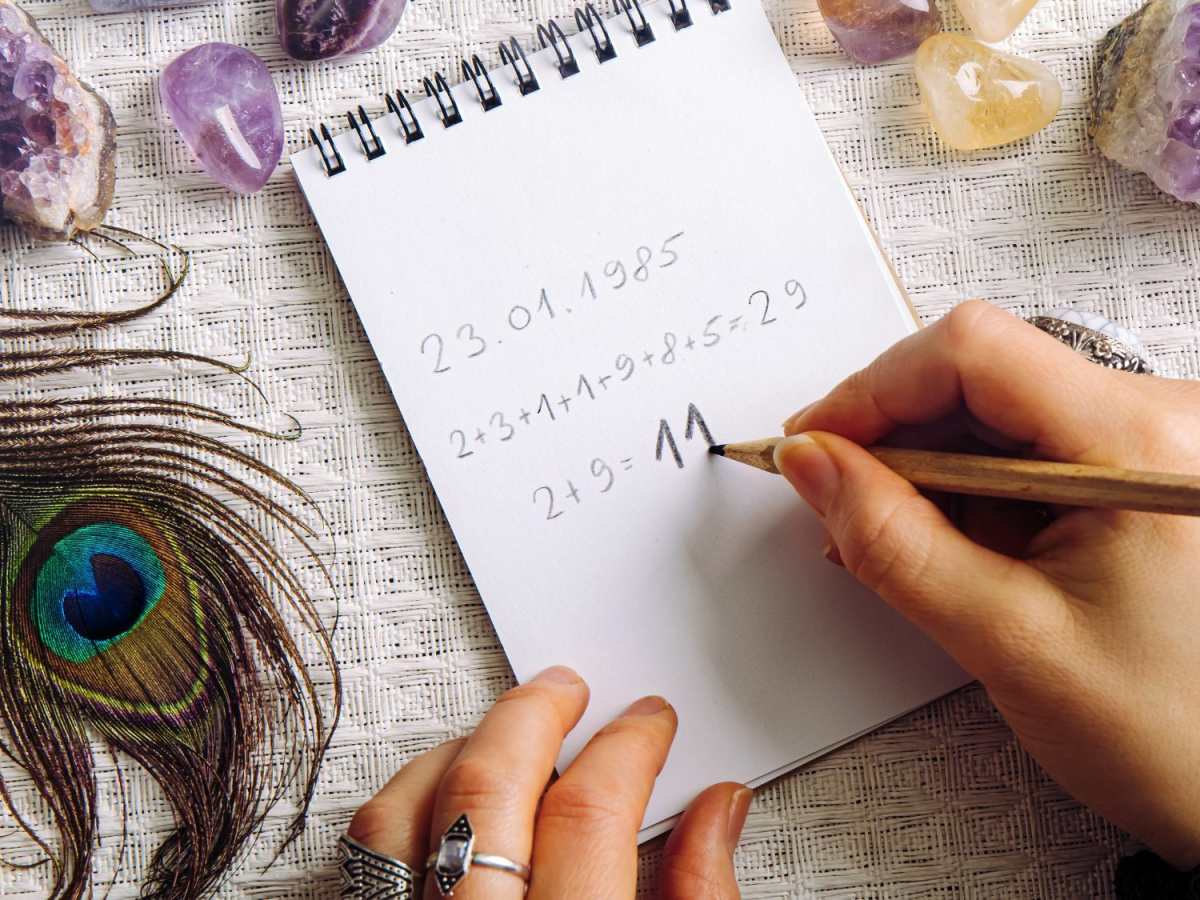
The life path number is widely considered the most critical metric in your entire numerology chart because it outlines the central road you are walking and the primary lessons you are here to master. This number represents the structural framework of your journey, highlighting both the natural opportunities that will come your way and the specific hurdles you will consistently face. To calculate the life path number, you must add all the digits of your complete birth date together, reducing the final sum down to a single digit between one and nine, unless the calculation results in a master number. The reduction process must be done carefully by breaking the birth date down into three separate components, which are the month, the day, and the year, reducing each component to a single digit before adding them together for the final reduction.
Calculation Example: If an individual is born on December 14, 1993, the calculation begins by reducing the month of December, which is twelve, down to one plus two, resulting in three. Next, the day fourteen is reduced by adding one plus four, which results in five. The year 1993 is reduced by adding one plus nine plus nine plus three, which equals twenty-two, and twenty-two is further reduced by adding two plus two, which results in four. Finally, the three individual components are added together, so three plus five plus four equals twelve, and twelve is reduced by adding one plus two, yielding a final life path number of three.
Each single digit from one to nine carries a distinct archetypal theme that flavors an individual’s life journey. A life path number of one centers on independence, innovation, and learning to pioneer new pathways, whereas a life path number of two revolves around cooperation, diplomacy, and mastering the art of harmonious relationships. The number three thrives on creative self-expression and communication, while the number four demands practicality, discipline, and building secure structures for the future. Individuals with a life path number of five are defined by their pursuit of personal freedom, adaptability, and experiential learning, while those with a number six focus on responsibility, community service, and domestic nurturing. The number seven is the archetype of the analytical seeker, driving individuals toward deep spiritual or intellectual investigation, while the number eight centers on material abundance, personal power, and executive authority. Finally, a life path number of nine represents the humanitarian, focusing on universal compassion, emotional completion, and learning the art of healthy detachment.
Understanding Expression and Soul Urge Numbers
While your birth date determines the overarching path you travel, your full birth name represents the personal toolkit and psychological blueprint you brought with you to navigate that journey. The expression number, which is frequently referred to as the destiny number, is calculated by converting every single letter of your full legal birth name into its corresponding numerical value based on a standard western alphanumeric chart. This calculation includes all middle names and must reflect the exact spelling found on your birth certificate, as this original name is believed to hold your foundational energetic blueprint. The expression number highlights your natural capabilities, your ingrained talents, and the specific contributions or legacy you are naturally equipped to leave behind in the world.
In contrast to the outward-facing expression number, the soul urge number, which is often called the heart’s desire, reveals your most private internal landscape. This number is derived exclusively by isolating and summing the numerical values of the vowels within your full legal birth name. The soul urge number uncovers your deepest subconscious longings, your hidden motivations, and the specific environments or emotional rewards that make your spirit feel truly secure and fulfilled. Understanding your soul urge number explains why you make certain choices that might seem irrational to outsiders but feel absolutely necessary to your inner peace. By contrasting a highly practical expression number with a deeply idealistic soul urge number, you can diagnose the precise origins of career dissatisfaction or relationship friction, enabling you to make more conscious, balanced life decisions.
The Meaning of Master Numbers and Karmic Debts
In modern western numerology, certain double digits are recognized as possessing a significantly higher vibrational intensity and are referred to as master numbers. These numbers consist of eleven, twenty-two, and thirty-three, and they are intentionally left unreduced during the initial phases of chart calculation because they represent profound spiritual potential and heightened acute awareness. The number eleven operates as the intuitive messenger, channeling illumination and spiritual insight, while the number twenty-two functions as the master builder, possessing the unique ability to turn abstract, grand visions into practical, physical realities. The number thirty-three is recognized as the master teacher, embodying universal love, deep compassion, and a commitment to global healing and service. While these numbers offer extraordinary gifts, they also bring substantial challenges, often manifesting as intense internal pressure, chronic anxiety, and prolonged periods of hardship during early life as the individual learns to handle such a potent energetic load.
On the opposite side of the interpretive spectrum lie the karmic debt numbers, which include thirteen, fourteen, sixteen, and nineteen. These specific numbers indicate deep-seated behavioral patterns, imbalances, or missteps from past evolutionary experiences that require conscious awareness and rectification in your current lifetime. For instance, a karmic debt of thirteen indicates a need to overcome laziness and shortcut-seeking by mastering hard work, focus, and efficient organization. A debt of fourteen requires an individual to navigate chaotic life changes without falling into destructive escapism or impulsive behaviors, focusing instead on temperance and emotional flexibility. The number sixteen signifies a pattern of inflated ego and arrogance, which is corrected through sudden, disruptive life events that dismantle false pride and force the construction of an authentic spiritual foundation. Finally, a karmic debt of nineteen requires the individual to learn true independence and mutual respect, overcoming a history of either isolating selfishness or codependent reliance on others. Recognizing these numbers provides a lens of profound self-compassion, transforming your most stubborn personal struggles into clearly defined lessons for psychological evolution.
Practical Applications of Numerology in Daily Life
Numerology should never be approached as a rigid form of deterministic fortune-telling that strips away your personal free will or agency. Instead, it is best utilized as an adaptable self-awareness tool that complements your professional development, emotional intelligence, and daily decision-making processes. Many professionals use their core numbers to guide major career transitions, deliberately choosing workplace environments and roles that capitalize on their inherent strengths rather than constantly fighting against their natural dispositions. In interpersonal relationships, comparing your core numbers with those of a romantic partner, family member, or business associate offers valuable insights into communication differences, potential friction points, and areas of natural emotional compatibility.
Another highly practical element of daily numerology is the calculation of personal year cycles, which help you understand the changing energetic themes of your life over a twelve-month period. A personal year number is calculated by adding the digits of your specific birth month and birth day to the digits of the current calendar year, reducing the total to a single digit. Tracking these annual cycles allows you to anticipate whether a specific year is best suited for aggressive external growth, quiet inner reflection, or major domestic reorganization. For example, a personal year of one is the ideal time to launch a new business or embark on an independent project, whereas a personal year of nine focuses on wrapping up loose ends, clearing out clutter, and letting go of relationships or habits that no longer serve your growth. Integrating this knowledge into your routine provides a grounding structural framework that helps you work with the natural tides of your life rather than constantly swimming against them.
Comprehensive Summary of Core Numerology Terms
| Numerology Term | Alternate Names | Calculation Source | Primary Psychological Focus |
| Life Path Number | The Destined Road | Complete Date of Birth | Your central life purpose, major lessons, and the primary road you travel. |
| Expression Number | Destiny Number | All Letters of Full Birth Name | Your natural talents, practical capabilities, and the legacy you leave. |
| Soul Urge Number | Heart’s Desire Number | Vowels of Full Birth Name | Your deepest internal cravings, hidden motivations, and spiritual needs. |
| Personality Number | Outer Self | Consonants of Full Birth Name | The public persona you project and how other people perceive you initially. |
| Birth Day Number | Talent Number | The Day of the Month You Were Born | Specific sub-talents and initial tools available to assist your life path. |
| Master Numbers | High-Vibrational Pairs | Unreduced Double Digits (11, 22, 33) | Heightened intuitive potential, acute sensitivity, and major life responsibilities. |
| Karmic Debt Numbers | Evolutionary Lessons | Specific Totals (13, 14, 16, 19) | Persistent behavioral blind spots and obstacles that require conscious correction. |
| Personal Year Number | Annual Cycle Guide | Birth Date plus Current Calendar Year | The overarching thematic flavor and energetic focus of your current year. |
Frequently Asked Questions
Can my numerology numbers change over time if I legally change my name?
Your foundational core numbers do not change because modern numerology relies strictly on the full legal name recorded on your original birth certificate to establish your primary baseline blueprint. This original name reflects the energetic conditions present at the exact moment you entered the world. However, adopting a new name through marriage, professional performance, or legal modification introduces a secondary overlay of numbers known as a minor expression or minor soul urge. This new name acts like an additional set of clothing or a specialized tool, subtly shifting how you express your natural talents and altering the minor everyday vibrations you project to the public, but it never fully erases or replaces the underlying core numbers of your birth blueprint.
Why do different numerology systems give me different results?
Different results occur because various historical cultures developed distinct alphanumeric methodologies, each operating through its own unique philosophical framework. The Western Pythagorean system is the most common, utilizing a linear one-to-nine scale that matches the standard modern western alphabet sequentially. The Chaldean system, which originated in ancient Babylonia, utilizes an eight-number scale based strictly on the phonetic sound and vibration of letters rather than their alphabetical order, completely omitting the number nine because it was considered entirely sacred. Additionally, Kabbalah numerology focuses solely on the Hebrew alphabet and a person’s current common name. None of these systems are incorrect; they simply examine your personality through different cultural lenses, much like how Western astrology and Vedic astrology use different calculations to analyze the same human psyche.
What happens if my chart contains mostly conflicting numbers?
It is entirely normal to have conflicting numbers in your personal chart, as human beings are inherently complex, multifaceted creatures rather than simple, predictable caricatures. For example, having a life path number of seven, which craves deep intellectual solitude, alongside an expression number of three, which thrives on highly public, expressive social communication, will naturally create an internal tug-of-war. This internal friction does not mean your chart is broken or inaccurate. Instead, it highlights the exact psychological tensions you are here to synthesize. Recognizing these competing numbers allows you to consciously design a lifestyle that honors both needs, such as pursuing a quiet research career while maintaining an active, creative hobby in the performing arts.
Is a master number inherently better or luckier than a single digit number?
Master numbers are not inherently superior, luckier, or more evolved than single-digit numbers, and harboring this common misconception can lead to unnecessary ego inflation or severe personal anxiety. A master number simply indicates a much higher, highly intense vibrational frequency that operates with dual energies, meaning an eleven carries both the traits of the inspired visionary and the sensitive, cooperative traits of a number two. This heightened intensity acts like a high-voltage electrical current running through a standard household appliance. It requires immense emotional maturity, rigorous self-discipline, and years of life experience to harness safely. Individuals with master numbers often experience much harder early lives and greater personal upheavals than those with single-digit charts, making their path one of profound responsibility rather than easy luck.
How does the personal year number affect my daily decisions?
The personal year number acts as a psychological weather forecast, showing you the energetic conditions of your current twelve-month cycle so you can plan your major choices with minimal resistance. If you are currently in a personal year of four, which is a cycle dedicated to hard work, organization, and building foundations, attempting to travel constantly or radically change careers might feel incredibly frustrating and unproductive. Conversely, if your personal year is a five, which naturally brings sudden opportunities, travel, and personal freedom, it is the ideal time to take calculated risks and explore new horizons. By checking your personal year theme before making major financial commitments, signing contracts, or initiating relationship changes, you can align your actions with the natural cosmic currents rather than forcing outcomes against the tide.
What is the difference between the personality number and the soul urge number?
The fundamental difference lies in the classic psychological distinction between your outer public persona and your authentic inner self. Your personality number is calculated strictly from the consonants of your full birth name and represents the external facade you present to the world, your style dress, and the immediate assumptions people make about you upon first meeting. Your soul urge number is derived entirely from the vowels of your birth name and represents your private emotional core, your true motivations, and what you require to feel safe when the public spotlight is completely turned off. Essentially, the personality number is the front door and architectural exterior of your psychological house, while the soul urge number is the private, intimate living room inside where you truly reside.
How can someone clear or resolve a karmic debt number in their chart?
Resolving a karmic debt number is not about performing mystical rituals or being punished for ancient mistakes, but rather about developing conscious awareness around your most deeply ingrained negative habits. The first step to clearing a debt is recognizing how its specific patterns manifest as self-sabotage in your daily life, such as noticing if you constantly seek lazy shortcuts under a thirteen debt or isolate yourself selfishly under a nineteen debt. Once you identify these recurring behavioral traps, you clear the debt by consistently making the harder, more constructive choice. By practicing discipline, accepting responsibility, and facing obstacles with patience and integrity, you gradually rewrite your behavioral programming, transforming that specific karmic vulnerability into one of your greatest psychological strengths.
Wrap-Up
Approaching numerology for the first time can feel like trying to learn a completely foreign language, but mastering these core definitions changes how you view yourself and your life patterns. By understanding the specific mechanics behind the life path, expression, soul urge, master numbers, and karmic debts, you transform these abstract concepts into a cohesive, highly practical framework for self-examination. This foundational knowledge allows you to peel back the surface layers of your daily experiences, helping you see the clear, underlying themes that govern your relationships, career drives, and personal growth milestones.
The true value of this ancient symbolic practice lies in how effectively you apply it to your lived reality. Rather than treating your chart as a rigid blueprint that dictates what must happen, use it as an adaptable tool to expand your self-awareness, validate your natural instincts, and navigate your personal challenges with greater confidence. Let this beginner’s overview serve as a sturdy starting point for your ongoing self-discovery. Take these definitions, apply them directly to your own birth data, and observe how a deeper relationship with numbers can bring a renewed sense of clarity, balance, and intentional direction to your daily choices.
References
-
Britannica, The Editors of Encyclopaedia. “Numerology.” Encyclopedia Britannica, 2026.
-
Iamblichus. The Theology of Arithmetic. Translated by Robin Waterfield. Phanes Press, 1988.
-
Hippolytus of Rome. Refutation of All Heresies (Elenchos). Academic research overviews on ancient Pythagorean traditions and arithmancy, 2016.
-
Jordan, Juno. The Romance in Your Name. De Vorss and Company, 1965.