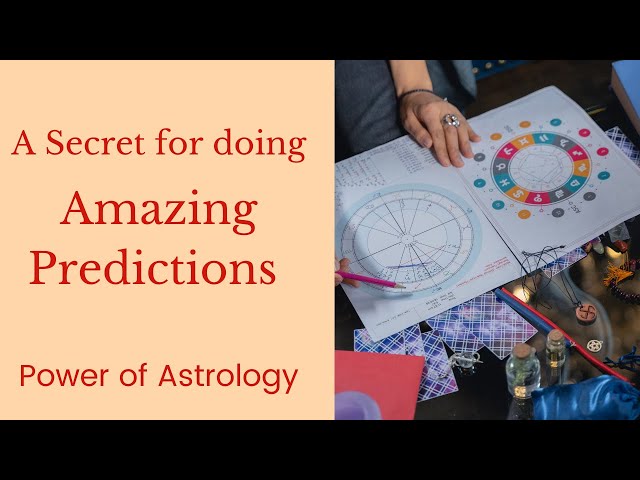
Astrology has surged in popularity as a tool for self-reflection, yet it often carries the weight of deterministic predictions that can feel both overwhelming and intrusive. Many people encounter astrology through generic “daily horoscopes” that suggest specific events are destined to happen, leading to a common misconception that the practice is purely about fatalism. In reality, astrology functions most effectively as a symbolic language for exploring your own psychology, tendencies, and growth cycles. By approaching the craft with a critical, grounded mindset, you can extract meaningful self-knowledge while maintaining your personal agency and independence from the limitations of reductive predictions.
The key to engaging with astrology in a healthy way lies in understanding the distinction between archetypal energy and specific future outcomes. An astrological chart describes a set of potentials—your inherent strengths, areas of internal tension, and natural inclinations—rather than a rigid, unchangeable blueprint of your life. When you read a prediction that claims you will experience a specific event, such as a “financial windfall” or a “new romantic encounter,” it is helpful to reframe that as an invitation to examine how you currently relate to your own values, communication style, or emotional needs. This perspective shift allows you to use astrological themes as a prompt for introspection rather than as a definitive forecast of what the future holds.
Developing a balanced approach requires you to treat astrology as an auxiliary tool for your own decision-making process. No external system should replace your own judgment, intuition, or professional advice when making important life decisions. When you view your birth chart as a starting point for exploration—a map of your own landscape rather than a set of rules—you maintain control over your path. This method of “mindful interpretation” encourages you to look for the metaphorical resonance in astrological concepts, asking yourself how these symbols mirror your current reality rather than blindly accepting them as inevitable truths. By keeping your feet firmly on the ground, you turn astrology into a useful exercise in self-awareness that empowers rather than restricts.
Recognizing the Difference Between Archetypes and Events
Astrology relies on archetypes—universal patterns of human experience—rather than literal, physical outcomes. For example, the planet Mars is archetypally linked to drive, assertiveness, and action. An astrologer might describe a “Mars transit” as a period of heightened intensity, but that energy can manifest in a thousand different ways depending on your personality, your goals, and your choices. It might manifest as a productive burst of energy in your career, a need to advocate for yourself in a relationship, or even a period of frustration that forces you to re-examine your boundaries. The specific event is not written in the stars; your internal response to that energy is what creates the reality of your day.
The mistake often made is treating the symbol as the event itself. When you learn to separate the core energy from the predicted manifestation, you reclaim your agency. If a reading suggests that you will face a “challenge” in your career, do not spend your time worrying about what that challenge could be. Instead, use that information as a prompt to evaluate your current professional trajectory. Are you feeling unfulfilled? Are you avoiding a necessary conversation? By viewing the astrological suggestion as a psychological signal rather than a prophetic statement, you transform a potentially anxiety-inducing prediction into a helpful, non-literal guide for self-correction and proactive development.
Establishing Healthy Boundaries with Astrology
Maintaining a healthy relationship with astrology involves setting clear boundaries around how and why you consume it. A significant issue in modern digital culture is the abundance of “clickbait” horoscopes designed to generate engagement through fear or overly optimistic promises. These generic messages, which ignore the nuance of your unique birth chart, should be treated with healthy skepticism. They lack the context of your specific life circumstances and are rarely accurate for large groups of people. If you choose to follow astrological trends, do so with the understanding that they are meant to be general thematic suggestions rather than personalized guidance meant for your specific life.
Furthermore, it is important to know when to step away. If you find yourself checking your horoscope before making every minor decision, or if you feel anxious when a transit is described as “difficult,” it is a clear sign that you have ceded too much power to an external system. Astrology should support your confidence, not erode it. If a specific astrologer or platform consistently leaves you feeling worried, disempowered, or overly reliant on their advice, it is time to unsubscribe. Your own intuition and rational assessment of the facts are always the most authoritative sources for your life path. Using astrology to supplement your own wisdom is a strength; using it as a replacement for your own judgment is a vulnerability.
Using Astrology as a Tool for Self-Reflection
To use astrology for actual benefit, focus on your own birth chart rather than transient, generic predictions. Your birth chart is a static, reliable record of your own nature, providing a consistent framework for self-discovery that does not change from day to day. When you focus on understanding your own planetary placements—such as the meaning of your Sun, Moon, and Rising signs—you are engaging in a process of self-study. This is no different from exploring personality theories or journaling, as it encourages you to categorize your traits and think critically about your own behavior. This practice is empowering because it provides the vocabulary to name your own experiences and motivations.
When exploring these concepts, always look for the evidence in your own life. If your chart suggests you have a “need for independence,” look back at your history to see where that has manifested. Have you always valued your autonomy? Did you find yourself resisting group settings? By validating these descriptions against your real-world experience, you confirm that you are the expert on your own life. Astrology becomes an analytical tool that you control, testing ideas against your history and using the insights that prove useful while discarding the ones that do not fit. This iterative process turns the study of the stars into a deeply personal, grounded, and ultimately human endeavor.
| Practice | Old Approach | New Approach |
| Daily Horoscope | Seeking future events to happen | Looking for general themes to reflect on |
| Challenging Transits | Feeling anxiety about a “bad” time | Seeing a period for growth and work |
| Making Decisions | Looking for approval from the chart | Using the chart for self-reflection only |
| External Guidance | Relying on the astrologer’s opinion | Relying on your own life evidence |
| Focus Area | Generic daily predictions | Understanding your unique birth chart |
| Agency | Feeling powerless and fated | Feeling empowered and choosing action |
Frequently Asked Questions
How can I avoid getting anxious about “negative” predictions?
The best way to avoid anxiety is to reject the idea that any part of astrology is inherently negative. In the study of archetypes, every planet has a constructive expression and a challenging one. If a transit is described as “hard,” view it as a period requiring extra patience or focus, rather than an inevitable disaster. Remember that astrologers often use dramatic language to get attention; filter that through your own rational mind. If you find a reading stressful, simply disengage. No piece of information is worth your peace of mind.
Is it wrong to use astrology if I am a logical or scientific person?
There is no inherent contradiction in being a logical person who enjoys astrology as a tool for introspection. Many people utilize astrology in the same way they might use a personality test or a creative writing prompt: as a way to generate ideas about the self. It does not need to be a literal science to be a helpful, psychologically resonant framework. As long as you maintain your logical critical thinking skills and do not use astrology to ignore facts or bypass your personal responsibilities, it can be a perfectly harmless, imaginative practice.
Should I make major life decisions based on my birth chart?
You should never make major life decisions—like changing careers, moving, or entering relationships—based solely on astrological suggestions. Decisions of this magnitude should always be based on your own research, your personal values, the concrete reality of your circumstances, and your long-term goals. Astrology can be a helpful sounding board to explore your feelings, but it should never be the deciding factor. Your own judgment, based on evidence and careful thought, must remain the final authority in your life.
Why do some people seem to be obsessed with their charts?
Some people find comfort in astrology because it provides a sense of order and meaning in an unpredictable world. However, an obsession usually indicates that the person is using astrology to avoid facing the reality of their own agency. If someone is letting the stars dictate their romantic choices or business moves, they are likely struggling with the anxiety of decision-making. If you feel you are becoming obsessed, take a break from all astrological content for a few months to reset your focus and reconnect with your own decision-making processes.
Can astrology actually predict the future accurately?
There is no scientific evidence to support the idea that planetary positions at birth or in transit can predict specific, measurable events in a person’s life. The perceived accuracy of astrology often comes from the “Barnum Effect,” where general personality descriptions or predictions are interpreted as highly specific because they are sufficiently vague to apply to many different situations. When you approach astrology as a system of symbolic archetypes rather than a predictive science, you remove the pressure of “accuracy” and focus on what is personally meaningful to your development.
What is the best way to start exploring astrology responsibly?
Start by looking for high-quality, long-form content that focuses on the theory and psychology behind astrology, rather than short, sensationalist posts. Books written by reputable astrologers who emphasize the psychological and archetypal nature of the craft are excellent resources. Avoid accounts that promise wealth, luck, or specific romantic outcomes. Treat it as you would a hobby or a book club; take what makes sense to you, think deeply about how the concepts apply to your history, and always feel free to discard what does not resonate.
Conclusion
Understanding astrology without falling into the trap of fatalism requires a commitment to your own critical thinking and personal agency. By recognizing that the stars provide archetypal themes rather than scripted events, you shift the power dynamic in your favor. You become the observer of your own life, using astrological symbols as a language to describe your experiences, while maintaining the firm belief that you are the one writing the story. This approach transforms astrology from a source of anxiety into a constructive, reflective tool that helps you understand yourself with more depth and clarity.
Continue to prioritize your own judgment above all else. Use astrology to ask better questions about your behavior, your motivations, and your path, but let the answers always come from your own lived reality. If you maintain this boundary, you can enjoy the fascinating symbolism of the craft while remaining completely in control of your journey. Remember that your potential is not found in a chart, but in the choices you make every single day. Keep your focus on your actions, value your intuition, and allow astrology to be a secondary influence that adds color to your self-understanding rather than a primary force that dictates your future.
References
-
American Psychological Association (APA): Information on the psychology of belief and cognitive biases that influence how we interpret information. https://www.apa.org
-
Committee for Skeptical Inquiry: Resources on critical thinking and the scientific examination of claims, including astrology. https://skepticalinquirer.org
-
The Library of Congress: Historical perspectives on the evolution of celestial observation and the history of astrological thought. https://www.loc.gov