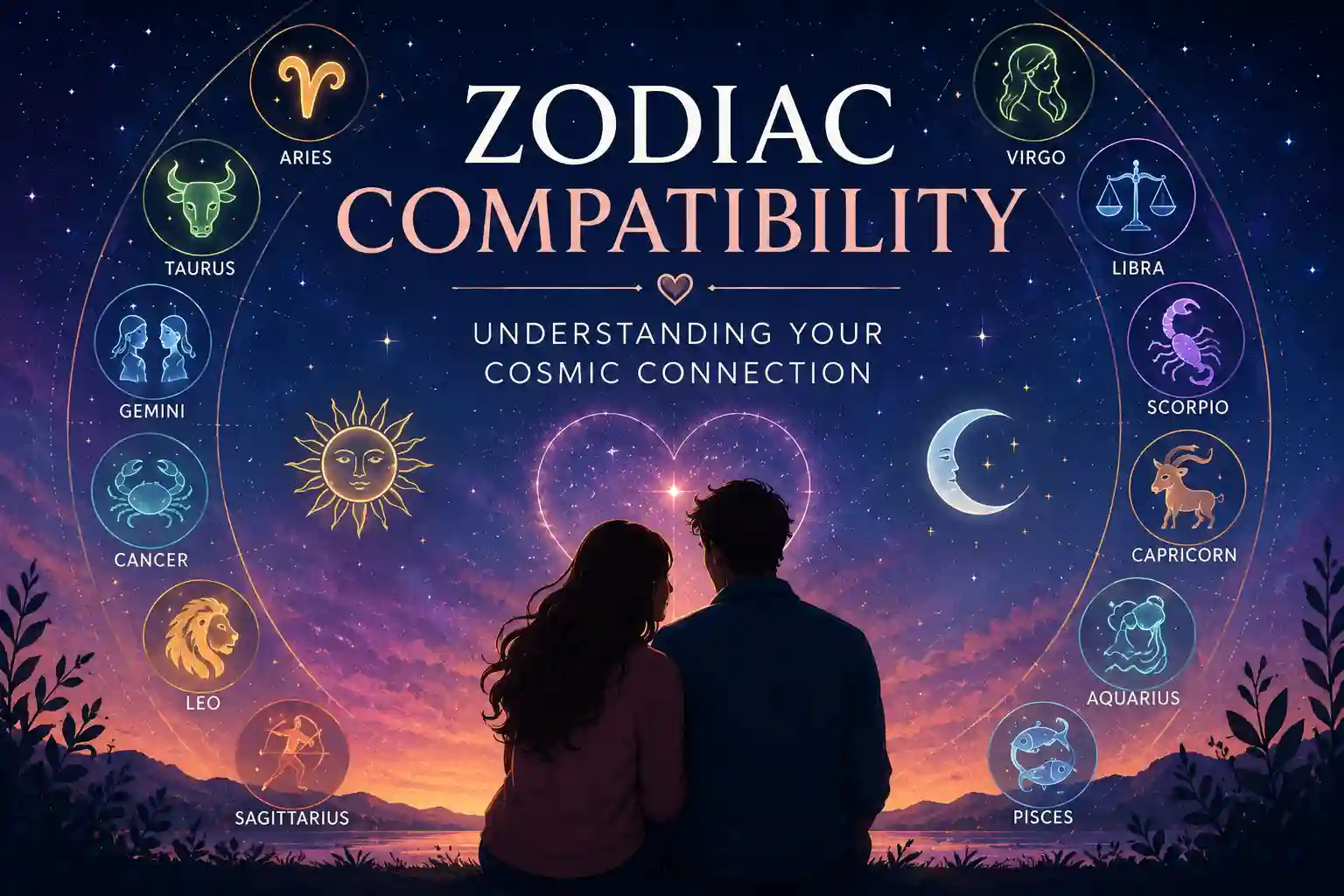
Diving into the world of relationship astrology can be incredibly exciting, especially when you are searching for deeper insights into how you connect with the people around you. Many individuals naturally turn to these ancient systems during moments of romantic uncertainty, hoping to find clear answers about whether a new partner is truly their perfect match. However, the modern digital landscape has created a significant hurdle for newcomers. The internet is flooded with oversimplified compatibility tests and generalized horoscopes that reduce complex human relationships into rigid, black-and-white verdicts. This creates a real dilemma for readers who might feel tempted to walk away from a healthy relationship or experience deep anxiety simply because an online widget flagged their partnership as mismatched. The fundamental issue stems from a lack of foundational understanding regarding what relationship metrics can genuinely reveal versus what remains entirely in the realm of human choice. This Beginner’s Guide to Zodiac Compatibility is designed to solve that problem by breaking down the true mechanics of relationship dynamics. By exploring the actual depth of this system, you will learn to separate commercial myths from practical insights, empowering you to use these tools to enhance your real-world connections without succumbing to fatalistic predictions.
The Complex Reality Beyond Simple Sun Signs
This narrow focus heavily impacts readers by fostering unnecessary doubt and causing them to overlook the actual, multi-layered nuances of human personality. When you view a partner strictly through the lens of their sun sign, you miss the vast celestial blueprint that makes up their entire psyche. In authentic practice, an individual is a complex combination of multiple planetary placements, houses, and mathematical angles. Judging a relationship solely by two sun signs is the equivalent of reading the first sentence of a book and assuming you understand the entire plot.
To overcome this limitation, you must train yourself to look at the complete natal chart of both individuals involved. A practical solution is to recognize that a challenging sun sign combination often provides the exact friction needed to spark mutual personal growth and long-term fascination. For instance, a cautious Earth sign and an impulsive Fire sign might be labeled as incompatible by a basic online calculator, yet in reality, they can form a beautifully balanced partnership where one provides stability and the other introduces adventure. By broadening your perspective to include the entire chart, you shift from making shallow judgments to understanding the deeper psychological forces at play.
Deciphering the Interplay of Astrological Elements and Houses
To truly understand how two personalities interact, you must explore the foundational framework of the four natural elements, which include Fire, Earth, Air, and Water. Each zodiac sign belongs to one of these elemental groups, dictating their primary temperament, emotional language, and behavioral motivations. Misunderstandings frequently arise when partners speak entirely different elemental dialects without realizing it. For example, an Air sign may attempt to solve a relationship issue through logical discussion, while their Water sign partner experiences the problem as a deep emotional wave that defies cold logic.
This elemental disconnect can lead to severe frustration if individuals mistake a simple difference in communication styles for permanent incompatibility. When you do not understand the underlying energetic motivations of your partner, it becomes incredibly easy to personalize their natural behaviors as intentional slights or emotional rejection. A Fire sign’s need for constant action and external validation might overwhelm a grounded Earth sign, who mistakenly interprets their partner’s high energy as instability or dissatisfaction with the home life.
The solution lies in learning how these diverse energies can actively support and complement one another rather than clash. You can cultivate this balance by studying how the elements interact within the specific houses of your birth charts, particularly the seventh house, which traditionally governs serious, long-term partnerships and committed contracts. Recognizing that your partner’s unique elemental makeup offers a perspective you naturally lack allows you to transition from criticism to collaboration. A relationship between differing elements thrives when both individuals view their differences as a complementary team dynamic rather than an ongoing battleground.
The True Mechanics of Synastry and Composite Chart Analysis
When professional practitioners evaluate the potential of a human bond, they utilize two advanced techniques known as synastry and composite chart analysis. Synastry involves taking the unique birth chart of one individual and mathematically overlaying it directly on top of another person’s chart to observe how their planets interact. This method reveals the daily chemistry, attraction levels, and immediate communication triggers between two distinct people. It highlights how one person’s emotional nature activates the other person’s intellectual side or where their personal values might naturally mesh or collide.
Failing to understand the mechanics of these advanced charts often leaves beginners vulnerable to generic online readings that lack any real context. For example, a basic chart reading might note a difficult angle between two planets and falsely declare that the couple will experience constant arguments. Without a deeper look into the entire system, readers often miss the supportive placements that naturally minimize that specific tension. Synastry acts as a highly detailed psychological weather report, indicating areas where you will enjoy sunny, effortless connection and areas where you must prepare for occasional emotional storms.
A reliable way to utilize these tools effectively is to focus heavily on the placements of Mercury, the Moon, and Venus across both charts. Mercury maps your intellectual processing and verbal communication styles, the Moon governs your deepest emotional needs and safety mechanisms, and Venus represents your language of affection and core values. By analyzing how these specific planets interact, couples gain clear, actionable insights into how to handle disagreements constructively. For instance, if a synastry analysis reveals that your partner possesses a highly sensitive Moon placement, you can consciously adjust your communication style to be gentler during stressful moments, turning abstract celestial data into practical relationship harmony.
What Celestial Calculations Can Never Predict About Human Bonds
The absolute boundaries of relationship astrology represent the most critical concept for any beginner to grasp. It is vital to understand that a birth chart is a map of potential, behavioral tendencies, and psychological archetypes, but it can never account for human free will, personal maturity, or conscious intent. A chart cannot tell you whether a person has actively worked through their childhood trauma, developed healthy coping mechanisms, or chosen to treat their partner with genuine respect and kindness.
This blind spot can become incredibly dangerous if an individual permits celestial data to override their real-world observations and healthy boundaries. People occasionally remain in toxic or emotionally abusive relationships because an online compatibility report explicitly labeled the connection as a destiny or soulmate bond. Conversely, someone might reject a deeply loving, supportive, and emotionally mature partner simply because their charts displayed a few challenging mathematical squares. Relying entirely on an external esoteric system to make vital life choices results in a complete loss of personal agency and self-trust.
The most effective solution is to establish an ironclad rule that real-world behavior always takes absolute precedence over any astrological interpretation. No matter how perfectly aligned two charts appear on a computer screen, a relationship cannot survive without mutual respect, active effort, clear communication, and shared moral values. Use these celestial tools exclusively to understand behavioral patterns and communication preferences, but leave the evaluation of relationship health to tangible reality. If a partner is consistently unkind, untrustworthy, or emotionally unavailable, no amount of cosmic alignment can transform that situation into a healthy partnership.
Cultivating a Healthy and Balanced Perspective on Relationship Tools
Approaching relationship tools with the correct mindset ensures that you gather valuable insights without sabotaging your real-world interactions. The ultimate goal of examining compatibility should always be self-awareness and empathy rather than final judgment or prediction. When you use these systems as a psychological mirror, they help you uncover your own hidden relationship triggers, expectations, and emotional blind spots. This self-discovery allows you to take full responsibility for your actions within a partnership instead of pointing fingers at your partner’s planetary placements.
When couples approach these concepts with rigid expectations, they inadvertently create self-fulfilling prophecies of conflict and estrangement. If you enter a disagreement firmly believing that your partner is incapable of understanding you due to an elemental clash, you will naturally stop listening to them, effectively closing the door to any resolution. This passive attitude prevents genuine intimacy from developing, as both individuals begin treating each other as fixed cosmic stereotypes rather than evolving, dynamic human beings.
To build a truly resilient perspective, treat the insights you gather from compatibility charts as helpful conversational starters rather than absolute laws. Share your findings with your partner in a lighthearted, collaborative manner, using the descriptions to discuss how you both prefer to receive affection, process stress, and manage domestic life. By anchoring these esoteric concepts firmly in open communication and mutual respect, you transform an ancient symbolic language into a highly practical tool for deepening emotional intimacy and fostering lifelong relationship growth.
| Analytical Category | What the System Can Tell You | What the System Cannot Tell You | Practical Relationship Application |
| Communication Styles | Identifies how each person processes data and expresses thoughts verbally. | Cannot predict whether a person will choose to lie, manipulate, or listen. | Use the insights to adjust your tone and timing during difficult discussions. |
| Emotional Needs | Explains what environments and behaviors make each partner feel secure. | Cannot determine if an individual has healed their deep childhood patterns. | Create a home environment that satisfies both partners’ safety triggers. |
| Core Value Alignment | Highlights shared aesthetic preferences, financial styles, and love languages. | Cannot force a human being to commit to a long-term future with you. | Align your real-world financial goals and daily expressions of affection. |
| Friction & Tension Zones | Points out the specific behavioral patterns likely to trigger disagreements. | Cannot calculate the maturity level or patience a person possesses. | Develop conscious boundaries and specialized conflict resolution strategies. |
Frequently Asked Questions
Can a relationship succeed if the zodiac compatibility chart states we are completely incompatible?
A relationship can absolutely thrive regardless of what a basic compatibility chart claims. Traditional astrology highlights areas of natural ease and potential friction, but it never dictates the final outcome of a human relationship. Real-world success depends entirely on mutual respect, emotional maturity, effective communication, and a shared willingness to work through challenges together. Many couples with highly challenging chart combinations enjoy deeply fulfilling, lifelong partnerships because their differences drive continuous personal growth and keep the romance dynamic. Real-world behavior and conscious commitment will always override any mathematical calculation found on an online platform.
What is the difference between a standard sun sign match and a professional synastry reading?
A standard sun sign match only compares the positions of the sun for two individuals based on their birth months, offering a highly generalized and superficial look at core identities. A professional synastry reading is an advanced technique that takes the complete birth charts of both people—including the exact hour and geographic location of birth—and overlays them to analyze how all the planets, houses, and mathematical angles interact. Synastry provides a highly detailed, personalized psychological profile of the relationship, mapping out specific patterns of emotional connection, communication styles, and long-term domestic compatibility that a simple sun sign could never reveal.
How does knowing my partner’s Moon sign help resolve recurring arguments in our relationship?
The Moon governs an individual’s subconscious emotional nature, instincts, and baseline security needs. When you discover your partner’s Moon sign, you gain immediate insight into what they require to feel safe and respected during a high-stress confrontation. For instance, a partner with a Water Moon may need time to feel their emotions completely before speaking, whereas an Air Moon might need to intellectualize the problem immediately. Understanding these distinct emotional blueprints allows you to stop personalizing their defense mechanisms, enabling you to approach disagreements with deeper empathy and alter your communication style to de-escalate tension effectively.
Can relationship astrology predict if a partner will eventually cheat or break my trust?
Astrology can never predict specific moral choices, character flaws, or future acts of betrayal. A birth chart simply maps psychological tendencies, archetypal strengths, and potential areas of personal vulnerability, but it cannot calculate an individual’s integrity, values, or level of self-control. Trustworthiness is a conscious, daily human choice driven by maturity, personal ethics, and respect for the partnership. You should never rely on a celestial configuration to guarantee a partner’s fidelity; instead, evaluate their character through their ongoing real-world actions, consistency, and openness over the course of your relationship.
Why do I feel a powerful, instant connection with someone whose chart does not match mine at all?
Instant attraction is a complex human experience driven by a variety of psychological, biological, and situational factors that exist completely outside of basic sun sign astrology. Even when looking at a chart, an instant spark is often caused by subtle connections between minor planets, ascendants, or nodal points that standard online compatibility calculators completely ignore. Furthermore, a lack of traditional alignment can create a magnetic sense of mystery and fascination, drawing two differing personalities together to learn important life lessons. A psychological connection should always be explored based on real-world feelings rather than dismissed due to an incomplete digital report.
How can I introduce these astrological concepts to my partner without making them feel judged?
The best approach is to treat these tools as a lighthearted, collaborative framework for self-discovery rather than a rigid set of rules or a weapon of criticism. Avoid using absolute statements like telling your partner they behave a certain way because of their sign. Instead, frame the conversation around exploring how you both naturally prefer to communicate, handle stress, and express affection. Present the birth charts as a fun psychological personality test, using the descriptions as open-ended conversation starters to deepen your emotional intimacy and learn more about each other’s inner worlds.
Wrap-Up
Embarking on a journey through relationship astrology offers a unique and illuminating lens for viewing human connection, provided you maintain a grounded and balanced perspective. As this guide has demonstrated, understanding the true depth of a comprehensive birth chart allows you to move far beyond the limiting, commercialized stereotypes of simple sun sign matches. These symbolic tools serve as an exceptional psychological mirror, highlighting our intrinsic communication styles, deep-seated emotional needs, and potential behavioral friction points. However, the most critical takeaway for any beginner is remembering that celestial data can never diminish the absolute power of human free will and conscious choice. A birth chart reveals the cosmic weather, but you and your partner hold the umbrella. Real-world relationship success will always require active effort, emotional maturity, mutual respect, and clear communication. As you continue to explore these concepts, let them cultivate deeper empathy and self-awareness within your personal life. Treat these ancient systems as a supportive guide rather than an unyielding destiny, and always trust the tangible, real-world actions of love and commitment above any digital prediction.
References
-
Harvard University (Center for Astrophysics): Understanding the Ephemeris and Planetary Motion Calculations (Technical reference documentation regarding the astronomical tracking of celestial coordinates and positions).
-
University of California, Berkeley (Department of Psychology): The Psychology of Relationships and Confirmation Bias in Personality Assessments (Research analysis regarding how individuals project meaning onto generalized personality profiles).
-
Library of Congress (Science, Technology, and Business Division): History of Astrological Systems and the Evolution of the Zodiac Wheel (Historical overview detailing the cultural development and systemic shifts in celestial mapping across ancient societies).
-
The Center for Relationship Development: Empirical Metrics of Long-Term Marital Success versus Esoteric Predictors (Sociological study highlighting the primary roles of communication, commitment, and shared values over deterministic tracking systems).
-
Gottman Relationship Institute: The True Drivers of Interpersonal Compatibility and Emotional Safety (Clinical research emphasizing real-world behavioral metrics, conflict resolution styles, and trust building in human partnerships).
-
Stanford University (Stanford Encyclopedia of Philosophy): Free Will, Determinism, and the Limits of Predictive Archetypes (Philosophical exploration regarding human agency and the boundary lines of symbolic, character-based systems).