The global resurgence of interest in esoteric studies has brought celestial mapping firmly into the mainstream, prompting millions of enthusiastic individuals to explore their personal birth charts. Learning to interpret the unique language of the cosmos can be a deeply rewarding journey of self-discovery, offering profound insights into your psychological patterns, relationship dynamics, and life path. However, when stepping into this intricate, multi-layered discipline without structured guidance, it is incredibly easy to stumble into common analytical pitfalls. Navigating the sheer volume of fragmented information available online often leads to confusion, false assumptions, and unnecessary anxiety. The core problem is that a significant portion of digital media oversimplifies complex classical techniques, causing newcomers to form a highly distorted perspective of their charts. Understanding the most common astrology mistakes beginners make is an essential step toward building a truly reliable and authentic practice. By identifying these initial missteps, you can protect yourself from widespread misconceptions, cultivate a grounded approach to your studies, and ensure that your exploratory journey remains both intellectually fulfilling and practical for your everyday life.
Overemphasizing the Sun Sign and Ignoring the Complete Natal Chart
The single most widespread misconception in modern popular culture is the belief that your sun sign represents your entire astrological identity. This issue exists because commercial media has spent decades packaging celestial study into simplified daily horoscopes based entirely on birth months. When beginners rely solely on this single placement, they inevitably encounter contradictions, leading them to feel that the entire system is inaccurate or irrelevant to their true personality.
Focusing exclusively on the sun sign heavily affects readers by reducing a highly sophisticated psychological map into a flat, one-dimensional stereotype. An individual might read that their sun sign is naturally assertive and outgoing, yet they might personally be deeply introverted and private, causing them to completely dismiss the validity of the practice. In authentic methodology, the sun is merely one component among an entire network of celestial bodies, each governing a different facet of the human experience.
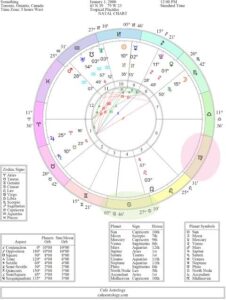
To avoid this pitfall, you must learn to view your natal chart as an ecosystem where every placement interacts with the others. A practical solution is to focus immediately on the big three, which consists of your Sun, Moon, and Ascendant signs. If you look at the visual structure of a complete chart wheel, you will notice that the Sun sign is just one single glyph situated within a complex web of geometric lines and house divisions. Expert guidance from historical traditions emphasizes that the Ascendant, or rising sign, represents your physical container and baseline perspective on the world, while the Moon governs your internal emotional landscape. By synthesizing these three core elements, you immediately gain a far more balanced and accurate reflection of your true self.
Overlooking the Critical Importance of Exact Birth Times and House Systems
Another fundamental misstep that regularly misleads newcomers is using an estimated or rounded birth time when generating a natal chart. This issue frequently arises because individuals assume that a difference of fifteen or twenty minutes is negligible in the grand scheme of cosmic movements. However, because the Earth rotates a full three hundred and sixty degrees every twenty-four hours, the exact degree of the horizon changes roughly every four minutes, making precision absolutely paramount.
Relying on incorrect chronological data completely distorts the structure of the houses in your chart, which are the twelve distinct segments representing different areas of your life, such as career, relationships, and home. A planet that actually resides in your quiet, private twelfth house might appear in your highly public tenth house if your birth time is off by just half an hour. This error results in deeply inaccurate readings, leaving you confused as to why your personal life experiences do not mirror the interpretations provided by books or software.
The definitive solution to this problem is to secure an official birth certificate that explicitly records your exact time of delivery before attempting any deep analysis. Additionally, beginners must familiarize themselves with the different mathematical house systems available, such as Placidus and Whole Sign. While the Placidus system calculates houses based on the unequal times it takes for signs to rise, the Whole Sign system assigns an entire zodiac sign to each house evenly. Experimenting with both frameworks under the guidance of established practitioners allows you to determine which system offers the most accurate and resonant blueprint for your lived experiences.
Misinterpreting Challenging Aspects as Permanent Personal Disasters
When beginners first learn to read a chart wheel, they often feel alarmed by the presence of hard aspects, such as squares and oppositions, which are frequently rendered as bright red lines in modern software. This anxiety stems from older, fatalistic interpretations that labeled these geometric relationships as inherently evil, malicious, or indicative of bad luck. Newcomers often look at a square between their communication planet and their emotional planet and conclude that they are permanently broken or destined to fail in their interpersonal relationships.
This pessimistic interpretation heavily impacts viewers by fostering self-limiting beliefs, low self-esteem, and unnecessary panic about their inherent character. It reverses the foundational purpose of psychological tracking, transforming a tool meant for empowerment into a source of fatalistic anxiety. In reality, a chart completely devoid of challenging aspects usually indicates a lack of motivational drive, as friction is the primary catalyst required to build resilience, talent, and deep wisdom.
To overcome this psychological barrier, you must consciously shift your vocabulary and view hard aspects as evolutionary tension rather than permanent disasters. For example, a square between Saturn and Venus does not mean you will never find love; rather, it indicates that you must learn to build genuine self-worth and establish healthy boundaries before your relationships can fully blossom. Expert guidance from psychological astrologers reveals that the most accomplished historical figures frequently possessed charts filled with intense squares and oppositions, using that exact internal tension as fuel to achieve extraordinary creative and professional milestones.
Treating Planetary Transits with an Anxious and Fatalistic Mindset
The modern internet has created a culture of deep anxiety surrounding ongoing planetary transits, with events like Mercury Retrograde, Saturn Returns, and eclipses being blamed for every minor inconvenience in daily life. This collective panic exists because sensationalized headlines find it incredibly profitable to market fear, convincing vulnerable readers that the planets are actively conspiring to ruin their careers, relationships, and technology. Beginners frequently review upcoming cosmic schedules with a sense of dread, entering a state of mental paralysis where they fear making any significant life changes.
This hyper-reactive mindset strips individuals of their personal agency, causing them to blame external cosmic movements for situations that actually require personal accountability and practical action. If someone experiences a communication breakdown at work during a retrograde period, it is far more productive to evaluate their clarity and listening skills rather than completely throwing their hands up in helplessness. Treating transits as malicious external forces creates an unhealthy, paranoid lifestyle that distances you from true emotional maturity.
The most effective solution is to approach planetary transits as predictable natural seasons rather than targeted personal attacks. Just as you would naturally carry an umbrella during a rainstorm without fearing the clouds, you should use transits to prepare your internal mindset for shifting energetic climates. A retrograde period is not a cosmic punishment; it is a vital phase meant for reflection, review, and restructuring areas of your life that have become unstable. Implementing a mindful practice where you journal through these periods allows you to observe how these cycles uniquely interact with your personal natal placements, turning abstract anxiety into a structured tool for intentional living.
Favoring Fast Social Media Trends Over Structured Historical Study
The final major pitfall for newcomers is attempting to learn this vast, ancient discipline exclusively through short-form social media videos, internet memes, and automated pop apps. This trend dominates modern consumption habits because bite-sized content is highly addictive and requires zero intellectual heavy lifting. Unfortunately, these digital spaces prioritize viral entertainment over historical context, frequently spreading inaccurate data, fabricated techniques, and shallow sign stereotypes to maximize viewer engagement.
Relying solely on fragmented social media clips results in a completely disjointed understanding of astrological theory, leaving you unable to read a comprehensive chart independently. Beginners who learn through memes often end up memorizing shallow keywords rather than understanding the underlying astronomical and philosophical principles that animate the entire system. This leaves you entirely dependent on online influencers and automated generators, preventing you from developing true expertise and critical thinking skills.
To establish a truly authentic and authoritative practice, you must actively pivot away from casual scrolling and invest your time in structured, foundational literature. Seek out celebrated textbooks written by respected educators who respect the historical lineages of both traditional and modern psychological methodologies. Dedicate time to learning the baseline building blocks of the practice, which include understanding the astronomical relationship between the Earth and the ecliptic, the true meanings of planetary rulerships, and the symbolic geometry of aspects. Treating this study with the same academic respect you would afford any complex psychological or historical discipline ensures that your knowledge remains accurate, resilient, and deeply impactful.
| Common Astrological Mistake | Negative Real-World Impact | Practical Actionable Adjustment | Expected Educational Benefit |
| Sun Sign Isolation | Distorts identity analysis and creates inaccurate personality profiles. | Synthesize the Big Three: Sun, Moon, and Ascendant signs together. | Delivers a balanced, multi-dimensional understanding of character. |
| Guessing Birth Times | Misaligns the twelve house positions and alters life area context. | Source an official, legally recorded birth certificate for exact minutes. | Ensures precise placement of planets within correct experiential sectors. |
| Fear of Hard Aspects | Breeds fatalistic anxiety and self-limiting beliefs regarding potential. | Reframe squares and oppositions as necessary engines for personal growth. | Transforms psychological tension into actionable wisdom and talent. |
| Transit Paranoia | Triggers mental paralysis and a total loss of personal accountability. | View planetary movements as predictable natural seasons for reflection. | Restores personal agency and removes fear from daily planning. |
| Meme-Based Education | Yields fragmented, shallow knowledge reliant on viral stereotypes. | Study structured, foundational textbooks from respected historical lineages. | Cultivates independent chart-reading literacy and critical analysis. |
Frequently Asked Questions
Why does my sun sign horoscope often feel completely inaccurate for my daily life?
Daily or monthly horoscopes found in popular media feel inaccurate because they are written using a highly generalized method called the Solar House system, which treats every individual of a specific sign as if they share an identical chart. In reality, your unique natal chart contains nine other planetary bodies situated across twelve different houses, all forming unique mathematical angles. If your sun sign is in an outgoing fire sign, but your moon and rising signs are positioned in private water signs, your daily experience will naturally lean toward introversion. To find accurate daily insights, it is far more effective to read horoscopes written specifically for your Ascendant or rising sign.
What should I do if my official birth certificate does not list my exact birth time?
If your birth certificate lacks a recorded time, you can first attempt to contact the specific hospital archives where you were delivered or review family baby books and personal journals. If official documentation remains completely unavailable, you can consult an experienced professional practitioner who specializes in an advanced technique known as chart rectification. Rectification is a highly structured process where the practitioner works backward through your life, matching the exact dates of major life milestones—such as marriages, career shifts, major moves, or health events—to planetary transits to mathematically deduce your most probable time of birth.
Are red lines on a natal chart wheel proof that a person is inherently unlucky or toxic?
The red lines on a natal chart wheel simply indicate major hard aspects, specifically squares and oppositions, which represent areas of internal psychological friction and dynamic tension. They are absolutely not indicators of bad luck, a cursed life, or a toxic personality. In classical and psychological practice, these placements are viewed as the vital engines that drive ambition, self-awareness, and personal mastery. Without the tension provided by these red lines, an individual may lack the motivation to overcome obstacles or develop deep resilience. The most successful historical figures routinely possess charts filled with these exact challenging configurations.
How can I safely prepare for a Mercury Retrograde period without experiencing constant anxiety?
To manage a Mercury Retrograde period mindfully, you must reframe the transit from a cosmic threat into a necessary phase of environmental maintenance. Mercury governs communication, technology, travel, and fine details, meaning that when it appears to move backward, it invites us to slow down and review our current trajectories. Practically, you can prepare by backing up important digital data, double-checking travel itineraries, and practicing extra patience during difficult conversations. View this three-week period as an ideal time to finish old projects, declutter your physical spaces, and reflect on past choices rather than starting major new initiatives.
Which house system is best for a beginner to use when starting chart analysis?
For those just beginning their studies, starting with the Whole Sign house system is highly recommended due to its conceptual clarity and structural simplicity. In the Whole Sign framework, the entirety of your rising sign becomes your first house, and every subsequent house aligns perfectly with the boundaries of the following zodiac signs. This eliminates the confusion of intercepted signs and unequal house sizes found in the Placidus system, making it far easier to learn the core meanings of planetary placements. As your technical literacy grows, you can naturally experiment with quadrant-based frameworks like Placidus to see which resonates more deeply.
How can I tell if an astrology book is a trustworthy educational resource or pop pseudoscience?
A trustworthy educational textbook will prioritize teaching foundational mechanics, historical lineages, and symbolic frameworks over superficial predictions and personality stereotypes. Look for authors who are recognized educators within long-standing organizations, such as the National Center for Geocosmic Research or the Faculty of Astrological Studies. A high-quality resource will explicitly explain the astronomy behind the chart wheel, detail the history of techniques, and encourage readers to approach interpretations holistically rather than offering rigid, absolute definitions for isolated placements. Avoid books that utilize clickbait phrasing or promise to reveal your definitive future destiny.
Wrap-Up
Embarking on the study of celestial mechanics offers a profound path toward self-awareness and philosophical growth, provided you navigate its complexities with academic respect and digital literacy. As detailed throughout this guide, moving past the common astrology mistakes beginners make requires a conscious shift from passive, entertainment-driven consumption to active, structured learning. By integrating your complete natal chart rather than isolating your sun sign, ensuring exact chronological data, and reframing challenging aspects as essential evolutionary tools, you elevate the practice from pop pseudoscience into a deeply valuable psychological mirror. Remember that the ultimate purpose of this symbolic language is to illuminate your inherent potentials and expand your personal agency, not to induce anxiety or lock you into a fatalistic destiny. Let your exploration be guided by patience, critical analysis, and a commitment to reputable historical lineages. As you continue to decipher the unique geometry of your personal birth chart, use these insights to foster real-world empathy, build emotional resilience, and navigate the shifting seasons of your life with clarity, confidence, and purpose.
References
-
National Center for Geocosmic Research (NCGR): Educational Guidelines and Curriculum Standards for Astrological Literacy (Professional documentation outlining the technical and ethical requirements for accurate natal chart calculation).
-
Kepler College of Astrological Arts and Sciences: The Historical Evolution of House Systems from Antiquity to Modern Practice (Academic research paper analyzing the mathematical and philosophical shifts between Placidus and Whole Sign frameworks).
-
The Faculty of Astrological Studies (London): Psychological Astrology and the Integration of Hard Aspects (Educational manual detailing the therapeutic interpretation of squares and oppositions in character development).
-
University of London (Warburg Institute): The Astrological Tradition: Transmission of Esoteric Knowledge through Classical Texts (Historical study tracking the degradation of classical techniques into modern mass media formats).
-
Princeton University Press: The Houses of Heaven: History, Astronomy, and the Mapping of the Cosmos (Comprehensive text examining the mathematical history of celestial coordinates and geographic birth time metrics).
-
American Federation of Astrologers (AFA): Astro-Clocking and the Impact of Birth Time Variances on Chart Precision (Technical advisory report demonstrating mathematical shifts in ascendant degrees per minute of earth rotation).