The Historical Origins and Evolution of the Tarot Deck
To understand why so many misconceptions surround the tarot, we have to look back at where these cards actually came from. A highly popular myth suggests that tarot cards originated as a secret, ancient Egyptian hieroglyphic system smuggled out of burning libraries by nomadic groups. Other stories claim the deck was invented by medieval occult societies operating entirely in the shadows to preserve forbidden spiritual knowledge from religious authorities. These narratives are highly entertaining and have helped sell thousands of books, but they completely fall apart when subjected to rigorous historical research.
The historical reality is far more ordinary but equally fascinating. Historians specializing in playing cards have conclusively proven that tarot decks first appeared in northern Italy during the early fifteenth century. They were not created for divination, spellcasting, or spiritual enlightenment. Instead, wealthy Renaissance nobles commissioned artists to paint these extra cards to play a fashionable, complex trick-taking parlor game called Tarocchi. The original decks featured standard playing card suits alongside a special set of twenty-one illustrated trump cards and a single card known as the Fool. This game was immensely popular among the aristocracy across Italy, France, and southern Germany for more than three centuries before anyone ever thought to use the images for predicting the future.
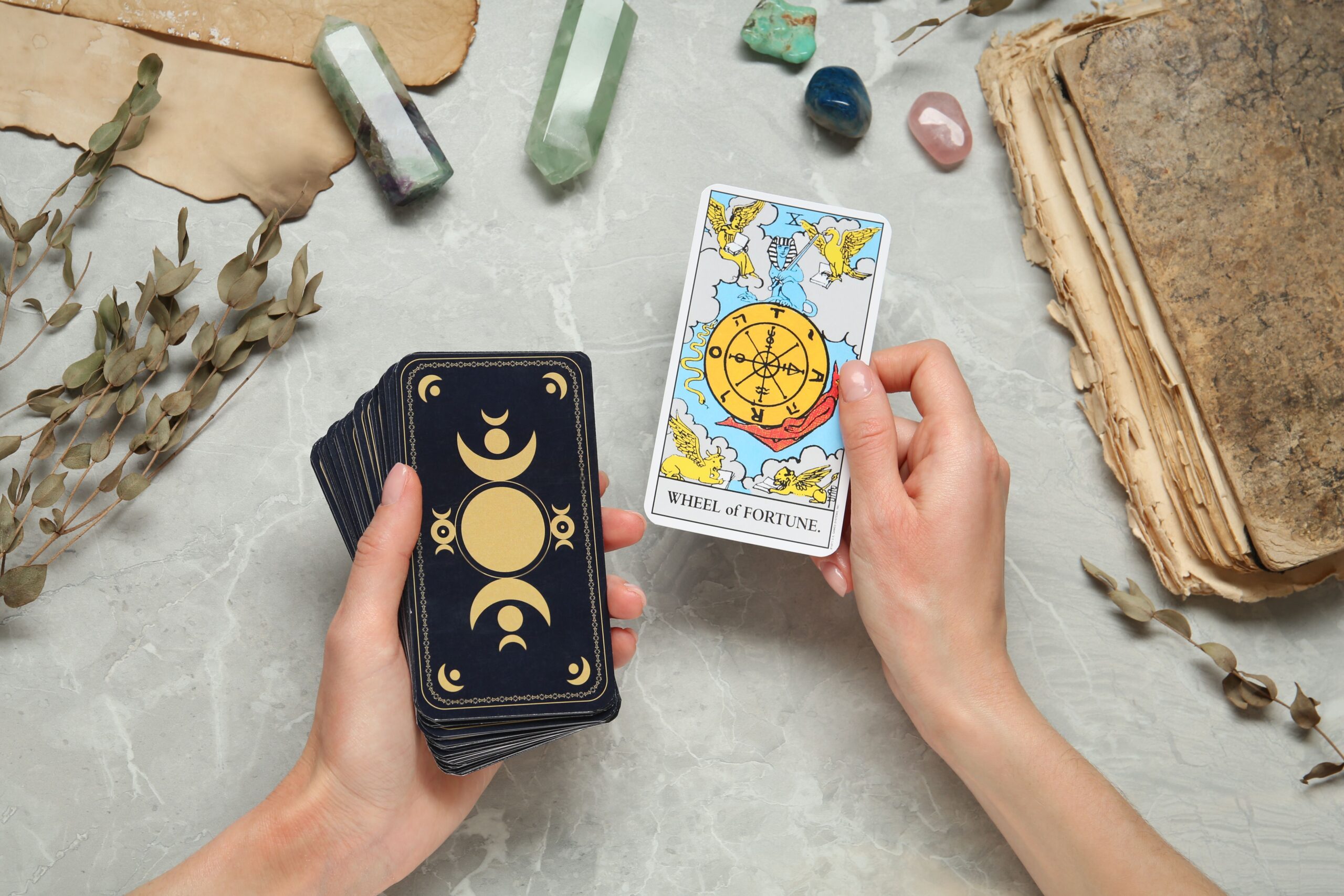
The transition from a secular card game to a tool for esoteric study did not happen until the late eighteenth century in Paris. French clergymen and occultists began publishing elaborate essays asserting that the imagery on the cards contained hidden wisdom from ancient civilizations. Because the Renaissance artwork heavily utilized classical Roman and Christian allegories, it was easy for imaginative writers to rephrase those symbols to fit their own mystical philosophies. This historical shift explains why the myth of ancient origins persists today. When you look at an iconic layout of cards, like the early twentieth-century illustrations by Pamela Colman Smith, you are looking at a beautiful synthesis of Renaissance art and turn-of-the-century symbolism, not a prehistoric artifact. Understanding this factual timeline helps remove the intimidating, unearned mystique that often alienates everyday observers.
The Misconception of the Death Card and Spooky Imagery
Perhaps no single element of tarot causes more immediate anxiety than the appearance of certain ominous-looking cards. Hollywood directors love to use the Death card, the Tower, or the Devil as a cheap narrative device to signal that a character is facing an imminent physical demise or an unavoidable tragedy. When a beginner sees a skeleton carrying a scythe or a building being struck by lightning, it is entirely natural for their survival instincts to kick in. This visceral reaction is the primary reason why many people refuse to let anyone lay out a deck of cards near them, fearing that looking at the image will somehow manifest a terrible curse or an untimely illness into their daily lives.
Professional tarot consultants and scholars handle these cards with a completely different mindset because they recognize that the imagery functions entirely on a metaphorical level. In the traditional structure of the deck, the Death card almost never refers to a physical ending of a human life. Instead, it symbolizes the natural, evolutionary process of absolute transformation, closure, and the clearing away of old habits to make room for new beginnings. Just as autumn requires the shedding of leaves so that a tree can survive the winter and bloom in the spring, the human experience requires us to let go of outgrown relationships, stagnant careers, or outdated mindsets. The discomfort associated with the card does not come from physical danger, but rather from the psychological resistance we naturally feel when forced to adapt to major life changes.
Similarly, other visually intense cards serve as psychological mirrors for common human struggles rather than literal threats. The Tower represents a sudden disruption of a fragile status quo, breaking down a false sense of security so that you can rebuild your life on a much more honest and sturdy foundation. The Devil card serves as a warning about unhealthy attachments, addictions, or codependency, reminding the observer that they often hold the keys to their own self-imposed emotional cages. When you stop viewing these illustrations as literal omens of doom, they transform into valuable diagnostic tools. They allow you to look at your personal challenges with objective clarity, helping you identify areas where you might be clinging to harmful patterns out of a simple fear of the unknown.
Demystifying the Gift Myth and Who Can Read Tarot
A deeply entrenched piece of folklore insists that you are strictly forbidden from purchasing your very first tarot deck. According to this specific myth, a deck must be given to you as a completely spontaneous gift by an experienced practitioner, or else the cards will lack the necessary spiritual energy to function accurately. A closely related misconception claims that you cannot learn to read the cards through study and practice alone, asserting instead that true proficiency requires an innate, inherited psychic gift. These ideas create an artificial, elitist barrier to entry, leaving many enthusiastic beginners waiting around indefinitely for a gift that may never arrive, or walking away entirely because they do not consider themselves mystically gifted.
The idea that a deck must be a gift likely originated in the nineteenth century within highly secretive esoteric societies. These groups used elaborate initiation rituals and strict rules to maintain exclusivity and control over who had access to their libraries. In the modern era, holding onto these restrictive rules serves no practical purpose other than generating unnecessary gatekeeping. Thousands of highly respected authors, artists, and analysts began their personal journeys by walking into a local bookstore or ordering a deck online simply because they were drawn to the artwork or the psychological utility of the symbols. The cards themselves are mass-produced items made of cardboard, paper, and commercial ink; they do not possess a hidden consciousness that activates only upon being wrapped in gift paper.
Furthermore, reading tarot is a skill that can be systematically learned by absolutely anyone willing to dedicate time to study and observation. It is highly comparable to learning a new spoken language or mastering an instrument. The seventy-eight cards form a visual alphabet that represents the complete spectrum of human experiences, emotions, and developmental stages. By studying the historical context of the symbols, understanding the numeric progressions, and practicing regular observation, you develop a sharp sense of pattern recognition and narrative literacy. You do not need to hear voices or predict weather patterns to read the cards effectively. True expertise comes from cultivating a disciplined mind, a capacity for deep empathy, and an ability to connect visual metaphors to real-world situations.
The True Boundaries of Fortune Telling Versus Introspection
A massive point of friction between traditional critics and modern practitioners involves the precise definition of what happens during a tarot session. The common assumption is that the cards operate as an absolute, unchangeable blueprint of the future, functioning as a form of deterministic fortune-telling. People frequently approach a reading expecting the cards to tell them the exact date they will meet a romantic partner, the precise lottery numbers to pick, or whether a specific business venture will succeed. When predictions inevitably fail to materialize exactly as described, critics quickly dismiss the entire practice as a fraudulent scam, while disappointed clients feel misled and disillusioned.
This conflict exists because viewing tarot as a rigid crystal ball completely misrepresents the fundamental mechanics of human free will and probability. The future is not a single, unyielding track waiting to be uncovered; it is a fluid web of possibilities shaped by your daily choices, external circumstances, and subconscious habits. Modern professional readers utilize the cards not to lock in a specific destiny, but rather to analyze the unseen dynamics of the present moment. The cards act as a visual storyboard that highlights your current motivations, hidden anxieties, and potential blind spots. By projecting your thoughts onto the archetypal imagery, you can see where your current trajectory is leading you, allowing you to make conscious adjustments if you dislike the destination.
Consider a practical example where an individual asks the cards if they will get a promotion at work. Instead of providing a binary yes or no answer, a well-handled reading might reveal cards indicating high external stress, a lack of clear communication with management, and an internal sense of burnout. This information does not seal the person’s fate; instead, it provides an actionable diagnosis. It shows that if they continue on their current path without addressing their communication issues, the promotion is highly unlikely. Armed with this realization, the individual can proactively schedule a meeting with their supervisor, change their work habits, and actively steer their career toward a much better outcome. This shifts the focus from passive waiting to empowered decision-making.
Addressing the Misconception of Dark Energies and Curses
For decades, certain cultural, societal, and religious groups have actively condemned tarot, labeling it as a dangerous tool designed to invite malicious forces, dark energies, or supernatural curses into a household. This perspective is frequently reinforced by horror films that depict characters playing with a deck of cards only to accidentally unleash a malevolent entity. These intense portrayals can leave people feeling genuinely terrified of even touching a card, associating the practice with spiritual danger or psychological harm.
When we strip away the cinematic exaggerations, we find that tarot cards possess no inherent spiritual energy, light or dark. A deck of cards is a completely inert tool, physically no different from a deck of ordinary playing cards used for poker or a box of flashcards used for studying biology. The cards do not contain spirits, they cannot cast spells, and they do not have the power to place a curse on anyone. The entire experience of a reading takes place within the minds of the human beings participating in the process. The symbols on the cards simply act as an external catalyst for internal reflection, allowing you to access memories, emotions, and insights that are already resting inside your subconscious mind.
The fear surrounding tarot often stems from a fundamental discomfort with the unknown and a historical tendency to pathologize practices that fall outside mainstream cultural norms. When people do not understand how a tool works, it is historically common to attribute its effects to supernatural or malevolent origins. In reality, modern psychologists and therapists frequently use tarot or similar associative card decks in clinical settings as a creative form of the famous Rorschach inkblot test. By asking a patient to describe what they see happening in the artwork of a card, a therapist can bypass intellectual defenses and help the patient talk openly about deep-seated anxieties, family conflicts, or unexpressed grief. Demystifying this process allows individuals to engage with the cards as a safe, highly constructive medium for personal growth and mental clarity.
Quick Reference Summary of Tarot Facts and Fiction
The following table provides a quick, clear distillation of the most widespread myths discussed in this guide, contrasted directly with established historical and practical facts.
Frequently Asked Questions
Can reading tarot cards accurately predict the exact time and date of future life events?
Tarot cards are completely incapable of providing fixed calendar dates or absolute, immutable predictions for future events. The future is not a stagnant script that has already been written; rather, it is a dynamic structure constantly shaped by human choices, random variables, and environmental factors. Instead of acting as a rigid crystal ball, tarot functions as an analytical tool that examines the psychological and behavioral patterns of your present situation. A reading can show you the probable trajectory of your current habits and decisions, giving you the clarity needed to either maintain your direction or make conscious adjustments to alter your path entirely.
Is it necessary to memorize all seventy-eight card meanings before you can start doing readings?
You do not need to perfectly memorize every single interpretation before you begin practicing with a deck. While understanding the traditional definitions is incredibly helpful, trying to force rote memorization often leads to stiff, robotic readings that feel completely disconnected from real life. A much more effective approach is to learn the overarching structure of the deck, such as the four elements of the minor suits and the sequential journey of the major trump cards. By pairing this structural layout with open visual observation and personal intuition, you can naturally interpret the stories unfolding in the artwork as you practice.
Why do different tarot readers give entirely different interpretations for the exact same cards?
The variation in interpretations occurs because tarot functions as a highly sophisticated system of visual metaphors rather than a rigid code with single-word translations. Each card contains multiple layers of symbols, colors, numbers, and historical allegories that can highlight completely different aspects of human experience depending on the context of the question. An experienced reader adapts their interpretation to fit the unique situation of the person asking the question, blending historical knowledge with empathetic observation. This flexible, nuanced approach is precisely what makes the cards so valuable for personalized introspection and creative problem-solving.
Can using tarot cards conflict with an individual’s personal religious beliefs or spiritual practices?
Because tarot cards are completely inert tools made of paper and ink, they do not inherently possess or impose any specific religious doctrine or spiritual belief system. How you choose to frame and utilize the cards is entirely up to your personal comfort level and worldview. Many people choose to look at tarot through a strictly secular, psychological lens, treating the imagery as an artistic variant of a standard personality test or a creative writing prompt. Because the core purpose of the cards is simply to encourage deep self-reflection, mindfulness, and honesty, the practice can easily coexist with a wide variety of personal philosophies.
What is the primary difference between a standard deck of playing cards and a tarot deck?
The primary difference lies within the structural layout and the depth of the illustrative theme. A standard modern deck of playing cards contains fifty-two cards divided across four suits, which actually evolved directly from early European card designs. A tarot deck expands upon this foundation, containing seventy-eight cards in total. It features four expanded suits known as the Minor Arcana, alongside a unique set of twenty-two standalone symbolic cards known as the Major Arcana. These major cards depict universal human archetypes and developmental milestones, such as the Empress, the Hermit, and the Sun, providing a much broader canvas for psychological storytelling.
Does reversals or reading upside-down cards mean something inherently negative or bad?
When a card appears upside down in a layout, it is known as a reversal, and it does not signify a terrible omen or a negative outcome. In modern practical reading methods, a reversed card simply indicates that the energy of that specific card is being blocked, internalized, or experienced in an extreme manner. For example, a card that traditionally represents external celebration might suggest a need for private, quiet gratitude when flipped upside down. Many experienced practitioners choose to completely ignore reversals altogether, keeping all their cards right-side up and relying entirely on the surrounding context of the layout to discover the deeper meaning.
Emphasizing Personal Empowerment and Clarity
When we take the time to strip away the centuries of theatrical myth, sensationalized media tropes, and unnecessary gatekeeping, tarot reveals itself to be an remarkably elegant and grounded invention. It is not an ancient, dangerous instrument of dark forces, nor is it a rigid script designed to rob you of your personal agency. At its absolute core, tarot is a brilliant system of visual psychology—a collection of seventy-eight artistic mirrors that reflect the shared challenges, triumphs, and transitions of the human experience. The true magic of the cards does not reside within the cardboard itself, but rather within the focused awareness, deep honesty, and meaningful conversations that the imagery inspires.
Approaching the deck with a factual understanding of its Renaissance origins and its metaphorical nature allows you to reclaim the practice as a safe, highly accessible space for personal growth. Whether you choose to use the cards as a daily mindfulness exercise, a tool for breaking through creative writer’s block, or a medium for deep introspection with friends, you remain the ultimate author of your own destiny. By leaving behind the anxiety of old misconceptions, you can step forward with confidence, using these historic symbols to cultivate greater self-awareness, master your current choices, and deliberately shape a stable, purposeful future.
References
-
The International Playing-Card Society (IPCS). An authoritative international organization dedicated to the historical research, study, and documentation of playing cards and the origins of tarot regional variants.
-
Dummett, Michael. The Game of Tarot: From Ferrara to Marshall McLuhan. A seminal, peer-reviewed academic publication detailing the comprehensive history of tarot as a 15th-century European parlor game.
-
Decker, Ronald, and Depaulis, Thierry. A Wicked Pack of Cards: The Origins of the Occult Tarot. A thoroughly researched historical analysis tracking the late 18th-century shift of tarot from secular gaming to esoteric mysticism.
-
The British Museum Department of Prints and Drawings. Official historical documentation and curatorial archives detailing early Renaissance Italian woodcut cards and Tarocchi card fragments.
-
Greer, Mary K. Tarot for Your Self: A Workbook for Personal Transformation. A foundational industry publication exploring the psychological, non-divinatory application of tarot imagery for self-reflection and personal analysis.