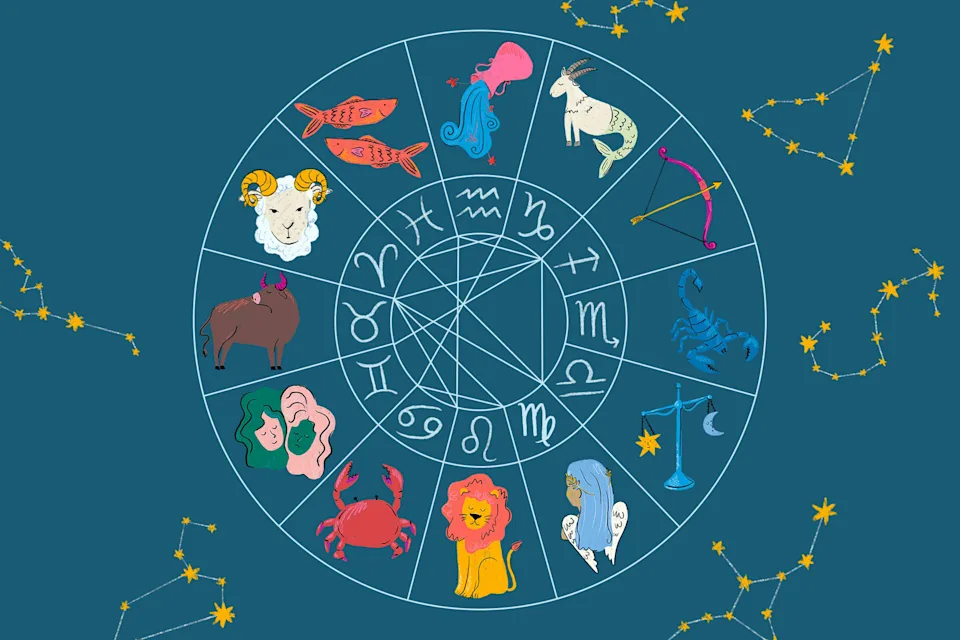
In the study of astrology, the Rising sign—also known as the Ascendant—is one of the most pivotal components of your birth chart. While your Sun sign represents your core identity and your Moon sign reflects your inner emotional world, the Rising sign describes the mask you wear and the lens through which you experience the world. It is the sign that was physically rising over the eastern horizon at the exact moment of your birth, setting the stage for how you project yourself into the public sphere. For many, the Rising sign is the first thing people notice, acting as an energetic introduction that dictates how you interact with new environments and how others perceive your initial presence.
Understanding the function of the Ascendant is crucial for anyone looking to move beyond basic horoscopes. Because it marks the beginning of the first house in your birth chart, the Rising sign acts as the anchor for your entire life path, determining where the rest of your houses—and therefore your planetary placements—fall. If you imagine your life as a theater production, your Sun sign is the lead character, but your Rising sign is the stage, the lighting, and the setting that defines the context of the story. By grasping the energy of your Rising sign, you gain insight into why you might feel naturally comfortable in certain social situations while feeling guarded or out of place in others, providing a clear explanation for your automatic behaviors.
Many beginners find it confusing that their outward personality, governed by the Rising sign, sometimes feels completely different from their internal personality, governed by the Sun or Moon. This is entirely natural. Your Ascendant is the interface between your internal world and the external environment. It is the filter through which you process information before you even consciously decide how to respond. By learning to identify this sign, you stop questioning why your public behavior doesn’t always align with your internal feelings and instead begin to see it as a functional tool for navigating life. This self-awareness is the foundation for creating more authentic interactions, as you learn to consciously manage how you present your internal truths to the outside world.
The Role of the Rising Sign in Social Dynamics
The Rising sign is fundamentally about your first approach to life and the energy you project into social settings. If your Ascendant is in a fire sign, for instance, you likely meet new people and situations with enthusiasm, warmth, and a need for direct action. People may perceive you as confident and perhaps even a bit impulsive. Conversely, if your Rising sign is in an earth sign, you might present yourself as composed, observant, and grounded, leading others to view you as someone who is dependable and steady. This “first impression” is not just about your appearance; it encompasses your body language, your tone of voice, and your instinctual reaction to new stimuli.
This influence extends into how you handle conflict and initiate change. Because the Ascendant represents your entry point into experience, it dictates the speed at which you make decisions and the intensity with which you pursue your goals. A person with an air sign rising might approach a challenge by brainstorming, analyzing, and seeking out conversation, while someone with a water sign rising might prioritize their intuition, emotional comfort, and the security of their environment. By recognizing that these traits are tied to your Rising sign, you can identify why you gravitate toward specific social roles. This knowledge allows you to consciously step into different personas when the situation demands it, rather than feeling trapped by your own natural instincts.
Connecting the Rising Sign to Your Life Path
Because the Ascendant dictates the placement of the houses, it serves as the ultimate map of your life’s priorities. The twelve houses represent different areas of human experience, such as career, relationships, family, and health. When you know your Rising sign, you know which house is “ruled” by which sign, which tells you how you are likely to experience those life areas. For example, if you have an Aries rising, your tenth house—the house of career and public reputation—will be ruled by Capricorn, the sign of structure and ambition. This suggests that your approach to your professional life is disciplined, patient, and goal-oriented, even if your Sun sign suggests a more relaxed or creative nature.
This structural mapping is what makes the birth chart so personalized. It explains the specific “flavor” of your experiences in different areas of life, providing a deeper understanding of why certain life lessons feel more intense than others. You might find that you are naturally talented in areas where your planets are placed, but your Rising sign provides the framework that organizes those talents into a coherent structure. By examining which houses are occupied by certain signs, you can start to see where your life’s energy is most concentrated. This helps you identify where you should focus your efforts and where you might need to lean into the strengths of your specific house placements to find the most success and satisfaction.
Moving Toward Authentic Self-Expression
The ultimate goal of studying your Rising sign is to foster a more integrated and authentic version of yourself. Many people feel as though they are playing a role that isn’t truly theirs, especially if their Rising sign differs significantly from their Sun sign. However, the Ascendant is not a “fake” personality; it is the gateway through which your inner light reaches the world. By embracing your Rising sign as a deliberate tool for communication and interaction, you stop viewing it as a contradiction and start viewing it as a complement to your core identity. This shift allows you to show up more intentionally in your personal and professional life, using your natural social energy to serve your ultimate purpose.
To begin this work, observe your own reactions to new people and situations over a period of time. Notice the patterns of behavior you default to before you have a chance to think or filter your responses. This automatic set of behaviors is your Rising sign in action. When you catch yourself acting in a certain way, pause and ask yourself if this behavior aligns with your values or if it is simply a habit of your Ascendant. Over time, this practice allows you to refine your social presence, turning your Rising sign into an asset that helps you connect with others, navigate difficult spaces, and project the image that truly represents the person you are on the inside. This conscious approach leads to more meaningful connections and a deeper sense of internal alignment.
| Feature | Primary Function | Impact on You |
| Initial Approach | How you start new tasks | Dictates your speed and energy level |
| First Impression | How others perceive you | Defines your social mask or image |
| Life Structure | House distribution | Sets the stage for your life’s priorities |
| Social Style | Interaction patterns | Explains your default way of engaging |
| Growth Path | Life’s unfolding | Provides the context for your lessons |
| Personal Filter | Mental processing | How you screen the world around you |
Frequently Asked Questions
Does the Rising sign become more important as I get older?
Many astrologers suggest that as we move into our thirties and beyond, we tend to integrate the energies of our Rising sign more consciously. While it is always present, the younger years are often defined by the Sun sign’s exploration. As we mature, we often find ourselves becoming more comfortable with the social role or the way of engaging with the world that our Rising sign provides. It becomes a more intentional tool for expression rather than just a reflexive habit of behavior.
Why is my Rising sign sometimes called the “mask” I wear?
It is called a mask because it is the interface between the world and your inner self. Just as a mask is the first thing people see when looking at someone, your Rising sign is what people encounter before they get to know your deeper Sun and Moon traits. It is not necessarily a deceptive mask, but rather a protective or functional one. It helps you navigate the environment and decide which parts of your inner truth are ready to be shared with the public.
Can my Rising sign change over time?
Your Rising sign is determined by the specific time and location of your birth, so it is a fixed point in your chart. It does not change. However, your relationship to that energy is dynamic. You might learn to express the traits of your Rising sign in healthier, more productive ways as you grow in self-awareness. While the sign itself remains the same, your mastery over how you utilize that energy can evolve significantly throughout your life, especially as you learn to balance it with your other planetary placements.
How does my Rising sign influence my physical appearance?
Traditional astrology often suggests that the Rising sign can influence physical characteristics, such as stature, bone structure, or common mannerisms. While there is no universal scientific proof for this, many people find that the archetypal energy of their Rising sign is reflected in how they move or carry themselves. It is more about the “vibe” or the impression of vitality you project rather than just physical features. It is best to view this as a symbolic expression rather than a literal biological prediction.
If I have the same Rising sign as a friend, why are we so different?
Even with the same Rising sign, your charts differ in every other aspect: your Sun sign, Moon sign, house placements, and planetary aspects are all unique. Your friend’s chart has a different “map” of planets and houses, which colors the expression of their Rising sign. Think of the Rising sign as the shared foundation of a house, but the interior layout, the decoration, and the inhabitants are entirely unique to each person. Your specific combination of placements ensures that your manifestation of that sign is singular.
Where can I find my accurate Rising sign if I am unsure?
To find your accurate Rising sign, you need your exact birth time, birth date, and location. There are many reputable, free online birth chart calculators that can generate this information for you. Because the sign changes roughly every two hours, precision is vital. If you find your chart on a calculator, ensure the Ascendant (often abbreviated as ASC) is clearly marked. If you are still uncertain, double-check your birth certificate for the time, as even small errors can lead to an incorrect calculation.
Conclusion
The Rising sign serves as a vital bridge between your internal world and the external reality, providing you with a framework for how you engage with life. By acknowledging the power of your Ascendant, you move toward a deeper understanding of your social patterns, your initial reactions, and the structure of your life’s journey. This knowledge is not intended to place you in a box, but rather to give you the clarity needed to step out of the boxes you may have unconsciously created for yourself. When you understand the lens through which you see the world, you gain the power to adjust your focus, ensuring that your outward expression is always in harmony with your internal truth.
Take the time to observe how your Rising sign manifests in your daily interactions. Use this guide as a starting point for self-reflection and continue to explore how your specific planetary placements interact with the houses your Ascendant has set in motion. Astrology is a journey of discovery, and your Rising sign is the perfect entry point. Embrace your unique way of engaging with the world, honor the first impression you make, and use the wisdom of your chart to live more intentionally, confidently, and authentically in every environment you enter.
References
-
NASA Solar System Exploration: Astronomical context for planetary movements and the Earth’s rotation. https://solarsystem.nasa.gov
-
The American Federation of Astrologers: Resources for historical and technical astrological standards and terminology. https://astrologers.com
-
Project Hindsight: Scholarly archives on traditional and Hellenistic astrological techniques, including the use of the Ascendant. https://www.projecthindsight.com