Embarking on the study of astrology often feels like learning a foreign language. You are quickly met with a barrage of technical jargon that can make even the most interested beginner feel lost. Understanding these terms is essential because they form the vocabulary of the craft, allowing you to move beyond basic concepts and into a deeper, more nuanced interpretation of your birth chart. By breaking down these complex terms into plain English, you gain the clarity needed to unlock the hidden wisdom within your chart, turning an intimidating collection of symbols into a coherent map of your own personal narrative and potential.
The primary reason for learning this vocabulary is to bridge the gap between abstract cosmic concepts and your actual life experience. Terms like “aspects,” “transits,” and “houses” are not just intellectual labels; they represent real-world psychological and energetic forces that influence how you relate to yourself and others. When you demystify this language, you shift your relationship with astrology from a passive consumption of information to an active exploration of your own psyche. This shift is vital for building the E-E-A-T foundation—Experience, Expertise, Authoritativeness, and Trustworthiness—needed to truly benefit from astrological insights, as it allows you to verify and apply what you learn with confidence and accuracy.
Developing this fluency does not require a degree in ancient history or complex mathematics. It simply requires a structured approach to learning the core pillars of the practice. As you familiarize yourself with these definitions, keep in mind that every term serves a specific function in your chart, describing either the “who,” “what,” “how,” or “where” of your personality. This guide is designed to strip away the unnecessary complexity, providing you with clear, actionable definitions that you can apply immediately to your own chart. By mastering these basics, you establish a reliable foundation that will serve you throughout your entire journey into the vast and fascinating world of astrological study.
Decoding the Basic Building Blocks
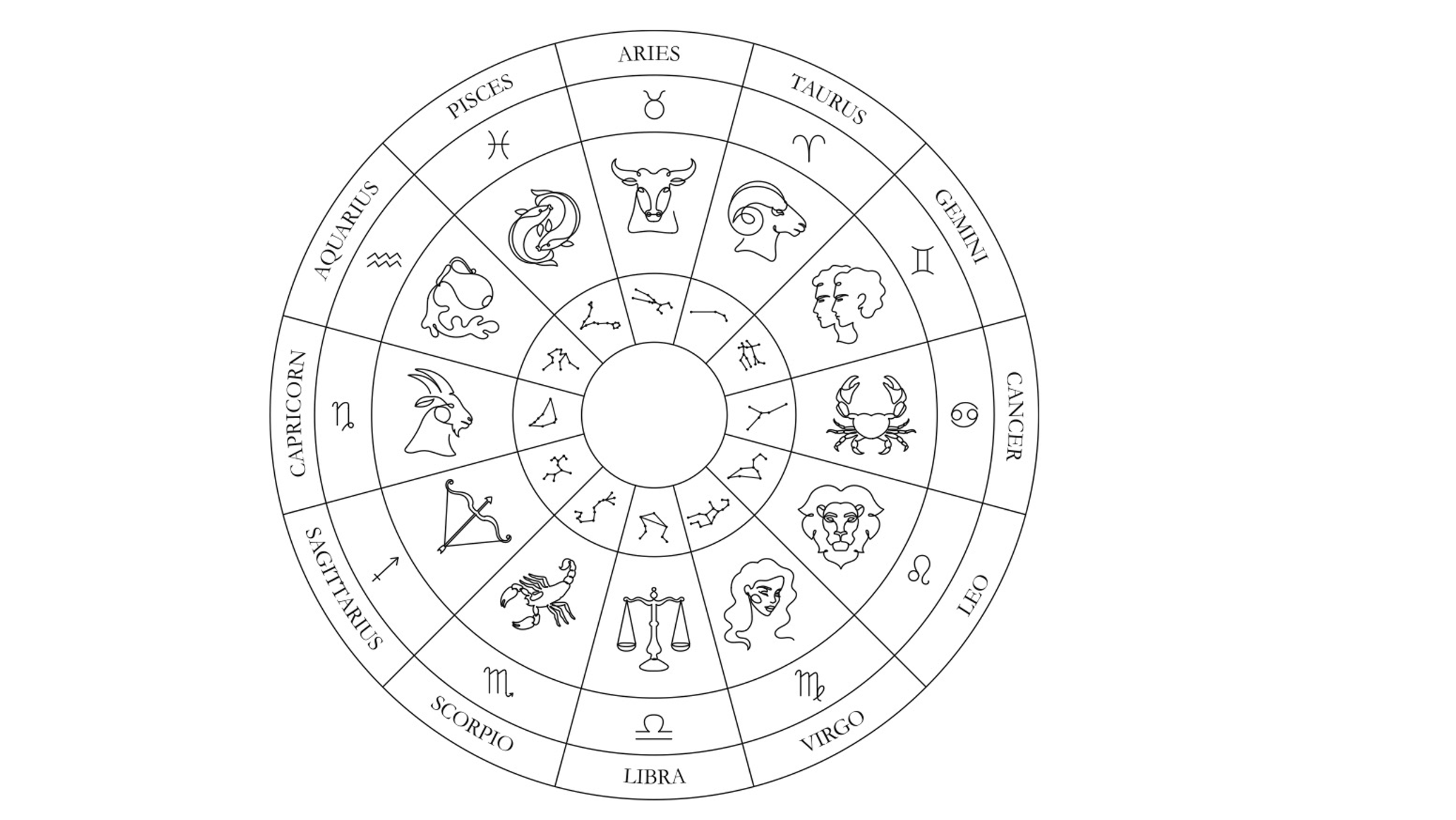
At the foundation of every chart are three main components: the planets, the signs, and the houses. Planets are the “actors” in your chart, representing the core drives or psychological functions you possess, such as your drive for success, your need for love, or your way of communicating. Each planet has a specific archetype it embodies, and knowing what each one represents is the first step in reading your own narrative. Zodiac signs are the “costumes” or “styles” that these planets wear. If a planet is the actor, the sign tells you how that actor performs their role—whether they are bold and direct, or quiet and reflective.
The houses are the final piece of this foundational triad, acting as the “setting” or the specific area of life where the action takes place. There are twelve houses, and they map out the diverse experiences of your human existence, from your financial life and career to your partnerships and home environment. When you combine these three—a planet in a specific sign, located in a specific house—you get a precise, three-dimensional description of a facet of your life. Understanding this triad is the most important step in moving past the superficial level of astrology, allowing you to see how your different traits and life areas are interconnected within the larger structure of your chart.
Understanding Aspects and Transits
Once you grasp the basics, you will encounter the terms “aspects” and “transits,” which describe how the energy of your chart moves and interacts. Aspects are the geometric angles that form between the planets in your birth chart. They indicate whether the planetary energies are working in harmony with each other or if they are creating tension. Think of aspects as the “relationships” between the different parts of your personality. A harmonious aspect suggests that two parts of you naturally support each other, while a challenging aspect suggests that these parts require conscious effort to balance. Recognizing these aspects helps you identify your internal strengths and the specific areas where you face your greatest opportunities for growth.
Transits, on the other hand, refer to the movement of planets in the current sky as they pass over the positions of the planets in your birth chart. This is how astrologers understand the timing of life events and personal cycles. When a transit planet hits a significant point in your chart, it acts as a trigger, bringing up the themes associated with that house or planetary placement. Understanding transits allows you to work with the natural rhythms of life rather than fighting against them. It provides a helpful context for why certain years feel particularly focused on growth, transition, or challenge, helping you navigate your path with more patience, intentionality, and a clearer perspective on the shifting energies in your world.
Defining Essential Astrological Concepts
| Term | Plain English Definition | Significance |
| Birth Chart | A map of the sky at your moment of birth. | Your unique cosmic blueprint and identity. |
| Planet | The core psychological function or drive. | Represents “what” is happening in your life. |
| Zodiac Sign | The quality or style of an energy. | Represents “how” you express your traits. |
| House | The specific domain of human experience. | Represents “where” the energy is focused. |
| Aspect | The angle between two planets. | Shows how your traits work together or clash. |
| Transit | Movement of current planets over your chart. | Describes cycles of time and personal growth. |
| Retrograde | A planet appearing to move backward. | A period of review, reflection, and internal work. |
| Cusp | The line marking the start of a house. | The transition point between life domains. |
Frequently Asked Questions
What does it mean when a planet is in retrograde?
When a planet is in retrograde, it is not actually moving backward; it is an optical illusion caused by the Earth’s speed relative to the other planet. In astrology, this period is viewed as a time to slow down, review, and reflect on the themes associated with that planet. It is generally advised to be more careful with communication, contracts, or starting brand-new major projects during this time, as things often require more attention, double-checking, or re-evaluation before they can move forward successfully.
What is a “cusp” and does it mean I am two signs at once?
A cusp is the specific point where one house transitions into another, or where one sign meets the next. You are not two signs at once; you belong to the sign that the planet was in at the exact moment of your birth. The concept of being a “cusp baby” is popular, but it is technically a misunderstanding of how the degrees work. Your placement is always precise. If you feel like a mix of two signs, it is likely because you have other planets or your Rising sign in the adjacent sign.
Are some planets more important than others in my chart?
Every planet has a role, but the personal planets—the Sun, Moon, Mercury, Venus, and Mars—are generally considered the most influential in your daily experience. They describe your identity, emotions, thoughts, values, and drive. The outer planets—Jupiter, Saturn, Uranus, Neptune, and Pluto—operate on a much slower, generational level and usually represent broader life themes, societal shifts, and long-term evolutionary growth. All are important, but they work on different scales of time and influence within your individual chart.
How do I know if an aspect is “good” or “bad”?
Avoid labeling aspects as strictly good or bad. Harmonious aspects create ease, but they can sometimes lead to stagnation if you never have to work for what you want. Challenging aspects create tension, but that tension is exactly what fuels ambition, creativity, and the drive to improve. Every aspect is an opportunity to learn something about yourself. A “bad” aspect is really just a call to develop a specific part of your personality that is currently underdeveloped or misaligned with your goals.
Why does my Rising sign determine my house structure?
The Rising sign is the sign that was crossing the eastern horizon at the moment you were born, and it marks the exact degree of your first house. Because the houses are calculated relative to this point, changing the time or location of your birth changes the entire orientation of the chart. The Rising sign dictates where the house boundaries fall, which is why having an accurate birth time is absolutely essential for an accurate reading of your house placements and your life’s specific domains.
What is the difference between a “sign” and a “constellation”?
This is a common point of confusion. In modern Western astrology, signs are twelve equal 30-degree segments of the zodiac wheel based on the seasons and the position of the Sun. Constellations are the actual groups of stars in the sky. Because of the precession of the equinoxes, the signs and the constellations are no longer perfectly aligned in the same physical space. Western astrology uses the seasonal, symbolic signs, while the constellations are an astronomical reality that does not factor into this specific system.
Conclusion
Mastering the basic vocabulary of astrology is the essential first step toward claiming ownership of your own cosmic map. By learning to define and recognize these core terms, you transition from being a passive reader of horoscopes to an active interpreter of your own potential. Each planet, sign, house, and aspect adds a layer of depth to your understanding, helping you to see the interconnected nature of your drives, challenges, and strengths. This clarity not only enriches your personal practice but also builds the confidence to apply astrological wisdom in a grounded, practical, and highly effective way.
As you continue your studies, remember that this language is meant to be a tool for empowerment. Do not worry about memorizing every detail immediately; focus on the concepts that resonate most with your lived experience. Use these terms to organize your observations and to reflect on your personal journey. The more you work with these foundational building blocks, the more natural and intuitive the process of reading your chart will become. Stay curious, keep exploring, and enjoy the profound process of uncovering the rich and unique story that is written in your own birth chart.
References
-
NASA Solar System Exploration: Provides the astronomical context and scientific definitions for the planets. https://solarsystem.nasa.gov
-
The American Federation of Astrologers: A comprehensive resource for established astrological terminology and historical practice standards. https://astrologers.com
-
National Council for Geocosmic Research (NCGR): A professional body dedicated to maintaining standards and providing educational resources for astrological studies. https://geocosmic.org