
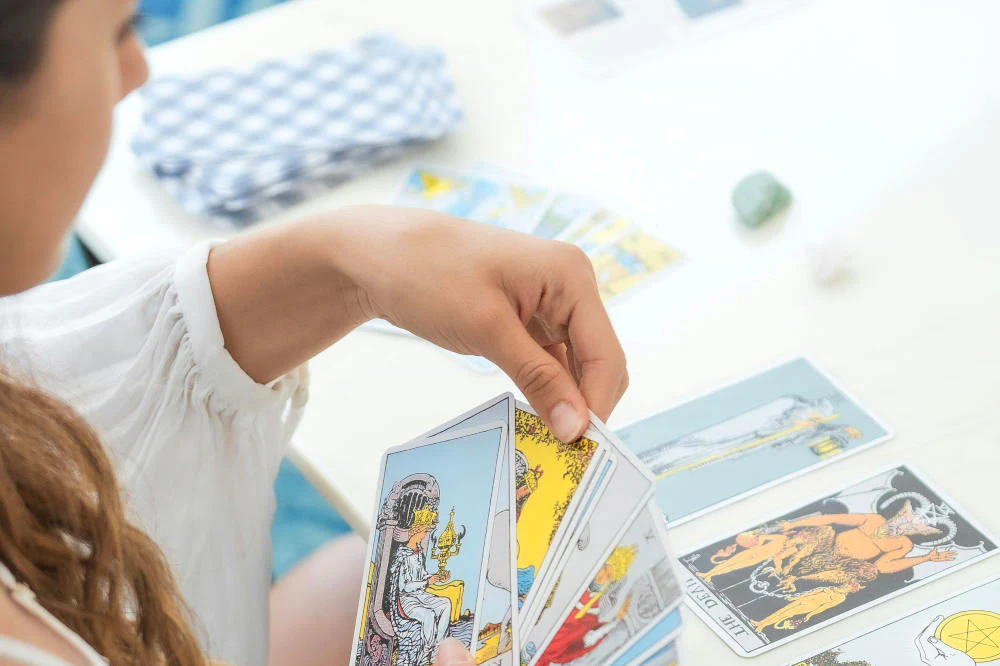
Unlocking the language of tarot is a deeply rewarding journey that bridges conscious logic with intuitive self-reflection. When you first sit down with a seventy-eight-card deck, the rich colors and mysterious archetypes promise profound insights into your personal growth, relationships, and daily choices. However, the initial excitement of learning this ancient craft frequently leads to a predictable set of analytical missteps. Many enthusiastic beginners find themselves frustrated or anxious after a few sessions, not because the cards are inherently combative, but because their approach relies on a few easily corrected habits. By recognizing these foundational pitfalls early on, you can transition from an overwhelmed novice to a confident, fluid reader who treats the deck as an empowering mirror rather than a source of stress.
The Pitfall of Treating the Guidebook as an Absolute Dictator
The most common hurdle a new reader faces is the habit of turning their reading practice into an exhausting open-book exam. It is entirely natural to look up definitions when you are unfamiliar with the imagery, but pausing after every single flip to read an entire block of text completely severs your intuitive flow. When you rely solely on a book to tell you what a card means in the exact moment you look at it, your brain stays locked in an analytical memorization mode. This academic tension makes it difficult to notice what the artwork is triggering in your subconscious mind, effectively muting your unique perspective in favor of someone else’s generic interpretation.
To break free from this mechanical habit, try committing to a visual-first approach whenever you lay down a spread. Spend at least two minutes silently observing the characters, the dominant colors, the weather conditions, and the body language depicted on the cardboard before you even touch your companion book. Ask yourself how the environment in the illustration feels, and note any immediate emotional responses that bubble up to the surface. Once you have established a personal, initial baseline, you can open your guidebook to refine your understanding and layer in historical context, transforming the text into a helpful advisor rather than a rigid rulebook.
Formulating Loaded Vague or Disempowering Questions
Another frequent misstep occurs long before the cards are shuffled, rooted in the way a practitioner frames their inquiry. Beginners often approach the deck with passive, fortune-telling questions that strip away their personal agency, such as asking if they will win a specific lottery or when a particular person will text them back. Alternatively, they might ask incredibly broad, vague questions that give the cards no context, leading to a confusing spread that is impossible to decode accurately. When you ask a question that implies you have no control over your future, any challenging card pulled can easily trigger a wave of unnecessary anxiety or fatalistic dread.
The solution to this problem lies in shifting your phrasing to favor open-ended, empowerment-focused inquiries. Instead of asking if a specific venture will fail or succeed, reframe the question to explore what steps you can take to maximize your chances of success, or what hidden dynamics you need to address within yourself. Using active vocabulary like what can I learn, how can I navigate, and where should I focus my energy shifts the power back into your hands. This stylistic change ensures that the resulting reading delivers practical, actionable advice that helps you make conscious choices rather than leaving you waiting for destiny to happen to you.
Conducting Readings During High Emotional Turbulence
It is incredibly tempting to reach for your tarot deck the exact moment a personal crisis hits, such as right after a heated argument with a partner or during a sudden wave of intense career panic. While the deck can absolutely serve as a tool for emotional processing, shuffling the cards while your nervous system is in a state of high alarm usually backfires. In these deeply charged moments, your objectivity vanishes, causing you to project your worst fears or desperate wishes directly onto the visual symbols. A neutral or slightly challenging card can easily be misread as a catastrophic omen, while a positive card might be twisted into a false sense of absolute certainty, both of which distort the true reality of the situation.
Before you approach your reading space during a stressful event, establish a non-negotiable grounding ritual to bring your emotional baseline back to center. Take a few deep, rhythmic breaths, wash your hands with cool water to reset your sensory perception, or sit in silence for five minutes until the initial wave of adrenaline subsides. If you find that your mind is still racing with catastrophic thoughts, it is always wiser to step away from the deck entirely and wait twenty-four hours before seeking clarity. Approaching the cards with a calm, curious disposition ensures that you can receive their messages with an open heart rather than treating them as an echo chamber for temporary panic.
Overcomplicating Spreads Before Mastering the Core Architecture
Many new practitioners are drawn to massive, intricate card layouts like the classic ten-card Celtic Cross because they look incredibly professional and visually impressive on a reading table. Unfortunately, trying to manage an advanced spread before you thoroughly understand the individual identities of the seventy-eight cards is a recipe for swift mental burnout. Each additional position in a large layout introduces complex relational variables, requiring you to simultaneously calculate the card’s baseline meaning, its positional modifier, its elemental dignity, and its connection to neighboring cards. This overwhelming influx of visual data usually causes a beginner’s mind to freeze up completely, turning what should be a meaningful exploration into a chaotic puzzle.
The most effective way to build sustainable confidence is to strictly limit your practice to single-card pulls and basic two- or three-card layouts during your first few months of development. A simple three-card layout tracking a progression like past, present, and future, or situation, obstacle, and advice, offers more than enough depth to generate a profound reading without causing intellectual fatigue. Mastering these minimal frameworks teaches you how to extract maximum narrative value from a small amount of data. Once you can effortlessly read a three-card layout without breaking your concentration or constantly flipping pages, you will possess the foundational stamina required to scale up to larger, more intricate geometric spreads.
Analyzing Cards in Isolation Instead of Creating a Cohesive Narrative
A very common mistake that separates advanced readers from beginners is the tendency to interpret a spread as a collection of isolated islands rather than a single, continuous sentence. When a novice looks at a three-card spread, they often read the first card, completely clear their mental slate, and then read the second card as an entirely independent concept. This disjointed technique completely misses the overarching story that the deck is trying to build through visual intersections, matching color transitions, and the directional movements of the illustrated characters. If you treat every card like an isolated definition, your readings will always feel choppy, contradictory, and devoid of nuanced depth.
To train your eyes to see the bigger picture, look for the visual threads that connect the cards across the layout like characters in a graphic novel. Notice where the figures in the illustrations are looking; if a character in the first card is facing away from a crisis depicted in the second card, that visual relationship speaks volumes about avoidance or ignorance in your real life. Look for recurring suits, numerical patterns, or dominant color schemes that sweep across the table, as a sudden abundance of blue cups indicates an emotional undercurrent, while a row of sharp swords highlights intellectual tension. Synthesizing these elements into a fluid story turns your tarot sessions into an authentic, deeply resonant dialogue.
Frequently Asked Questions
What should I do if a reading presents me with entirely contradictory meanings that make no logical sense?
When a spread looks completely contradictory, it usually means you are experiencing an internal conflict between different areas of your life, such as a logical desire for stability clashing with an emotional urge for sudden adventure. Look closely at the suits involved to determine which parts of your psyche are competing for attention, as a clash between swords and cups highlights a classic battle between your head and your heart. Instead of trying to force the cards to match perfectly, accept the contradiction as an accurate reflection of your complex inner state and ask how you can find a healthy compromise between those opposing forces.
Is it normal to feel completely disconnected from a deck that everyone else highly recommends?
It is entirely normal to feel zero intuitive chemistry with a popular or universally praised deck, and you should never force yourself to work with artwork that leaves you feeling cold or uninspired. Tarot is a deeply personal, visual language, and a style that triggers profound realizations for one reader might feel entirely flat or visually noisy to you. Trust your aesthetic instincts over internet trends, and focus on finding a deck whose line work, color palette, and character expressions speak directly to your unique sensibility, even if it happens to be a lesser-known independent release.
How often can I read on the exact same topic without ruining the accuracy of the cards?
You should avoid reading on the exact same topic more than once within a single lunar cycle or until the real-world circumstances surrounding your situation have significantly shifted. Asking the same question repeatedly over a few days is usually driven by a desire to get a specific answer, which only creates a muddy, confusing mess of cards that reflects your anxiety rather than providing clear guidance. Trust the advice delivered in your initial layout, give yourself time to integrate the lessons, and allow life to unfold naturally before you look to the deck for a status update.
Wrap-Up
Mastering the art of tarot reading is an evolutionary process that requires equal parts patience, observation, and structural discipline. By stepping away from the rigidity of guidebooks, framing empoweringly clear questions, and keeping your layouts simple, you remove the artificial friction that causes so many new students to quit. Remember that the cards are not a punitive force waiting to catch you making a mistake; they are highly adaptable tools designed to help you organize your thoughts and tap into your inner wisdom. Treat your early missteps as natural, valuable milestones in your education rather than proof of a lack of intuitive talent. As you continue to sit with your deck in a calm, centered frame of mind, the individual symbols will naturally begin to weave themselves into a cohesive, beautifully articulate language that brings lasting clarity, mindfulness, and balance to your daily life.