In the world of astrology, the terms “birth chart” and “horoscope” are frequently used interchangeably by the public, yet they represent two fundamentally different tools. A birth chart is a complex, static map of the sky at the exact moment of your birth, acting as a personal blueprint of your identity. In contrast, a horoscope—particularly the generic versions found in magazines and apps—is a transient, generalized forecast based on a singular planetary movement. Understanding the distinction between these two is essential for anyone wanting to move beyond superficial surface-level astrology into a more profound, accurate, and self-empowering practice.
The difference in their utility is stark. Your birth chart is a fixed record of the cosmic “data” that influenced your entry into the world. It accounts for every planet’s placement, the twelve houses of experience, and the intricate geometric aspects between those points, providing a detailed description of your unique psychological makeup. A horoscope, by contrast, typically focuses only on your Sun sign and offers a thematic summary of what that sign might experience during a specific day, week, or month. Relying on a horoscope to understand your life is akin to reading a weather forecast for your entire country when you only need to know the temperature in your specific backyard; it lacks the granular detail and personal context required for meaningful insight.
Why this distinction matters is a matter of agency and accuracy. When you rely solely on daily horoscopes, you are essentially looking for an external authority to tell you how your day will go, which can lead to a sense of fatalism or unnecessary anxiety. Conversely, studying your birth chart shifts the focus to self-discovery, allowing you to recognize your own patterns, strengths, and areas for potential growth. By prioritizing your personal chart over generalized predictions, you move from being a passive recipient of cosmic “news” to being the primary researcher of your own life. This shift is the foundation for an E-E-A-T approach to astrology, where you verify information against your lived experience rather than accepting generic claims at face value.
The Complexity of the Birth Chart
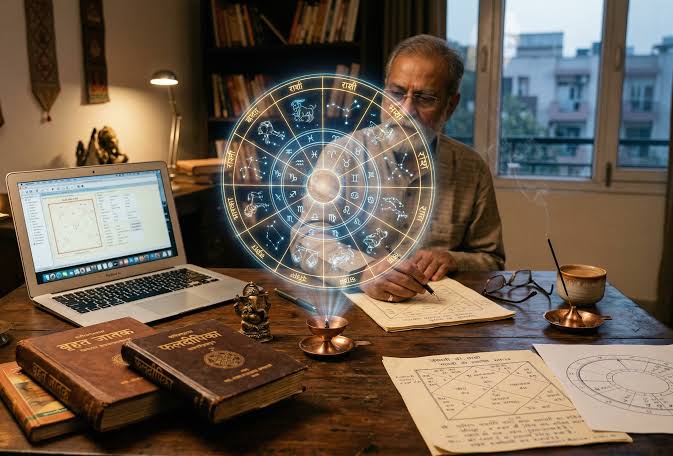
Your birth chart, also known as a natal chart, is the most authoritative astrological document you possess. It is calculated using the precise time, date, and location of your birth, ensuring that the resulting map is uniquely yours. This map includes the position of the Sun, Moon, and all the planets in our solar system, mapped across the twelve houses of experience. Each placement in your chart provides a specific layer of your personality—for example, the Sun describes your ego and core purpose, the Moon reveals your private emotional needs, and the Rising sign dictates your social presentation and life path.
Because the birth chart accounts for the interaction of these ten planets across all twelve houses, it contains thousands of possible combinations, making every chart essentially one-of-a-kind. When you analyze your birth chart, you are not looking for a prediction; you are looking for a description of your own character. It explains why you might be naturally inclined toward certain careers, why you struggle with specific emotional patterns, or why you find certain types of people easier to relate to than others. This static information provides a reliable, constant reference point that you can study for your entire life, constantly finding new layers of meaning as you grow and experience different phases of existence.
The Generalization of the Horoscope
Horoscopes represent the most simplified form of astrological communication. Because they are designed for mass consumption, they must be generalized to apply to millions of people who share the same Sun sign. A newspaper horoscope assumes that every person born under the sign of Aries is having the same emotional or professional experience on a given day, which is a mathematical and logical impossibility. While these snippets can be fun or provide a moment of reflection, they cannot provide accurate guidance for your individual life because they ignore your unique planetary positions, house placements, and current life transits.
The danger of horoscopes is that they encourage “Barnum effect” thinking, where individuals accept vague and general descriptions as highly personal and accurate. When you read a horoscope that says, “A surprise opportunity will come your way today,” your brain will naturally scan your day to find any event that fits that description, effectively confirming the horoscope’s accuracy after the fact. While this is an interesting psychological phenomenon, it is not astrology in its most useful form. By recognizing the limitations of these generalized forecasts, you can continue to enjoy them as entertainment while keeping your serious self-reflection reserved for the depth and detail of your own birth chart.
Why Prioritizing Your Chart Builds Trust
When you base your astrological practice on your birth chart, you are building your knowledge on a foundation of evidence and personal truth. You are not asking an external source to predict your future; you are using the symbols of your natal chart to better understand the person you already are. This process is inherently trustworthy because it is verifiable; you can look back at your own history and see how your planetary placements have manifested in your career, your relationships, and your personal crises. This direct link between the symbol and your experience is what transforms astrology from a belief system into a practical tool for self-awareness.
This approach also fosters a more mature relationship with the concept of fate. Instead of wondering if the stars are “doing” something to you, you start to see how you are “being” in the world. You realize that your chart is not a cage, but a set of parameters within which you have an infinite number of choices. If your chart suggests you are prone to emotional intensity, you can learn to channel that intensity into creative or productive work, rather than viewing it as a personality flaw or a fixed destiny. By using your chart to own your traits and take responsibility for your choices, you turn astrology into a force for genuine personal growth and psychological maturity.
| Feature | Birth Chart (Natal Chart) | Horoscope (Forecast) |
| Calculation Basis | Precise time, date, location of birth | Current date and Sun sign only |
| Scope | Total personality and life path | Short-term thematic generalities |
| Customization | Highly unique to the individual | Identical for millions of people |
| Reliability | Constant, static, and verifiable | Variable, transient, and generic |
| Primary Utility | Deep self-discovery and growth | Entertainment and casual reflection |
| Agency | Empowers your own decision-making | Risks promoting fatalism |
Frequently Asked Questions
Can a horoscope ever be accurate for me?
A horoscope might occasionally feel accurate, but this is usually due to the broad nature of the language used, which can be interpreted to fit many different situations. It is a psychological coincidence rather than a predictive success. True accuracy in astrology requires analyzing how current planetary movements interact with your specific birth chart. A generic Sun-sign horoscope simply lacks the necessary data to provide a precise or accurate reflection of what is happening in your life at any given moment.
Why are birth charts considered more “authoritative” than horoscopes?
Birth charts are authoritative because they are based on the complete data set of your life’s beginning. They account for the position of every major planet, the house structure, and the complex geometry of your unique cosmic signature. Horoscopes are considered secondary or “pop” astrology because they strip away this context, reducing a person to a single Sun sign. The birth chart is the primary source document, while the horoscope is merely a brief, generalized commentary derived from a small fraction of the data.
Do I need an astrologer to explain my birth chart?
You do not need an astrologer to start exploring your birth chart, though a professional can certainly provide nuance that a beginner might miss. There are many reliable resources available online, including books and charts, that can help you learn the basic symbols. As you learn, you will find that your own intuition and your familiarity with your life history are your most valuable assets in interpreting the chart. Starting on your own is often the best way to develop a solid, grounded understanding of how these concepts actually work for you.
Is it okay to enjoy horoscopes if I know they aren’t accurate?
Absolutely. Many people enjoy reading their horoscopes as a way to set a daily intention, to find a spark of inspiration, or simply to engage with a long-standing cultural tradition. As long as you maintain the awareness that they are for entertainment and not a substitute for your own judgment or professional advice, there is no harm in the practice. The key is to keep your serious self-reflective work focused on your birth chart and your personal growth, while keeping horoscopes in their proper place as light, casual reading.
How does my birth chart affect my daily decisions?
Your birth chart doesn’t dictate your daily decisions, but it can provide insight into why you make decisions the way you do. By understanding your chart, you can become aware of your default behavioral patterns—such as whether you tend to overthink before acting, or whether you prioritize emotional comfort over logic. When you have this awareness, you can consciously choose to act in ways that align with your long-term goals, rather than just following the automatic, reflexive patterns described in your natal chart.
Where can I find a trustworthy calculation of my birth chart?
To get a trustworthy birth chart, you need a reputable online calculator that allows for the input of your precise birth time, date, and location. Many established astrological organizations and educational websites offer free, high-quality tools that generate your chart using standard astronomical calculations. Avoid apps that require payment to “unlock” basic chart information, as this is often a sign of a commercialized product. A good calculator will provide you with a clear, standard chart diagram that you can then study at your own pace.
Conclusion
Distinguishing between your birth chart and a daily horoscope is a critical step in becoming a more informed and conscious student of astrology. While the birth chart stands as a complex, authoritative map of your unique potential, the horoscope remains a generalized, transient forecast that lacks the depth to offer meaningful personal guidance. By choosing to center your studies on your birth chart, you move away from the allure of quick predictions and toward the substance of genuine self-awareness. This shift allows you to take ownership of your personal narrative, using the wisdom of your natal map to make better choices and live with greater intentionality.
Treat the birth chart as your primary reference for self-discovery and the horoscope as a piece of lighthearted cultural entertainment. This balanced approach protects your autonomy, keeps your expectations realistic, and ensures that you are using astrology as a tool for empowerment rather than a source of confusion. As you continue to study your own placements, remember that the true power of astrology lies not in the stars themselves, but in the insights you gain when you apply their archetypal language to your own life experiences. Stay curious, prioritize your own critical thinking, and allow your birth chart to be the reliable compass that guides you through your own unique journey.
References
-
NASA Solar System Exploration: Official astronomical data on planetary positions and orbital mechanics. https://solarsystem.nasa.gov
-
The American Federation of Astrologers: A professional organization providing standards for astrological calculation and practice. https://astrologers.com
-
National Council for Geocosmic Research (NCGR): A professional body dedicated to the research, education, and professional development of astrology. https://geocosmic.org