The Core Confusion Surrounding Tarot Imagery and How It Overwhelms Beginners
When you first open a standard seventy-eight card deck, the sheer volume of detailed illustrations can feel completely overwhelming. Beginners frequently experience a specific type of mental fatigue because they try to analyze every single line, color choice, and background detail simultaneously. This problem is compounded by a massive amount of conflicting information available online, where different authors attach wildly different mystical systems, astrological alignments, and esoteric theories to the exact same drawing. This information overload causes many aspiring readers to freeze, feeling as though they lack a special hidden knowledge required to see the true meaning of the artwork. This sense of inadequacy often leads people to give up entirely, leaving their beautiful decks to gather dust on a shelf.
The primary reason this visual confusion exists is that modern decks, particularly those based on early twentieth-century designs, are multi-layered historical tapestries. The artists did not create these images in a vacuum; they purposefully combined classical Roman mythology, medieval Christian allegories, European folklore, and basic color psychology into unified pictures. When you look at a card without knowing these underlying cultural threads, your brain naturally struggles to find a logical starting point. You might notice a small bird in the background of one card or a specific type of flower in another, but without a foundational framework, these elements feel like random decorations rather than intentional narrative signposts.
To overcome this initial intimidation, you must realize that you do not need to understand every single microscopic detail perfectly to conduct a meaningful reading. Think of tarot symbols as individual words within a sentence. You do not need to write a complete academic essay on the etymology of every word just to understand what a person is saying to you in conversation. By learning to identify the major recurring structural elements first, you can instantly cut through the visual noise. This structural approach allows you to ground your observations in historical reality, transforming an overwhelming collection of pictures into a highly coherent, accessible storyboard.
Separating the Grand Themes of the Major Arcana From Daily Realities
A standard tarot deck is divided into two primary sections, and mistaking how these two groups function is a major roadblock for most beginners. The first twenty-two cards are known as the Major Arcana, which translates directly to the big secrets or major mysteries. These cards feature highly dramatic archetypes like the Emperor, the High Priestess, and the World. Because these illustrations are so intense and visually heavy, beginners often make the mistake of applying massive, catastrophic life predictions to everyday situations, causing unnecessary panic over simple, routine inquiries.
The historical purpose of the Major Arcana is to illustrate a grand, psychological journey through the human experience, often referred to by analysts as the Fool’s Journey. These twenty-two cards represent the macro-level themes, spiritual evolutionary phases, and universal milestones that every human being encounters throughout their lifespan. For instance, the Chariot represents the development of personal willpower and determination, while the Hermit signifies the vital need for quiet introspection and isolation. When these cards appear in a reading, they indicate that the situation you are asking about is deeply tied to a major developmental phase or an overarching life lesson rather than a fleeting, day-to-day occurrence.
Understanding this macro-level focus provides a practical solution for interpreting these cards without losing your sense of perspective. If you ask a simple question about your daily workplace dynamics and the Judgment card appears, you should not assume that your company is facing an immediate bankruptcy or an apocalyptic legal battle. Instead, an experienced analyst would recognize that the situation is prompting you to step into a higher level of professional accountability and evaluate your long-term career path. By viewing the Major Arcana as an internal compass for your character development, you can extract profound psychological wisdom from the archetypes without blowing everyday challenges completely out of proportion.
Deciphering the Four Elemental Suits of the Minor Arcana
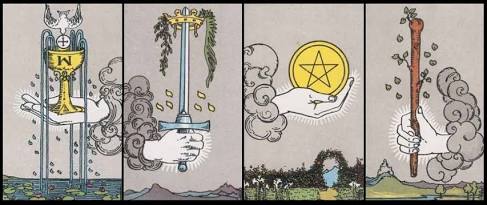
The remaining fifty-six cards of the deck are classified as the Minor Arcana, which handle the practical micro-level experiences, daily emotions, and temporary circumstances of human life. This section is divided into four distinct suits, mirroring the structure of standard playing cards. The most common pitfall for beginners here is trying to memorize all fifty-six individual card definitions as separate, isolated facts. This brute-force approach is incredibly inefficient and completely ignores the beautifully systematic architecture of the deck, which relies heavily on ancient elemental philosophies to convey meaning.
The most practical strategy for mastering the Minor Arcana is to learn the core elemental associations that govern each of the four suits. The suit of Wands is universally tied to the element of fire, representing raw passion, creative inspiration, ambition, and the initial spark of action. When you see cards filled with wooden staves, sprouting green leaves, and bright desert landscapes, you are looking at situations involving your career drive, personal energy, and spiritual enthusiasm. The suit of Cups corresponds directly to the element of water, managing the fluid realms of human emotion, romantic relationships, intuitive feelings, and creativity. Visually dominated by flowing rivers, oceans, and chalices, the Cups show how you connect with others on a deep psychological and emotional level.
The final two suits address the intellectual and material aspects of our daily existence. The suit of Swords is bound to the element of air, symbolizing the sharp, analytical power of the human intellect, communication, logic, and mental conflicts. Because swords are inherently sharp tools that can cut both ways, this suit frequently illustrates the psychological distress, anxieties, and communication breakdowns that occur when our thoughts become untethered from emotional empathy. Lastly, the suit of Pentacles relates to the element of earth, anchoring the reading in the physical world of money, property, career infrastructure, health, and long-term stability. By looking at a card and instantly identifying its suit emblem, you immediately discover what specific area of your life is being examined, providing an instant baseline for your interpretation.
Interpreting Common Environmental Motifs and Natural Symbols
Beyond the formal structure of suits and archetypes, tarot cards are filled with recurring environmental motifs that act as a secret shorthand for human emotions. Beginners often overlook the background scenery, focusing entirely on the human figures in the foreground. This oversight can cause you to miss crucial contextual clues that completely alter the meaning of a card. For example, a figure who appears to be resting peacefully might actually be surrounded by turbulent waters or jagged rocks, indicating that their calm exterior is masking a highly unstable emotional or physical situation.
Water is one of the most expressive natural symbols used throughout traditional tarot imagery, and its movement always tells a precise story. Calm, reflective pools or gently flowing streams represent emotional clarity, peace of mind, and harmonious relationships, as seen in cards like the Star. Conversely, rough, churning ocean waves or rushing waterfalls signal that an individual is currently drowning in overwhelming feelings, emotional drama, or deep-seated anxieties. Mountains and steep hills serve as another universal motif, representing the major obstacles, uphill battles, and long-term challenges you must climb to achieve your personal goals. If a figure is looking toward distant mountains, it shows they are planning for the future and acknowledging the hard work ahead, while a figure standing atop a mountain peak indicates total achievement, perspective, and hard-won mastery.
Flora and fauna also carry immense symbolic weight that can guide your intuition during a session. Red roses are frequently woven into the artwork to symbolize human passion, romantic love, and the beautiful desire for material pleasure. White lilies, on the other hand, represent mental purity, clarity of intent, and spiritual truth. When animals appear, they mirror our primal instincts and behavioral tendencies. A roaring lion, such as the one featured on the Strength card, does not represent a physical danger, but rather our wild, passionate impulses that must be gently tamed through patience and compassion rather than brute force. By training your eye to read the background environment as an extension of the human psyche, you gain a massive advantage in understanding the deeper emotional landscape of any reading.
Synthesizing Numerology With Visual Metaphors for Deeper Insights
The final foundational layer of tarot symbolism involves basic numerology, which provides a logical sequence to the chaotic progression of the Minor Arcana. Many beginners do not realize that each number from Ace to Ten carries a consistent mathematical and psychological theme across all four suits. Without this numerical framework, the cards can feel like a random assortment of disconnected scenes, making it incredibly difficult to see how a situation is developing over time.
Aces always represent the absolute beginning of a cycle, a pure, unmanifested potential, or a brand-new opportunity entering your life. An Ace is a gift of elemental energy; for example, the Ace of Pentacles indicates a new financial or physical beginning, while the Ace of Cups signals a fresh emotional awakening. As you move to the number Two, the theme shifts to balance, choices, dualities, and partnership, forcing you to decide how to direct that initial energy. Threes signify initial expansion, creative expression, and teamwork, showing that your initial choices are starting to bear fruit in the real world. Fours represent stability, structure, and boundaries, often manifesting as a comfortable plateau where you seek to protect what you have built, though it can sometimes lead to stagnation or boredom.
The middle of the numerical sequence introduces necessary tension and eventual resolution. Fives universally represent sudden disruption, conflict, loss, and instability, serving as a vital reminder that challenges are required for human growth and adaptation. Sixes bring a welcome relief from that tension, symbolizing harmony, mutual support, recovery, and a return to emotional or physical balance. Sevens challenge you to step into strategic thinking, hidden motives, and personal assessment, while Eights demand dedicated effort, speed, skill development, or necessary movement. Nines represent the absolute culmination of the suit’s journey, showing the near-completion of a cycle where you experience either the full abundance or the extreme burden of that element. Finally, Tens represent final endings, absolute completion, and the transition point before a brand-new cycle begins. By combining the elemental nature of the suit with the progressive meaning of the number, you can easily deduce the core meaning of any minor card without ever cracking open a guidebook.
Quick Reference Summary of Core Tarot Symbols
The following table provides a clear, high-level summary of the essential structural and environmental symbols discussed in this guide to help you build your visual literacy.
| Symbol Category | Visual Emblem or Motif | Primary Psychological Meaning | Practical Real-World Context |
| Major Arcana | Archetypal Figures (e.g., The Fool, The Empress) | Macro-level themes, spiritual phases, and overarching life lessons. | Major life transitions, character development, and soul growth. |
| Suit of Wands | Wooden Staves, Sprouting Green Leaves | Element of Fire; raw passion, ambition, creativity, and drive. | Career motivation, creative projects, and personal energy levels. |
| Suit of Cups | Chalices, Flowing Oceans, Rivers | Element of Water; human emotions, intuition, and relationships. | Romantic connections, emotional health, and family dynamics. |
| Suit of Swords | Double-Edged Blades, Piercing Swords | Element of Air; human intellect, communication, logic, and conflict. | Decision-making, mental anxiety, and communication breakdowns. |
| Suit of Pentacles | Gold Coins Inscribed with Pentagrams | Element of Earth; material reality, physical health, and finance. | Money management, career security, and long-term stability. |
| Natural Motifs | Turbulent Waves versus Calm Pools | The movement and state of personal emotions and subconscious states. | Overwhelming emotional distress versus peace and mental clarity. |
| Landscapes | Towering Mountain Peaks and Steep Hills | Long-term obstacles, high ambitions, and major achievements. | Facing personal challenges or enjoying the view of hard-won success. |
Frequently Asked Questions
Why do some tarot cards have different symbols or names depending on the specific deck you buy?
The variation in names and symbols across different tarot decks is a direct result of historical evolution and artistic creative freedom. While the classic Rider-Waite-Smith deck created in 1909 serves as the blueprint for modern Western tarot, many contemporary artists choose to reframe these traditional symbols to better fit modern cultural contexts, diverse perspectives, or unique artistic themes. For instance, a deck focused on nature might replace the traditional suit of Swords with arrows or feathers, while a mythological deck might rename the Major Arcana cards after specific deities. Despite these visual changes, the underlying psychological structure and elemental meanings almost always remain consistent across decks.
How can a complete beginner practice reading tarot symbols without constantly looking at a guidebook?
The most effective way to build your symbol reading skills without a book is a method called intuitive visual storytelling. Start by drawing a single card and spending two full minutes just looking at the artwork, pretending you are describing a painting in a museum to a friend. Pay close attention to the expressions on the figures’ faces, the colors in the sky, the weather conditions, and what objects are being held. Ask yourself what the immediate mood of the scene is, and try to connect that emotional atmosphere to a situation in your own life before you ever look up the traditional definition.
Do the colors used in tarot card illustrations carry specific symbolic meanings that I should know?
Color psychology plays a massive role in traditional tarot illustrations, acting as a direct shortcut to your emotional subconscious. Large amounts of bright yellow generally symbolize mental clarity, joy, consciousness, and intellectual energy, which is why it often dominates positive cards like the Sun. Deep blue hues typically represent the subconscious mind, intuition, mystery, and hidden emotions, frequently appearing in reflective cards like the High Priestess. Vibrant red signals human passion, physical desire, and willpower, while abundant green points directly to fertility, physical growth, healing, and material wealth in the real world.
What is the difference between reading tarot cards and using ordinary oracle card decks?
The primary difference between the two systems rests within their underlying structural rules and consistency. A traditional tarot deck always follows a strict, unyielding seventy-eight card format divided into the Major and Minor Arcana, utilizing centuries-old elemental and numerical systems that remain uniform across different publishers. Oracle decks, however, have absolutely no structural rules, set card counts, or universal symbol systems. An oracle deck is created entirely from the artist’s personal imagination, featuring whatever themes, messages, or artwork they choose, which makes oracle decks highly intuitive but lacking the deep structural interconnectedness found in tarot.
Can a card have a completely positive meaning even if the visual symbols look scary or negative?
Many cards that feature intense or frightening artwork carry incredibly positive, empowering, and necessary messages for personal growth. The best example of this dynamic is the Death card, which naturally causes panic due to its skeletal imagery but actually represents the beautiful process of closing an outgrown chapter to make room for a fresh beginning. Another example is the Tower, which depicts a destructive lightning strike but ultimately symbolizes the breaking down of toxic illusions and false structures so you can rebuild your life on an honest foundation. These cards remind us that temporary discomfort is often required to achieve long-term happiness.
How do I know if I should interpret a symbol literally or metaphorically during a reading?
In virtually every standard tarot reading scenario, symbols should be interpreted entirely on a metaphorical and psychological level rather than a literal one. The cards speak in the ancient language of dreams and archetypes, utilizing physical objects to represent abstract internal states of being. If you draw a card featuring a sharp sword, it almost never means you will encounter a physical blade in your daily life; instead, it indicates a need for sharp communication, a cutting truth, or a boundary against mental anxiety. Training your mind to instantly translate physical illustrations into emotional and mental concepts is the hallmark of a mature practitioner.
Cultivating a Lifelong Relationship With Visual Literacy
Learning to read the symbols of the tarot is a beautiful journey that mirrors the process of learning to appreciate literature or classical art. When you stop trying to force yourself to memorize rigid definitions from a tiny booklet, the deck transforms from an intimidating puzzle into an incredibly supportive friend. The symbols do not exist to lock you into a fixed destiny or overwhelm your mind with fear; instead, they are designed to help you slow down, quiet the external noise, and look honestly at the hidden dynamics of your inner world. By anchoring your practice in the basic structure of elements, numbers, and natural metaphors, you develop a deep sense of visual literacy that serves you far beyond the boundaries of the card table.
As you continue to practice and observe the cards over time, you will begin to notice these universal symbols showing up in everyday life—in the movies you watch, the books you read, and the emotional phases of the people around you. This realization is incredibly empowering because it demonstrates that tarot is simply a beautiful micro-reflection of the shared human experience. Trust your eyes, honor your personal intuition, and always allow the artwork to guide you toward greater self-awareness, mindful clarity, and a deeper appreciation for your own life story.
References
-
Waite, Arthur Edward. The Pictorial Key to the Tarot. The original, authoritative documentation written by the co-creator of the Rider-Waite-Smith deck, detailing the explicit intent behind its symbols.
-
The Warburg Institute Department of History of Art. Academic research archives and publications tracking the migration of Renaissance tarot imagery and European card game evolution.
-
Jung, Carl Gustav. Man and His Symbols. A foundational psychological text exploring how universal human archetypes, visual metaphors, and dream symbols interact with the subconscious mind.
-
Place, Robert M. The Tarot: History, Symbolism, and Divination. A thoroughly researched historical and cultural analysis tracking the artistic evolution of tarot iconography through Western esoteric traditions.
-
The Metropolitan Museum of Art (The Met). Curatorial documentation and historical essays regarding 15th-century luxury Italian card design and Renaissance allegorical illustrations.