Entering the world of ancient mythology often feels like a crowded, noisy room where everyone has been talking for hours. You are immediately overwhelmed by a series of complex names, intricate genealogies, and seemingly contradictory stories. Many yearn to explore these rich cultural tales, but a sense of inadequacy holds them back. This article reveals the mysteries of these ancient stories and offers a clear and simple roadmap to help you explore the world of mythology without getting lost in the complex details.
Understanding mythology is crucial because these stories are not just old fairy tales; they form the architectural blueprints of human culture. They have shaped our modern literature, psychology, language, and art. When you learn to decipher the meaning between the lines of mythology, you not only memorize the deeds of ancient gods but also explore how humanity has understood life, death, love, and the universe for thousands of years. By changing your learning method from rote learning to exploring stories, you can transform boring history lessons into exciting and meaningful adventures. The True Purpose of Ancient Myths
To truly appreciate ancient myths without becoming overwhelmed, one must first understand why ancient civilizations created them. Early societies did not possess modern scientific instruments to explain weather patterns, diseases, or astronomical phenomena. Instead, they relied on anthropomorphism to provide form and sound to the unpredictable forces of nature. When a sudden thunderstorm destroyed a village’s harvest, it was far more reassuring for ancient peoples to believe that an angry god had sent the lightning than to accept their complete submission to the arbitrary, ruthless elements of nature.
In addition to explaining the material world, myths also served as the fundamental laws and moral codes of early societies. They established social hierarchies, legitimized political power, and taught citizens how to interact with one another. Thus, long before modern legal systems existed, people used stories about the consequences of breaking oaths or disrespecting guests to maintain social order. When you realize that these stories were functional instruments designed to keep society running smoothly, the strange behavior of ancient gods begins to make sense.
As a beginner, to apply this way of thinking, you must first of all stop judging figures from antiquity by modern moral standards. When you read about the selfish or cruel deeds of a deity, do not let the shock overwhelm you; instead, think about the social rules or natural phenomena that the story attempts to highlight. Poseidon’s turbulent emotional outbursts, for example, perfectly reflect the unpredictable nature of the Mediterranean Sea, a route that ancient sailors had to navigate daily. By viewing mythology as a mirror of culture, rather than literal history, the pressure to try to understand every fantastical detail immediately disappears.
How to clarify the confusion of names and genealogies
For any beginner in mythology, the greatest obstacle is the sheer number of characters and their complicated family relationships. Ancient pantheons are characterized by countless unusual phenomena among the gods: marriages between different gods, name changes depending on the region, or dozens of different titles. A beginner reading Roman mythology, for example, might not realize that Jupiter, Jupiter, and Zeus in Greek mythology are essentially the same god, differing only in the various cultures. This overlap often makes readers feel like they need a doctorate in history to unravel the plot.
The cause of this confusion lies in the fact that ancient myths were passed down orally. The stories were passed down orally for centuries and constantly changed and evolved through conquests and cultural assimilation between different tribes. The local deity of a village was often adopted by the pantheons of neighboring city-states, leading to overlapping characters and confusing genealogies. Because these religions never had a uniform official ‘sacred book,’ variations are the rule rather than the exception.
For beginners, the best approach is to completely ignore the initially complex genealogies. Instead of memorizing their lines of descent, you are better off focusing on the core archetypes and the key functions of the major gods. Think of the pantheon as the offices of a modern company: you don’t need to know the CEO’s entire family to
In some texts, the goddess is described as a merciful protector of children, while in others she is depicted as a vengeful warrior who destroys entire cities. Beginners often mistakenly think they have discovered an error or read a poor translation. These inconsistencies feel like a puzzle whose pieces constantly change shape, causing many to eventually give up in frustration.
These contradictions are important because they reflect the true face of the development and transformation of human society throughout history. Myths recorded during periods of agrarian prosperity will inevitably differ significantly from those recorded by the same culture during centuries of war and famine. Moreover, as empires expanded through conquest, they blended their own traditions with the beliefs of the conquered peoples, creating complex hybrid stories that naturally contain contradictory elements.
To understand this properly, we must accept that there is no single “correct” version of an ancient myth. View every version as a unique montage of a classic film. When you encounter two diametrically opposed stories, do not dwell on which one is correct. Instead, appreciate how both versions reflect different facets of humanity and the historical context. This mindset can transform your reading experience from a stressful memory test into a fascinating study of cultural evolution.
Focus on the power of core archetypes
The sheer volume of myths spanning the globe, from the snow-covered fantasy world of Northern Europe to the ancient valleys of Egypt, is breathtaking. Trying to get to know every story would only exhaust you. But if you carefully study these global traditions, you will discover that cultures separated by vast distances and eras often essentially tell the same stories.
The famous psychiatrist Carl Jung popularized the idea that “humanity shares a collective unconscious filled with universal symbols and personality types,” which he called “archetypes.” Because all humans experience the same fundamental life milestones—birth, growth, adversity, and death—we naturally create similar figures to represent these experiences. Wise elders, rebellious heroes, cunning charlatans, and loving mothers are ubiquitous classic figures in the narrative traditions of almost every culture.
As a beginner, you can use these archetypes as a universal key to instantly unlock any mythological system. When you encounter a new mythological system, look for the outlier. In Norse mythology, that is Loki; in West African folklore, it is Anansi the Spider; in Greek mythology, it is Hermes. Once you have identified the archetype, you immediately understand the character’s narrative purpose: their existence revolves around disrupting the status quo, challenging authority, and bringing about change. By recognizing these patterns, you do not have to learn entirely from scratch, which saves you a significant amount of thinking.
Practical strategies for your reading journey
If you immediately start with a complete academic translation of Homer’s Iliad or the Icelandic Edda, you will likely find the obscure, ancient language daunting. Many well-meaning readers make this mistake and treat mythology as a strict school assignment rather than a series of vivid, captivating stories. This rigid approach quickly kills the joy of reading and makes the works appear much more difficult than they actually are.
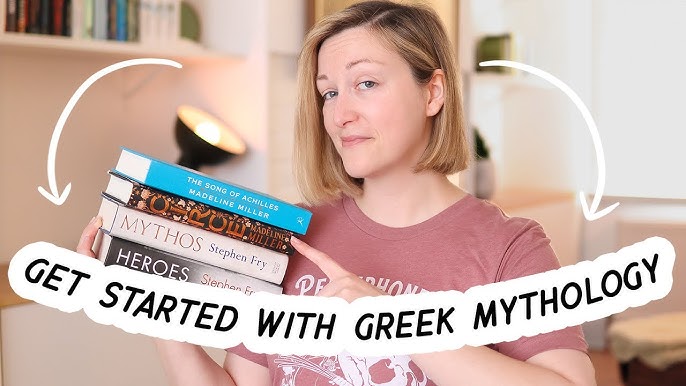
To develop a lasting and enjoyable reading habit, it is best to start with modern, easy-to-understand adaptations. Contemporary writers often rewrite these ancient stories in modern language, focusing on character development and narrative pace while retaining the core cultural elements. By reading these modern versions, you can become familiar with the characters, plot, and setting just as easily as reading a fantasy novel or watching a TV series.
Once you have laid a solid foundation with modern adaptations, you can gradually transition to classical translations if you wish to study the historical texts in greater depth. Furthermore, do not hesitate to use multimedia resources to support your learning process. High-quality podcasts, educational videos, and illustrated guides provide valuable audiovisual background information, making the story easier to remember than words alone. Allow yourself to discover at your own pace, skip parts that bore you, and focus on the culture that truly sparks your curiosity.
| Mythological Tradition | Primary Supreme Deity | Famous Trickster Character | Core Cultural Themes | Recommended Starting Point |
| Greek / Roman | Zeus / Jupiter | Hermes / Mercury | Fate, Hubris, Honor, Civic Duty | Modern retellings of the Odyssey |
| Norse | Odin | Loki | Destiny, Honor in Battle, Cosmic Doom | The Prose Edda retellings |
| Egyptian | Ra / Osiris | Anubis (Partial) | Afterlife, Balance, Cosmic Order | Stories of the Osiris Myth |
| Hindu | The Trimurti (Brahma, Vishnu, Shiva) | Various Avatars | Karma, Dharma, Reincarnation | Accessible versions of the Ramayana |
Frequently Asked Questions
What is the difference between myths, legends, and folk tales?
These three terms are often used interchangeably, but in folklore, they actually serve distinctly different narrative purposes. Myths are sacred stories set in antiquity that typically explain how gods or divine forces originally created the universe, nature, and human customs. Legends, on the other hand, take place in recognizable historical periods and focus on human heroes whose heroic deeds may have been greatly exaggerated over the centuries, such as King Arthur or Robin Hood. Folk tales are traditional stories about ordinary people or talking animals, primarily intended for entertainment or to teach children practical moral lessons, and they claim no historical or religious truth.
Why do Greek and Roman gods have so many similarities, yet different names?
This profound similarity stems from the reverence the ancient Romans had for Greek culture, art, and philosophy, leading them to systematically integrate the Greek pantheon into their own religious system. As the Roman Empire expanded and conquered Greek territories, Roman writers and priests blended their existing, local gods with the highly developed Greek mythological system. For example, Saturn, the Roman god of agriculture, corresponds to Cronus, the Greek Titan, while Jupiter, the Roman god of the sky, adopts mythological elements and traits from Zeus. Although the stories are largely the same, the Roman versions often emphasize military discipline, national responsibility, and civil law, reflecting the unique cultural values of the Roman Empire.
How can you remember all the names of the gods without getting confused?
The secret to remembering the names of mythological figures is not memorization or the use of flashcards. Instead, you must directly associate the name of each god with his main symbol, animal, or natural element, creating strong visual associations in your mind. For example, instead of just memorizing the name Poseidon, you can associate him with a trident and raging waves. Consulting the etymology of these names is also very useful, as many modern English words derive directly from them. The fact that the word ‘volcano’, for example, comes from the Roman god of fire, Vulcan, makes the name and the role it represents much more memorable.
Are ancient myths suitable for young children?
Unedited ancient myths contain many adult themes, such as violence, betrayal, and complex relationships, which are clearly unsuitable for young children. However, because these stories are crucial for human literacy, there are many adapted mythology books available today that are suitable for children. These children’s versions carefully remove adult content and focus on the exciting adventures, fantastic creatures, and moral lessons. Exposing children to these pure adaptations at a young age offers excellent educational benefits, making it easier for them to understand classical literature and history later on.
Wrap Up
Why do so many different cultures have similar stories about a global flood? The prevalence of flood myths in seemingly unrelated global civilizations—such as the Mesopotamian Epic of Gilgamesh, the Hindu Manu stories, and Mesoamerican legends—is remarkable and generally stems from two main factors. First, most early human civilizations naturally developed in fertile river valleys, such as those along the Nile, the Indus, or the Tigris and Euphrates. These valleys were highly vulnerable to catastrophic seasonal floods, which were often apocalyptic for the local population. Second, the massive flood serves as a perfect psychological and narrative metaphor, symbolizing a cosmic reset. This phenomenon enables various cultures to tell stories about humanity cleansing itself of sins and starting anew with higher moral standards.
Where is the best place for a complete beginner to start reading mythology? The best starting point for beginners is undoubtedly ancient Greek mythology, for a simple reason: Greek mythology is deeply rooted in modern Western language, media, and popular culture. Because you are likely already familiar with basic concepts such as the Trojan Horse, Achilles’ Heel, or Medusa, the learning curve is much steeper than when exploring lesser-known myths. Consider starting with acclaimed modern prose adaptations that smoothly transform ancient poetry into fast-paced, contemporary stories. Once you are familiar with Greek mythology, myths are used to explain their world, uphold their laws, and process human emotions; so you can safely set aside academic objections. Focus your attention on universal archetypes and use easy-to-understand modern stories, and you will discover beautiful, recurring patterns that connect all human cultures and transcend time and space.
Consider mythology during your studies as a vast field that you can explore at your leisure, rather than as a textbook you must master for an exam. Let your curiosity lead you from one culture to another, embrace the unique contradictions and diverse variations, for they reflect our shared human experience. Stories told around ancient campfires thousands of years ago still live on today, waiting for you to discover the timeless wisdom, drama, and wonder hidden between the lines.
References
-
The British Museum. (n.d.). Explore world cultures and ancient histories. Official museum documentation and educational resources.
-
Stanford University. (n.d.). The Stanford Encyclopedia of Philosophy. Research publications on myth, ritual, and ancient psychological archetypes.
-
Homer. (n.d.). The Odyssey. Classical text translations regarding ancient Greek heroic journeys and civic duties.
-
Sturluson, S. (n.d.). The Prose Edda. Historical Icelandic documentation regarding Norse cosmological structures and deities.