Mysticism refers to a broad group of beliefs, practices, and experiences oriented toward direct, personal contact with ultimate reality, the divine, or a deeper level of existence — as opposed to knowledge gained only through doctrine, ritual observance, or intellectual argument. It appears across religious traditions and, for some people, entirely outside them.
The word is hard to pin down for a simple reason: it was never used to describe one single system. Scholars use it as a comparative category that cuts across Christianity, Judaism, Islam, Hinduism, Buddhism, and various nonreligious contexts, and each of those traditions has its own vocabulary for what modern writers call “mystical.” This guide lays out what the term actually covers, how it developed historically, how it shows up differently across traditions, and what practices are commonly associated with it.

What Is Mysticism?
A Simple Definition
Mysticism commonly refers to the beliefs, experiences, traditions, texts, and practices concerned with direct contact with, or immediate awareness of, ultimate reality, the divine, or sacred truth. Rather than approaching that reality only through doctrine or secondhand teaching, mystical traditions treat firsthand experience as a valid — often central — source of insight.
Definition: Mysticism is a category of religious and philosophical thought and practice oriented toward direct, transformative experience of ultimate reality or the divine, found within many world religions as well as in some nonreligious contexts.
This doesn’t mean every mystic rejects doctrine or scripture. In most traditions, mystical practice developed alongside established religious life, not against it. What sets mystical strands apart is the emphasis on experience as a form of knowing in its own right.
The Origin of the Word Mysticism
The word traces back to the Greek myein, meaning “to close” (the eyes or lips), and is related to mystikos. In the Hellenistic world, “mystical” referred to the secret rites of the Greek Mystery religions, such as the Eleusinian Mysteries, whose initiates were bound to silence about what they witnessed. Early Christian writers later used the term for the “hidden” allegorical meanings of scripture and for the hidden presence of Christ in the Eucharist. Only over time did “mystical theology” come to mean something closer to its modern sense: direct experiential knowledge of the divine, distinct from purely intellectual theology.
What Mysticism Is Not
Because the word gets used loosely, it helps to separate mysticism from a few things it’s frequently confused with:
- Not the same as magic. Magic is generally oriented toward using ritual, symbol, or will to produce a specific effect in the world. Mysticism is oriented toward experience and insight, not toward causing outcomes.
- Not the same as fortune-telling or divination. Predicting future events is a different practice with a different aim.
- Not automatically occultism. Occultism concerns hidden or esoteric knowledge and techniques; some historical overlap exists, but the terms are not interchangeable (see the comparison section below).
- Not inherently irrational or anti-scientific. Many mystics were also serious scholars and theologians within their traditions.
- Not a rejection of organized religion. Most historically documented mystics practiced within established religious institutions rather than outside them.
What Is a Mystical Experience?
A mystical experience is typically described as a direct, often intense encounter that feels like it reveals something about the nature of reality — rather than an ordinary emotional or sensory experience. How that encounter is described varies enormously by culture, religion, and the individual involved, but scholars studying accounts across traditions have identified several recurring features.
A Sense of Unity or Oneness
Many accounts describe a dissolving of the ordinary boundary between self and world, or self and the divine. Philosopher Walter Stace, in his influential study of mystical texts, distinguished between “extrovertive” experiences — a sense of unity perceived through the senses, as if the world itself is transfigured — and “introvertive” experiences, an inward sense of undifferentiated unity reached by turning attention away from the senses entirely. This is a common thread across traditions, though it is not described identically: a Christian contemplative may frame it as union with God, while a Buddhist account may describe the dissolving of the sense of a separate self without reference to a deity.
Ineffability
Mystics across very different traditions consistently report that the experience resists being put into words. Philosopher and psychologist William James, whose 1902 work The Varieties of Religious Experience remains a foundational text in this field, called ineffability “the keynote of all mysticism” and treated it as one of the two features he considered essential to a mystical state. Because the experience can’t be fully translated into ordinary language, mystical writing leans heavily on metaphor, paradox, and poetry.
Noetic Quality
Alongside ineffability, James identified a second essential feature: a “noetic quality” — a strong sense that the experience delivers genuine knowledge or insight, not just an emotion. People commonly describe feeling that they have understood something true and important, even when they can’t explain what, exactly, they now know. It’s worth being precise here: feeling certain that an insight is true is not the same as that insight being objectively correct — the noetic quality describes the subjective conviction, not proof of its content.
Loss of the Ordinary Sense of Self
Many mystical accounts involve a temporary loosening of the usual boundary between subject and object — the felt sense of being a separate observer looking out at the world. This can range from a mild quieting of self-referential thought to a more dramatic sense that the personal self has dissolved entirely. Contemporary discussions sometimes use the term “ego dissolution” to describe this, a concept also studied in research on meditation and, separately, on psychedelics — though these remain distinct research contexts with different methods and different populations.
Personal Transformation
James and later researchers also noted that a genuine mystical experience often leaves a lasting mark rather than passing without effect: a change in values, a deepened sense of compassion, renewed religious devotion, or a shift in how someone relates to fear, loss, or daily life. This isn’t guaranteed. Not every reported mystical experience produces lasting change, and traditions themselves generally treat sustained ethical transformation, not the intensity of the experience itself, as the real marker of spiritual progress.
| Characteristic | Simple explanation | Possible example |
|---|---|---|
| Unity | A sense that self and world, or self and the divine, are less separate than usual | A contemplative describing union with God during prayer |
| Ineffability | The experience resists being fully described in words | A meditator saying “I can’t really explain what happened” |
| Noetic quality | A strong felt sense of gaining real insight or knowledge | A sudden conviction of having understood the nature of reality |
| Loss of ordinary self | A loosening of the usual subject–object boundary | A meditator reporting that “there was no longer a ‘me’ watching” |
| Transformation | Lasting change in outlook, values, or behavior afterward | Renewed compassion or a changed relationship to fear |
A Brief History of Mysticism
Direct spiritual experience has been documented for as long as we have religious texts, but the word “mysticism” itself is a much later, retrospective category applied by scholars to organize very different traditions.
In the ancient world, secret initiatory rites such as the Eleusinian Mysteries in Greece promised initiates a transformative encounter with the sacred, sealed by an oath of silence. Greek philosophy, especially Neoplatonism as developed by Plotinus in the third century CE, described a hierarchy of reality culminating in “the One,” with contemplative ascent toward it — a framework that later heavily influenced Christian mystical theology.
Within Judaism, Christianity, and Islam, distinct contemplative and mystical strands developed over the medieval period: Jewish mysticism matured through works like the Zohar and later Lurianic Kabbalah; Christian mysticism produced contemplatives such as Meister Eckhart and Teresa of Ávila; Islamic Sufism developed its own path of purification and divine love centered on remembrance of God (dhikr). In parallel, Indian religious traditions had already developed sophisticated contemplative systems — yogic and Vedantic paths toward liberation (moksha) and Buddhist meditative traditions aimed at insight and awakening — with roots reaching back over two thousand years.
In the modern era, the study of mysticism shifted from primarily theological to also psychological and academic. William James’s 1902 lectures treated mystical experience as a subject for serious empirical study rather than purely doctrinal debate, and 20th-century scholars such as Walter Stace and Rudolf Otto built comparative frameworks still used today. More recently, secular interest in mystical-type experience has grown through mindfulness practice, contemplative psychology, and controlled scientific research into altered states of consciousness — an interest that exists alongside, not in place of, the traditional religious contexts mysticism first developed in.
Mysticism in Different Religious Traditions
“Mysticism” is a modern comparative label — a convenience scholars use to group experiences and practices across cultures. Each tradition below has its own internal terms and its own understanding of what these experiences mean, and none of them should be treated as teaching identical things.
Christian Mysticism
Christian mysticism centers on contemplative prayer and the pursuit of union with God, often described through stages of purification, illumination, and union. Notably, “mysticism” is a comparatively late label for this practice — before the sixth century, what’s now called Christian mysticism was simply known as contemplatio or theoria, meaning “gazing at” or “being aware of” God, a reminder that the word itself trails behind the practice it describes. Contemplatives such as Meister Eckhart, Teresa of Ávila, John of the Cross, and Julian of Norwich wrote influential accounts of this inward path, frequently emphasizing divine love, self-emptying, and the limits of ordinary theological language in describing the encounter.
Jewish Mysticism
Jewish mysticism, whose best-known stream is Kabbalah, developed a symbolic and meditative system for understanding the hidden structure of divine reality, most famously through the Zohar and, later, the Lurianic Kabbalah of Isaac Luria in 16th-century Safed. It has long existed alongside, rather than apart from, mainstream Jewish religious life, and it should not be reduced to the popularized, celebrity-associated version of “Kabbalah” that circulates today.

Islamic Mysticism and Sufism
Sufism refers to the diverse inner, spiritual dimension of Islam rather than a separate religion. Sufi practice emphasizes remembrance of God, purification of the self, and a path toward direct spiritual awareness, often expressed through devotional poetry and, in some orders, ritual movement. Influential figures include the poet Rumi, the philosopher-mystic Ibn Arabi, and the early ascetic Rabia al-Adawiyya.
Hindu Mysticism
Hindu traditions include a wide range of contemplative paths oriented toward liberation (moksha), including yogic meditation and devotional practice (bhakti). Some traditions describe the goal as union between the individual self (Atman) and ultimate reality (Brahman); others, particularly nondual (Advaita) schools, describe the recognition that they were never truly separate to begin with. These represent genuinely different philosophical positions, not a single shared doctrine.
Buddhist Mysticism
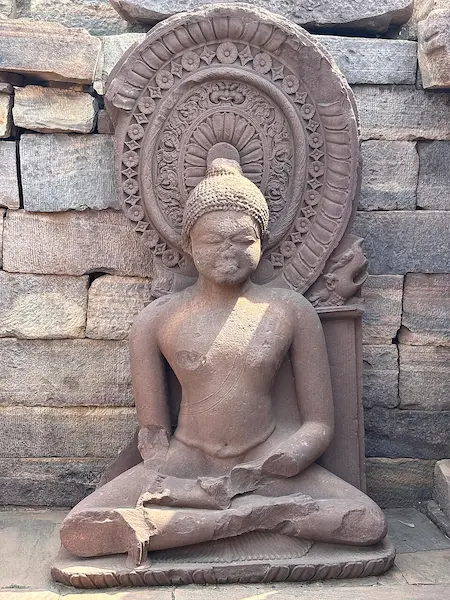
Buddhist contemplative traditions are usually described with caution alongside the word “mysticism,” since most Buddhist schools do not frame their aim as union with a deity. Meditative practice is instead oriented toward direct insight into impermanence, non-self, and the nature of mind, often summarized as awakening or liberation from suffering. Some traditions describe a nondual awareness of reality; forcing explicitly theistic language onto these accounts distorts what practitioners themselves describe.
Secular Mysticism
Some people report mystical-type experiences — a sense of unity, awe, or the dissolving of ordinary boundaries — through nature, art, music, or meditation, without interpreting the experience through any specific religious framework. Not every intense emotional experience qualifies; researchers studying this territory generally look for the same recurring features (unity, ineffability, noetic quality) rather than treating strong emotion alone as sufficient.
| Tradition | Common focus | Representative practices | Important clarification |
|---|---|---|---|
| Christian | Union with God through love and contemplation | Contemplative prayer, silence | Multiple distinct schools and stages exist |
| Jewish | The hidden structure of divine reality | Kabbalistic study and meditation | Not the same as popularized modern “Kabbalah” |
| Islamic (Sufi) | Purification and nearness to God | Remembrance (dhikr), devotional poetry | A dimension within Islam, not a separate faith |
| Hindu | Liberation and union or recognition of unity | Yoga, meditation, devotion | Traditions differ on what “union” actually means |
| Buddhist | Insight into non-self and impermanence | Meditation, contemplative inquiry | Not centered on union with a deity in most schools |
| Secular | Unity or awe without a religious framework | Meditation, contemplative attention to nature or art | Distinct from ordinary strong emotion |
Common Mystical Practices
The practices below are widely associated with mystical traditions because they tend to create conditions historically linked with contemplative or altered states of awareness. None of them guarantee a mystical experience.
Meditation
Meditative techniques vary enormously by tradition — some center on sustained focus on a single object, others on open, non-judgmental awareness — but they share the general purpose of quieting ordinary discursive thought long enough to allow a different quality of attention to emerge.
Contemplative Prayer
Contemplative prayer differs from petitionary prayer, which asks for something specific. It is instead a sustained, largely wordless attentiveness toward the divine, historically central to Christian mystical practice and paralleled in comparable practices in other traditions.
Chanting and Mantras
Repetitive sound — whether a mantra, sacred chant, or rhythmic recitation — is used across traditions to focus attention, mark time, and create shared rhythm within a community, in addition to any devotional meaning attached to the words themselves.
Silence and Solitude
Structured withdrawal from ordinary noise and social interaction, whether a retreat or an extended period of silence, is a near-universal feature of serious contemplative training, intended to sharpen inward attention.
Fasting and Ascetic Practices
Historically, fasting and other forms of self-discipline were used to reduce bodily distraction and reorient attention inward. A clear caution is warranted here: extreme fasting, prolonged sleep deprivation, unsafe breathing techniques, and other physically risky ascetic practices should never be attempted without qualified guidance, and this article does not provide instructions for them.
Mysticism Compared With Related Concepts
Mysticism vs Religion
Religion typically includes institutions, doctrine, communal ritual, and shared ethical codes. Mysticism is narrower: it concerns direct, often transformative experience. The two aren’t opposed — most documented mystics practiced their mysticism from within an established religion rather than instead of one — but mysticism can also be discussed as a category on its own, separate from any particular institution.
Mysticism vs Spirituality
Spirituality is a broader, looser term that can include almost any sense of meaning, connection, or sacredness in life — a walk in nature, a sense of purpose, a feeling of gratitude — without necessarily involving anything like a mystical experience as described above. Mysticism refers more specifically to traditions and experiences aimed at direct contact with ultimate reality.
Mysticism vs the Occult
Occultism generally concerns hidden or esoteric knowledge and techniques — divination, ritual magic, symbolic systems believed to grant influence over events. Mysticism is primarily concerned with direct experience of, or union with, ultimate reality, not with technique-based influence over outcomes. Historically, the two have sometimes overlapped within the same individuals or movements, but they are asking fundamentally different questions: the occult tends to ask “how do I use hidden knowledge,” while mysticism tends to ask “how do I directly encounter what is real.”
| Concept | Primary focus | Typically institutional? |
|---|---|---|
| Religion | Doctrine, community, ethics | Usually yes |
| Spirituality | Broad personal meaning or connection | Not necessarily |
| Mysticism | Direct experience of ultimate reality | Can exist within or outside institutions |
| Occultism | Hidden knowledge, ritual technique | Varies widely |
Famous Mystics Throughout History
The figures below represent a range of traditions and eras. This is not a ranking, and not all of them would have used the modern comparative word “mysticism” to describe their own experience.
- Rabia al-Adawiyya (c. 717–801) — An early female ascetic and poet in the Islamic tradition, remembered for emphasizing love of God for its own sake rather than out of fear of punishment or desire for reward.
- Meister Eckhart (c. 1260–c. 1328) — A German Christian theologian and Dominican friar whose sermons on detachment and the soul’s union with God remain central texts in Christian mystical theology.
- Rumi (1207–1273) — A Persian Sufi poet and scholar whose devotional poetry remains among the most widely read mystical literature in the world.
- Ibn Arabi (1165–1240) — An influential Sufi philosopher whose writing on the “unity of being” shaped later Islamic mystical thought.
- Julian of Norwich (c. 1343–after 1416) — An English Christian anchoress whose recorded visions form one of the earliest surviving books in English written by a woman.
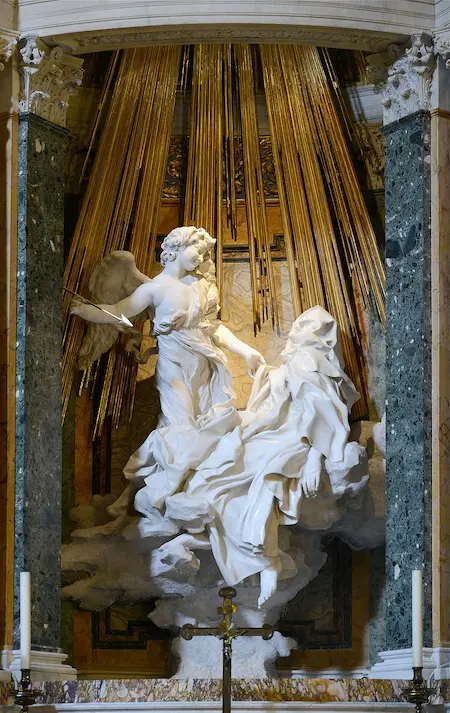
- Teresa of Ávila (1515–1582) — A Spanish Carmelite nun and reformer whose detailed accounts of contemplative prayer remain foundational in Christian mystical writing. Her described mystical experience later inspired one of the most famous artistic depictions of mysticism in Western art: Gian Lorenzo Bernini’s marble sculpture The Ecstasy of Saint Teresa (1645–1652), housed in the Cornaro Chapel in Rome.
- John of the Cross (1542–1591) — A Spanish Carmelite friar and collaborator of Teresa of Ávila, known for his writing on spiritual darkness and purification, often called the “dark night of the soul.”
- Isaac Luria (1534–1572) — A Jewish mystic based in Safed whose system, later known as Lurianic Kabbalah, became one of the most influential frameworks in Jewish mysticism.
Can Anyone Have a Mystical Experience?
Reports of mystical-type experiences come from people with formal training in a contemplative tradition and from people with none at all — some describe them as spontaneous, arising during illness, grief, nature, or ordinary daily life without any deliberate practice. Others report them emerging gradually through sustained meditation, prayer, or ascetic discipline over years.
Cultural background and expectation appear to shape both how these experiences are interpreted and how they are described afterward, which is part of why comparing accounts across traditions is genuinely difficult — researchers can’t fully separate the raw experience from the concepts a person already has available to describe it. It’s also worth being clear that these remain subjective reports: there is no way to independently verify the content of what someone believes they encountered, only that they had a powerful and often life-altering experience.
Not everyone who meditates, prays, or fasts will have one, and traditions themselves generally treat that as expected rather than a sign of failure — most contemplative teaching emphasizes steady practice over chasing a specific outcome. Separately, some contemporary research has studied psychedelic substances such as psilocybin in controlled clinical settings for their capacity to occasion experiences that resemble those described in mystical literature. This is a distinct area of supervised medical research, not a recommendation, and it should not be confused with unsupervised recreational use, which carries its own legal and health risks.
How Beginners Can Explore Mysticism
Start With Contemplation or Meditation
A short daily period of quiet sitting, reflective reading, prayer, or simply undistracted attention is the common entry point across nearly every tradition, and it carries little risk. There’s no need to expect an extraordinary experience from it — the practice itself, sustained over time, is the point.
Study a Trusted Tradition
Rather than combining unrelated practices from several traditions at once, it’s generally more productive to learn one tradition’s historical and cultural context in depth before exploring further. This reduces the risk of misunderstanding practices that were designed to work within a specific framework of meaning and guidance.
Read Primary and Scholarly Sources
Reading original mystical writing — poetry, contemplative texts, recorded sermons — alongside responsible academic commentary gives a more accurate picture than secondhand summaries, and helps distinguish a tradition’s own claims from later reinterpretations.
Keep Expectations Realistic
Unusual sensations or dramatic states are not, by most traditional accounts, the actual goal. Ordinary outcomes — steadier attention, more honest self-understanding, and gradual ethical development — are generally considered more reliable markers of progress than the intensity of any single experience.
Avoid Harmful or Extreme Practices
A few clear cautions are worth stating plainly:
- Avoid extreme fasting, prolonged sleep deprivation, or unsafe breathing techniques.
- Avoid substance misuse of any kind in pursuit of a spiritual experience.
- Be wary of coercive groups, and of any teacher who demands secrecy, large sums of money, unquestioning obedience, or isolation from family and friends.
- Don’t treat serious physical or psychological symptoms as purely spiritual events — persistent distress, dissociation, or symptoms that interfere with daily functioning deserve medical or mental health attention, not only spiritual reframing.
Frequently Asked Questions
What is mysticism in simple terms?
Mysticism is the pursuit of direct, personal experience of ultimate reality or the divine, rather than relying only on secondhand teaching or doctrine to understand it.
What is an example of mysticism?
A Christian contemplative describing a felt sense of union with God during silent prayer, or a Sufi practitioner reporting a state of nearness to God through remembrance practice, are both commonly cited examples.
Do mystics believe in God?
Many do, but not all. Christian, Jewish, and Islamic mystics generally describe their experience as union or nearness with a personal God. Many Buddhist and some nondual Hindu traditions, by contrast, describe deep insight or unity without necessarily framing it as contact with a deity — which is why scholars treat mysticism as a broader category than theistic belief alone.
Did Jesus practice mysticism?
This is debated among scholars rather than settled fact. Some point to passages in the Synoptic Gospels (such as Matthew 11:25–27) describing Jesus’s sense of intimate connection with God, and to the Gospel of John’s farewell discourse and prayer (chapters 14–17), as evidence of what scholars call “Christ-mysticism.” Others caution against reading later mystical categories back onto the historical Jesus. Regardless of that debate, later Christian mystics — from Paul’s visionary writings onward — explicitly drew on Jesus’s life and teaching as their model.
Conclusion
Mysticism is best understood not as one tradition but as a recurring pattern found across many: the pursuit of direct, transformative contact with ultimate reality, rather than only secondhand belief about it. That pattern shows up in Christian contemplative prayer, Sufi remembrance, Jewish Kabbalah, Hindu and Buddhist meditation, and in some nonreligious experiences of unity and awe. The specific language, goals, and guardrails differ meaningfully by tradition, and no single description covers all of them equally well. What stays consistent is the basic orientation: paying direct attention to what is most real, rather than settling for descriptions of it secondhand.

About the Author
Dana Whitfield
I write about numerology, astrology, mythology, tarot, and world mystical traditions for Mystivora, drawing on years of independent research across comparative religion and symbolic systems. I approach each topic by cross-checking primary texts and established scholarship rather than repeating popular but unverified claims.
Related Articles
View All Articles → Mysticism