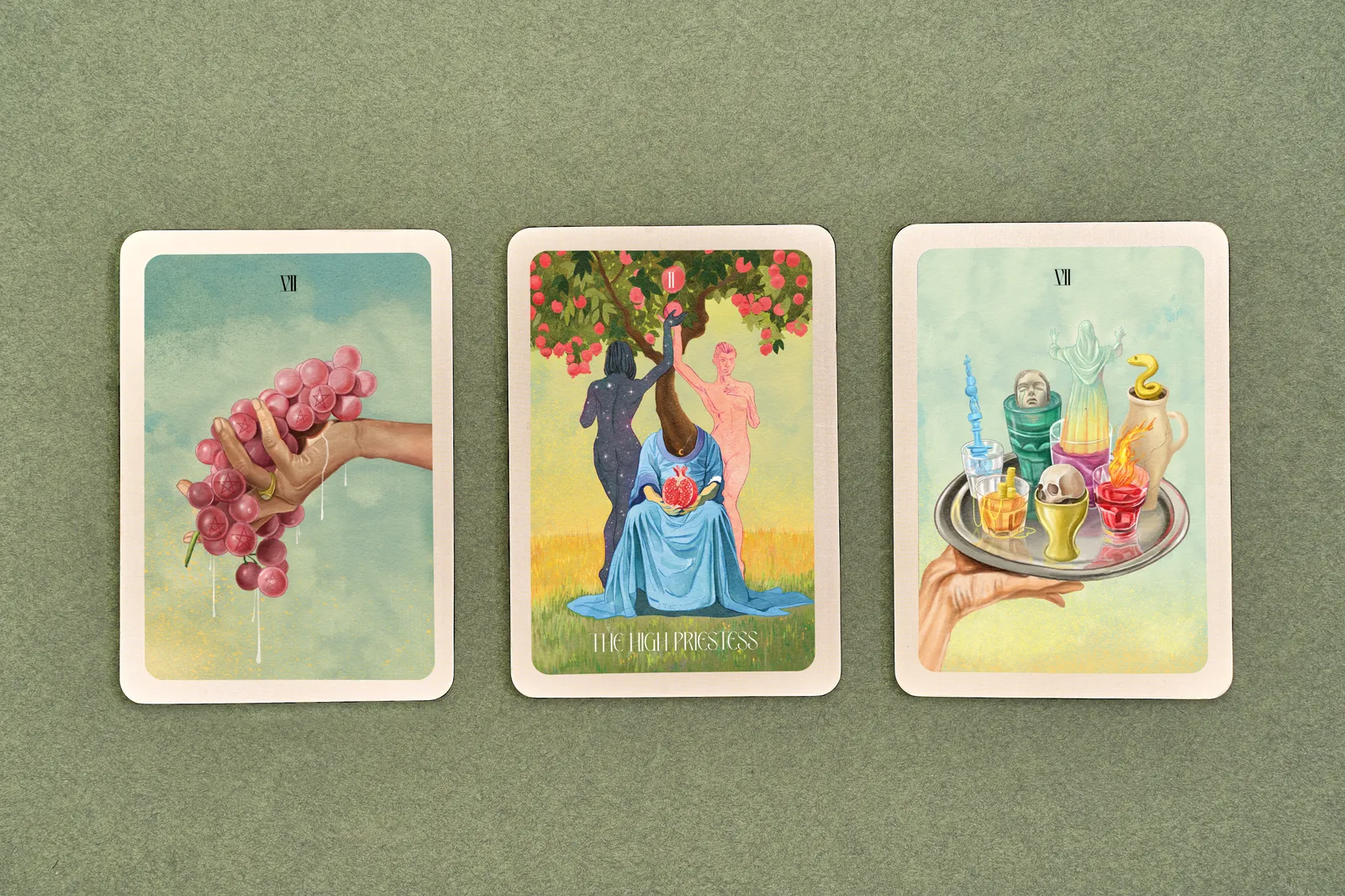
Unboxing your very first deck can feel both exhilarating and deeply intimidating. Holding a deck of seventy-eight unique cards, each filled with intricate artwork, strange symbols, and historical imagery, naturally triggers a sense of overwhelming responsibility. Most newcomers immediately turn to the small paper guidebook tucked inside the box, attempting to memorize the hundreds of distinct keywords, upright positions, and reversed interpretations listed for every single card. This standard approach quickly leads to mental exhaustion, causing many aspiring readers to abandon their practice altogether because they feel their memory simply is not strong enough to retain it all. The core dilemma lies in treating the deck like a textbook that requires strict rote learning, rather than an interconnected system of visual storytelling. This method matters because relying entirely on memory freezes your intuition during an actual reading, leaving you unable to connect the cards into a cohesive narrative when a real-world problem arises. By pivoting away from stressful memorization and learning to read the foundational systems built directly into the cards, you can unlock a fluid, intuitive reading style. This guide provides comprehensive, actionable insights to help you build confidence, develop visual literacy, and naturally master the art of card interpretation without ever opening a guidebook.
The Mental Freeze of Relying Solely on Memory
The primary reason beginners struggle to maintain a consistent reading practice is the psychological pressure of memorizing seventy-eight separate entries, which effectively doubles to one hundred and fifty-six when you account for reversals. When you attempt a layout while constantly checking your memory for the exact definition of a card, your analytical mind goes into overdrive, completely shutting down the creative and intuitive parts of your brain. If you pull a card during a moment of personal stress and your mind goes blank, you are immediately disconnected from the present moment, transforming what should be an insightful experience into a stressful memory test. This analytical freeze makes it incredibly difficult to see how cards interact with one another across a spread, reducing your reading to a series of disjointed, robotic keywords that fail to address the nuance of your situation.
This reliance on memory heavily impacts your growth because it prevents you from trusting your own observations and innate wisdom. Instead of looking at the actual scene depicted on the cardboard, your eyes glaze over as you search your internal database for a pre-written sentence created by someone else. This creates an unhealthy dependence on external authorities, convincing you that you cannot interpret a card unless you have a book open next to you. In reality, the traditional system was specifically designed to be visual, serving as a mirror for human psychology that relies on universal archetypes rather than secret code words.
To overcome this initial hurdle, you must give yourself explicit permission to stop studying definitions like vocabulary lists. A highly practical solution is to shift your focus toward understanding the larger, systemic patterns that bind the deck together. When you view the cards as a structured community with recurring themes, you no longer need to remember individual card traits in isolation. Instead, you learn to read the architectural blueprint of the deck, which allows you to deduce the meaning of any card on the fly based on its position within the system.
The Architectural Division of the Major and Minor Arcana
In contrast, the fifty-six cards of the Minor Arcana govern the daily, micro-level details of human existence. These cards depict the ordinary joys, conflicts, financial choices, and emotional adjustments that fill our routine weeks. While the Major Arcana shows the grand theater of life, the Minor Arcana shows the specific stage directions, offering practical commentary on how to handle immediate challenges. Recognizing this basic division immediately simplifies your analysis because you can instantly determine whether a situation requires macro-level reflection or micro-level action simply by noting which section of the deck dominates your spread.
Expert guidance from psychological traditions, particularly the work of Carl Jung regarding universal archetypes, confirms that the human mind naturally recognizes these grand characters without conscious study. The characters in the Major Arcana, such as the nurturing mother figure of the Empress or the structural authority of the Emperor, resonate with our shared human experience. When you observe these archetypes, look past the formal name of the card and evaluate what role that character plays in a universal story, allowing your natural understanding of human behavior to guide your interpretation.
Navigating the Elemental Landscapes of the Four Suits
The Minor Arcana is systematically divided into four distinct suits, each tied directly to one of the four natural elements, which include Fire, Water, Air, and Earth. This elemental framework provides a brilliant navigational system because each element corresponds to a specific area of human psychology and daily experience. The suit of Wands is linked to the element of Fire, representing passion, creativity, raw ambition, and the initial spark of inspiration that drives action. When you see Wands dominating a spread, you are instantly dealing with issues related to willpower, career energy, personal drive, and the fiery pursuit of your highest goals.
The suit of Cups connects to the element of Water, mapping the profound landscape of human emotions, relationships, intuition, and artistic expression. Because water naturally flows, adapts, and takes the shape of its container, this suit addresses how we connect with others, process grief, experience love, and manage our inner feeling states. Next, the suit of Swords represents the element of Air, governing the mental realm of intellect, communication, logic, boundaries, and conflict. Air is invisible yet sharp, mirroring how our thoughts, beliefs, and words can either cut through confusion or create intense mental storms of anxiety and misunderstanding.
Finally, the suit of Pentacles anchors the deck in the element of Earth, dealing with the material world, physical health, finances, long-term security, and manifest results. Earth represents the tangible aspects of life, focusing on your domestic environment, career stability, physical body, and the slow, steady effort required to build something lasting. By simply recognizing the element of the suit in front of you, you instantly narrow down the context of the card to a specific realm of life, eliminating three-quarters of the potential definitions before you even look at the numbers.
The Numerical Journey from Inspiration to Manifestation
Once you have identified the element of a card, you can easily determine its specific meaning by looking at its number, which tracks a logical progression from one to ten. In this systemic approach, the numbers tell a sequential story of development that repeats across all four suits. The Ace, representing the number one, always symbolizes a pure, unblemished seed of potential, offering a fresh start or a sudden burst of raw energy within that suit’s element. As you move to the Two, the initial spark encounters the need for balance, choice, cooperation, or dual perspectives, forcing you to weigh your options carefully.
The Three represents the initial expansion and creative output of that choice, often manifesting as collaboration, initial success, or outward growth. However, this early growth requires stability, which arrives in the Four, a number that symbolizes boundaries, structure, rest, and consolidation, though it can occasionally hint at stagnation if the structure becomes too rigid. The Five represents the inevitable disruption of that stability, introducing conflict, loss, unexpected challenges, or internal tension that forces you to adapt and grow past your comfort zone.
Order is restored in the Six, which brings harmony, emotional relief, mutual support, and a welcome period of recovery after the storm of the Five. The Seven introduces a phase of assessment, strategy, and personal choice, where you must re-evaluate your long-term plans and determine where to invest your limited energy. The Eight represents dedication, mastery, and focused effort, showing the hard work required to refine your skills or make major life adjustments. The Nine indicates the near-completion of the cycle, representing solitary fulfillment, personal satisfaction, or the internal culmination of the suit’s journey. Finally, the Ten represents absolute completion, showing the final outcome where the element is fully manifested, bringing either total abundance or an overwhelming burden that requires you to clear the slate and begin anew.
Developing Visual Literacy and Decoding Scenic Clues
The final step in mastering card interpretations naturally involves training your eyes to read the rich visual landscape embedded within the artwork itself, a technique known as visual literacy. The most popular historical decks, such as the classical Rider-Waite-Smith system, were carefully illustrated with detailed scenes designed to trigger immediate intuitive reactions. Instead of searching your memory for a phrase, look closely at the body language of the figures, the colors dominating the sky, and the physical terrain under their feet. A figure standing with open arms beneath a bright yellow sky instantly conveys joy, clarity, and optimism, requiring no memorization to comprehend.
Conversely, a figure huddled over fallen cups against a dark, grey backdrop immediately communicates themes of grief, regret, and emotional isolation. Pay close attention to the background landscapes, as they reveal the emotional environment of the situation. High, jagged mountains frequently symbolize long-term obstacles, steep challenges, or spiritual journeys that require immense endurance. Winding rivers and vast oceans represent the flow of the subconscious mind and shifting emotional depths, while flat, fertile green fields indicate stability, ease, and material readiness.
By combining the elemental context of the suit, the sequential progress of the number, and the direct emotional clues within the artwork, you form a highly precise interpretation unique to your situation. This holistic method transforms the deck from an intimidating memory quiz into an accessible visual map of human experience. You become a dynamic storyteller who reads the living patterns happening in the moment, allowing you to deliver deep, fluid, and authentic insights that help navigate real-world problems with absolute confidence.
Frequently Asked Questions
Is it wrong to use the guidebook when I am first starting out as a reader?
Using a guidebook is completely acceptable as a supportive learning tool, but it should never become an unyielding crutch that overrides your immediate observations. When you rely exclusively on the text, you train your brain to value someone else’s written opinion over the living visual patterns displayed right in front of your eyes. Consider reading through the booklet outside of active sessions to familiarize yourself with historical perspectives, but try closing the book completely when performing a real layout. Let your eyes scan the artwork, suits, and numbers first, forming your own intuitive summary before checking the text to see if it adds any helpful secondary layers of context.
How do I interpret Court Cards like Kings, Queens, Knights, and Pages without memorizing their specific traits?
Court cards are best understood as personality archetypes or developmental maturity scales within that specific suit’s element. Pages represent the curious, youthful energy of a student, carrying fresh messages or new learning opportunities related to their suit. Knights embody focused, intense action and extreme movement, sometimes rushing forward without thinking. Queens represent internal mastery, emotional intelligence, and nurturing control over the suit’s realm, while Kings symbolize external authority, leadership, and structured execution. To read them easily, simply combine the maturity level of the title with the element of the suit; for instance, a Queen of Cups represents internal mastery over the emotional world.
What is the easiest way to understand reversed cards without learning a whole new set of definitions?
Reversed cards, which appear upside down in a layout, do not require you to learn an entirely separate database of meanings. Instead, view a reversal simply as an energetic modification of the upright card’s core theme, indicating that the energy is blocked, internalized, or expressed in an extreme manner. A reversed card frequently suggests that the themes are occurring privately inside the querent’s psyche rather than manifesting externally in the physical world. For example, an upright Three of Swords indicates clear, external heartbreak or painful communication, while a reversed placement shows that the individual is privately processing internal grief or slowly recovering from a past emotional wound.
How can I practice reading cards daily if I only have a few minutes to spare?
A highly effective daily exercise for busy beginners is the single-card pull, performed every morning as a prompt for conscious observation. Take a few quiet moments to shuffle your deck, draw a single card, and spend sixty seconds scanning the visual landscape without looking at any text. Identify the element, note the numerical progression, and observe the immediate emotional tone conveyed by the figures and background scenery. Write down two or three sentences summarizing what area of life the card addresses and how its energy might appear during your day, then return to your notes in the evening to review how those patterns manifested in reality.
Why do different tarot decks have completely different artwork, and will that confuse my learning?
Different artistic styles can occasionally feel confusing if you try to memorize specific visual details, which is why focusing on the core underlying systems is so powerful. Most modern decks are structurally based on the historical Rider-Waite-Smith model, meaning that even if the art style changes to minimalist drawings or abstract concepts, the foundational suits, numbers, and major archetypes remain completely intact. When evaluating a new deck, look past the surface aesthetic to locate the elemental suit and numerical value. Understanding these core systemic blocks allows you to read almost any themed deck successfully, as the architecture remains completely universal.
Can I perform accurate readings for other people if I still do not know all the traditional meanings?
You can absolutely perform deeply insightful readings for friends and family by leaning heavily on collaborative visual storytelling and open communication. Instead of pretending to be an absolute authority who knows every historical detail, invite the other person to look at the layout with you as an active participant. Ask them what emotions the figures evoke, what elements dominate the spread, and how the numerical progression mirrors the timeline of their current real-world challenge. Combining your understanding of the deck’s structural system with their direct personal context creates a powerful dialogue that provides profound clarity without requiring perfect memorization.
Wrap-Up
Mastering the art of card interpretation is a deeply rewarding journey that flourishes when you trade the stress of raw memorization for the creative freedom of systemic reading. As this guide has outlined, the seventy-eight cards are not a disconnected list of vocabulary words, but a beautifully organized visual map built upon universal archetypes, elemental suits, and a logical numerical progression. By learning to decipher the grand themes of the Major Arcana, the practical daily insights of the Minor Arcana, and the rich emotional landscape hidden within scenic artwork, you reclaim your personal agency and trust your innate intuition. This visual literacy transforms your practice from an anxious memory quiz into a fluid, meaningful dialogue with your subconscious mind. As you move forward, let go of the need for absolute technical perfection, close the guidebooks during active sessions, and allow yourself to play with the visual narratives unfolding on your table. Trust the patterns you see, embrace the natural storytelling capacity of your mind, and watch as this ancient symbolic language becomes a practical, accessible tool for navigating life’s challenges with clarity, wisdom, and confidence.
References
-
The British Museum Department of Prints and Drawings: Historical Evolution and Iconography of Early European Playing Cards and Divination Decks (Academic archive documenting the structural origins and systemic design of symbolic decks).
-
Stanford University (Stanford Archetypal Research Project): Universal Mythological Motifs and the Psychological Function of Visual Systems (Research analysis detailing how human intuition naturally processes symbolic illustrations and character roles).
-
Harvard University Extension School: Visual Literacy: Deconstructing Narrative Structures in Historical Imagery (Educational course documentation outlining methods for analyzing body language, terrain, and color theory in symbolic art).
-
The Faculty of Astrological Studies & Esoteric Arts: The Integration of the Four Classical Elements in Psychological Mapping (Institutional manual examining the correlation between Fire, Water, Air, Earth, and human emotional landscapes).
-
University of Cambridge Faculty of English: Sequential Storytelling and Numerical Progressions in Medieval and Renaissance Literature (Historical study tracking the use of numbers one through ten as structural story arcs in Western traditions).