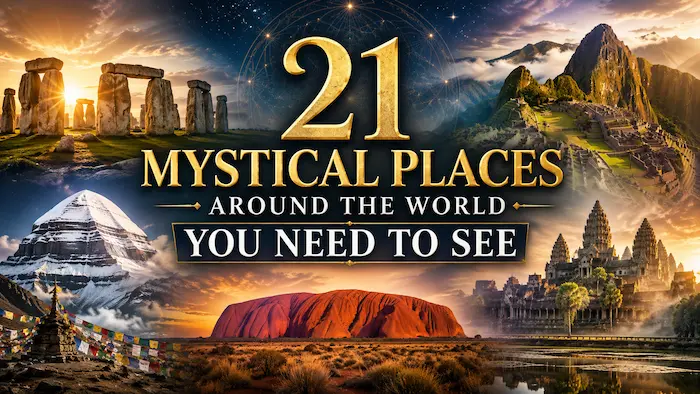
Mystical places are real-world locations that feel touched by something more than ordinary history. A mystical place is any physical destination where ancient history, sacred tradition, unusual landscapes, monumental architecture, and unsolved questions come together to create an atmosphere of mystery, often deepened by myths and local legends passed down for generations. Every destination on this list is real and can be visited today, though some of the supernatural stories attached to them remain matters of belief or folklore rather than proven fact. From wind-carved deserts to ancient stone temples, here are 21 of the most mystical places in the world, and what makes each one worth understanding.
What Is a Mystical Place?
The term describes a real location whose reputation rests on mystery, sacred meaning, spiritual tradition, ancient ritual, or an atmosphere that feels somehow larger than its physical dimensions. Unlike a purely mythical location, which typically exists only in legend or literature, a mystical place can be located on a map, walked through, and studied by historians and archaeologists. For a closer look at mysticism itself, the broader spiritual tradition this term draws from, see our full guide to what mysticism means.
A site can earn this reputation for several overlapping reasons. Some places are central to living religious traditions, where pilgrims still travel to worship or perform rituals their ancestors practiced for centuries. Others are defined by ancient monuments or ruins whose builders left behind more questions than answers. A number of locations owe their reputation to dramatic natural surroundings, such as isolated mountains, high-altitude lakes, or wind-carved rock formations that feel unlike anywhere else. Many carry stories passed down through generations, whether religious narratives, local folklore, or accounts of unusual personal experiences reported by visitors over time.
It’s worth being clear about one thing: calling somewhere “mystical” doesn’t automatically mean it hides paranormal activity or defies scientific explanation. Often, the mystique comes from the intersection of documented history and enduring belief, not from anything that has been proven supernatural.
21 Most Mystical Places in the World
The list below spans six continents and thousands of years of human history. Some entries are dominated by ancient stone architecture, others by natural landscapes that have inspired legend for as long as people have lived nearby. Wherever possible, the descriptions separate verified history from folklore and personal belief, since conflating the two tends to flatten what makes each mystical place genuinely interesting.
1. Stonehenge, England
Stonehenge stands on Salisbury Plain in Wiltshire, England, one of the most recognizable prehistoric monuments in the world. The site was built in several phases over roughly 1,500 years, beginning around 3000 BCE, with the massive sarsen stones and smaller bluestones arriving at different points in that long construction history. Its alignment with the summer and winter solstices is well documented, suggesting the builders tracked the movement of the sun with real precision.
What Stonehenge was actually used for remains only partly understood. Archaeologists have proposed connections to burial practices, ritual gatherings, and astronomical observation, and evidence of nearby cremated remains supports at least some funerary function. Later folklore linked the monument to giants, wizards, and eventually the Druids, though the stone circle predates the historical Druids by well over a thousand years. That gap between hard evidence and centuries of legend is part of why Stonehenge continues to feel like a mystical place today.
2. Machu Picchu, Peru
Perched high in the Andes above the Urubamba River valley, Machu Picchu was built by the Inca in the fifteenth century, most likely as a royal estate for the emperor Pachacuti. The site includes agricultural terraces, temples, residential structures, and stonework fitted together with remarkable precision, all set against a backdrop of steep, cloud-wrapped peaks.
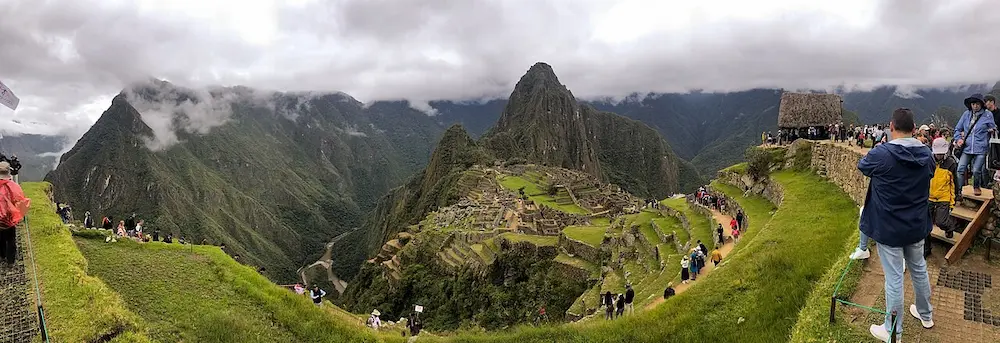
Historians believe Machu Picchu combined practical and ceremonial functions, serving as a retreat while also aligning architecturally with surrounding mountains that held spiritual significance in Inca cosmology. It was abandoned within roughly a century of its construction. Local residents knew the site, but it drew broad international attention in the early twentieth century. The isolation of its setting, the sophistication of its engineering, and its close relationship with the sacred landscape around it all contribute to its enduring mystical reputation.
3. Mount Kailash, Tibet
Mount Kailash rises in a remote region of western Tibet and holds sacred status across four major religious traditions: Hinduism, Buddhism, Jainism, and Bon. For Hindus, it is associated with the god Shiva. Buddhists connect it to spiritual attainment, and both Jains and followers of Bon regard it as central to their own cosmologies.
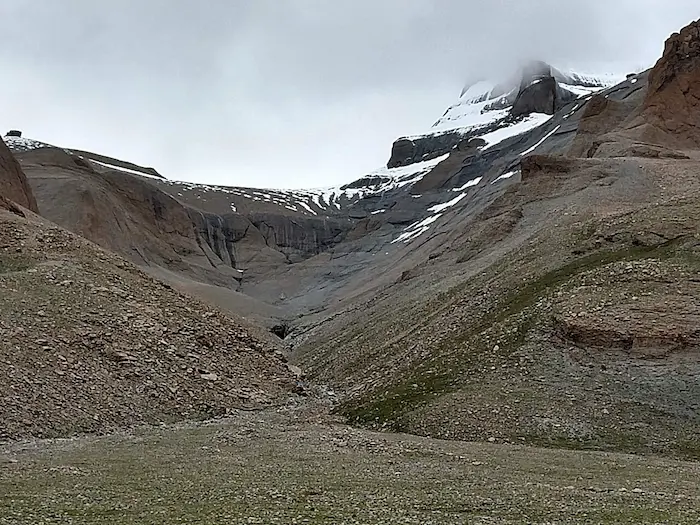
Rather than climbing to the summit, pilgrims perform a circumambulation, walking a roughly 32-mile path around the base of the mountain, a practice believed to bring spiritual merit. Climbing Mount Kailash is widely discouraged and, in practice, prohibited out of respect for its sacred status, and no confirmed ascent has taken place. This makes it a rare example of a mystical place that continues to function primarily as a living site of worship rather than a conventional tourist destination.
4. Sedona, Arizona, United States
Sedona sits in north-central Arizona, known for its red sandstone buttes, canyons, and pine forests. Its striking desert scenery has made it a magnet for hikers and photographers, but the town is equally known for its association with the New Age concept of energy vortexes, sites where the earth’s energy is said to be especially strong or concentrated.
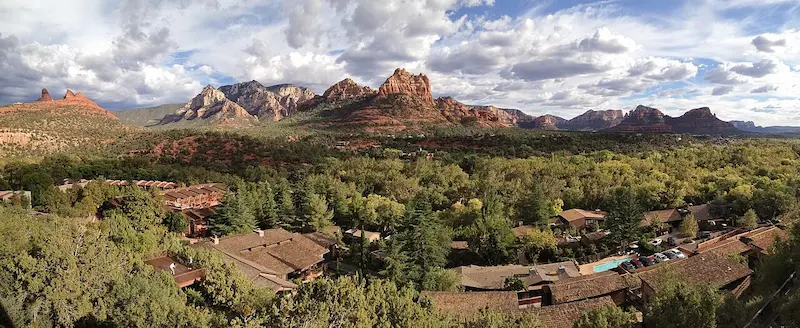
This vortex belief became prominent in the 1980s and has since shaped Sedona’s identity as a center for meditation retreats, spiritual workshops, and reflective travel. The vortex idea is a spiritual belief rather than a scientifically established phenomenon. What isn’t in question is the visual drama of the landscape itself, which draws visitors regardless of their views on the vortex phenomenon.
5. Uluru, Australia
Uluru is a massive sandstone monolith rising from the flat desert of Australia’s Northern Territory. For the Anangu people, the traditional custodians of the land, Uluru holds deep spiritual significance connected to Tjukurpa, the creation stories and law that shape their relationship with the land, ancestors, and each other.
Several sites around the base of Uluru are considered sacred, and the Anangu have long asked visitors not to climb the rock out of respect for its cultural importance; climbing was formally banned in 2019. The rock’s surface famously shifts color through shades of orange and red at sunrise and sunset, a natural effect that draws photographers from around the world. Approaching Uluru with awareness of its living Indigenous significance, rather than treating it purely as a scenic backdrop, is central to understanding why it is regarded as a mystical place.
6. Mount Shasta, California, United States
Mount Shasta is a dormant volcano in Northern California that has held spiritual significance for Indigenous communities, including the Winnemem Wintu, for generations, long before it became associated with newer spiritual movements. Its traditional importance centers on the mountain’s role in origin stories and ongoing ceremonial practice.
Beginning in the late nineteenth and twentieth centuries, Mount Shasta also attracted a separate layer of New Age legend, including stories of hidden spiritual masters, a subterranean city, refugees from the lost continent of Lemuria, and reported UFO sightings. These modern narratives developed largely independently of, and are distinct from, the Indigenous traditions connected to the mountain. Mount Shasta’s sheer visual presence, rising abruptly from the surrounding landscape, adds to its reputation regardless of which layer of tradition a visitor encounters first.
7. Glastonbury Tor, England
Glastonbury Tor is a hill in Somerset, England, topped by the roofless remains of a medieval church tower dedicated to St. Michael. The site has a long religious history stretching back to early Christian settlement, but it is most widely known today for its association with Arthurian legend, particularly the idea that Glastonbury is linked to the mythical Isle of Avalon and, by extension, the Holy Grail.
These Arthurian connections largely developed in the medieval period and were reinforced by later folklore rather than being part of any earlier historical record. Glastonbury Tor also holds a prominent place in modern spiritual and pilgrimage culture, drawing visitors interested in earth mysteries, alternative spirituality, and its symbolic hilltop setting. The panoramic view from the top, overlooking the Somerset Levels, adds a physical sense of separation from the ordinary world that reinforces its mystical reputation.
8. Varanasi, India
Varanasi sits along the banks of the Ganges River in northern India and is considered one of the most sacred cities in Hinduism. Its stone ghats, or steps leading down to the river, host daily rituals, and the city is home to numerous temples central to Hindu worship and pilgrimage.
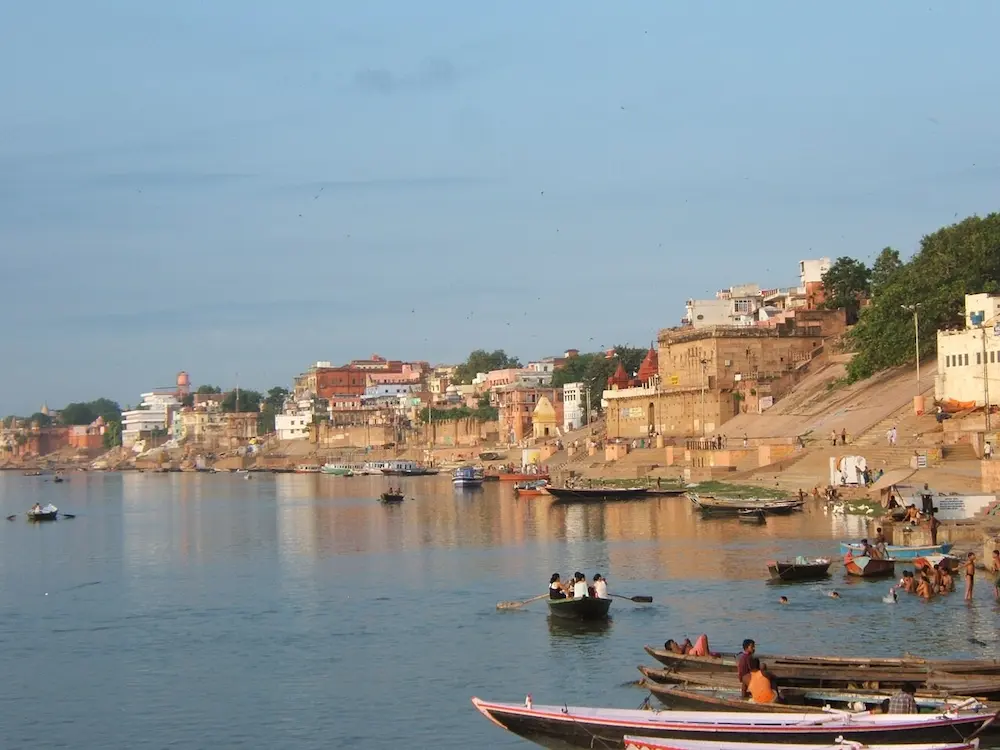
Cremation ceremonies performed at specific ghats along the river are connected to Hindu beliefs about purification and moksha, or liberation from the cycle of rebirth. Varanasi functions first and foremost as a living sacred city, where religious practice continues daily rather than existing as a historical curiosity. Its combination of ancient continuity, ongoing ritual, and its setting on one of India’s most revered rivers is why it is consistently named among the world’s most mystical places.
9. Angkor Wat, Cambodia
Angkor Wat was constructed in the early twelfth century under King Suryavarman II as part of the Khmer Empire, originally dedicated as a Hindu temple to the god Vishnu. Over subsequent centuries, it gradually transitioned into a Buddhist site, a shift that reflects the broader religious changes across the region.
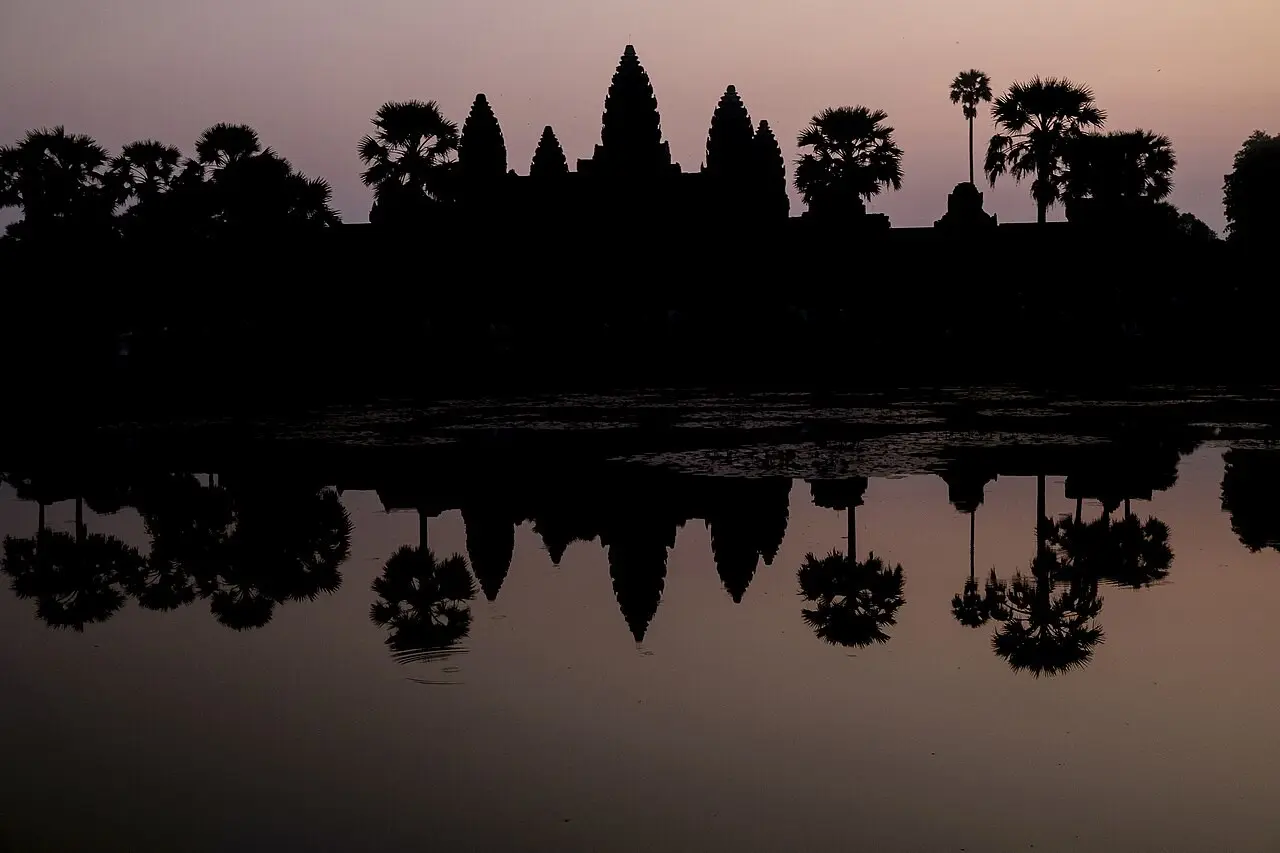
The temple’s scale is difficult to overstate, with elaborate bas-reliefs depicting Hindu epics, a layout believed to represent Mount Meru, the cosmic mountain at the center of the universe in Hindu and Buddhist cosmology, and a moat and causeway system that frame the central towers. Angkor Wat’s surrounding jungle, its continuous religious use across two major faiths, and its architectural ambition combine to make it one of Southeast Asia’s most striking mystical places.
10. Easter Island, Chile
Easter Island, known to its Indigenous Rapa Nui people as Rapa Nui, lies in the southeastern Pacific and is famous for its moai, the monumental stone statues carved between roughly the thirteenth and sixteenth centuries. The moai are generally understood to represent important ancestors, and their placement across the island was tied to community identity and status.
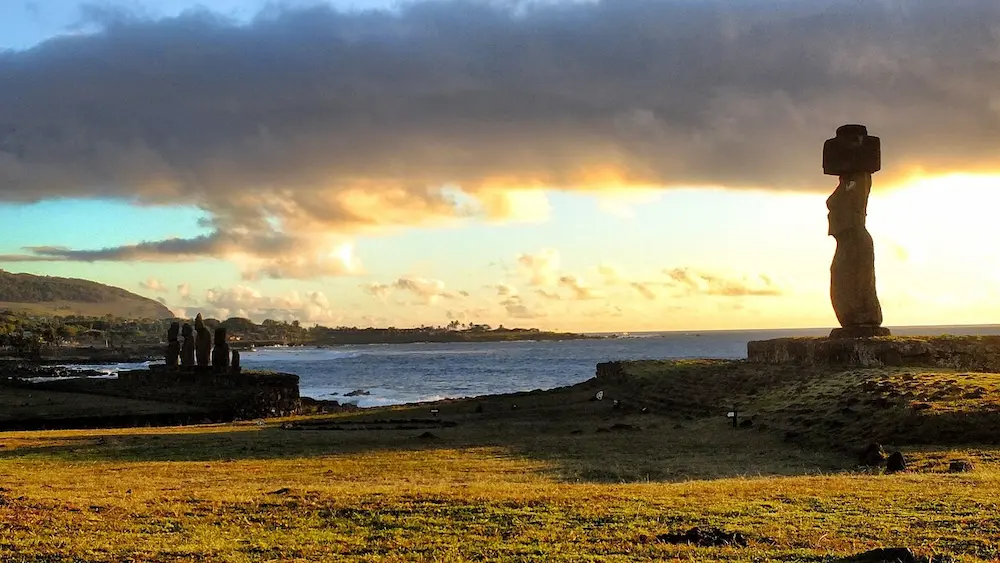
Archaeologists continue to study exactly how the statues were carved from volcanic rock and transported across the island, with current research favoring methods involving ropes, wooden sledges, or a controlled “walking” technique rather than any exotic explanation. Older narratives claiming the Rapa Nui people mysteriously vanished have been widely discredited; the population’s decline was driven by factors including deforestation, disease introduced through outside contact, and later exploitation, and Rapa Nui descendants live on the island today. The remaining archaeological questions about the moai, combined with the island’s extreme isolation, keep it firmly in the category of mystical places.
11. The Pyramids of Giza, Egypt
The Pyramids of Giza, including the Great Pyramid built for the pharaoh Khufu, were constructed roughly 4,500 years ago as part of elaborate royal funerary complexes on the outskirts of modern Cairo. They represent one of the most advanced engineering feats of the ancient world, built with a level of precision that still draws study today.
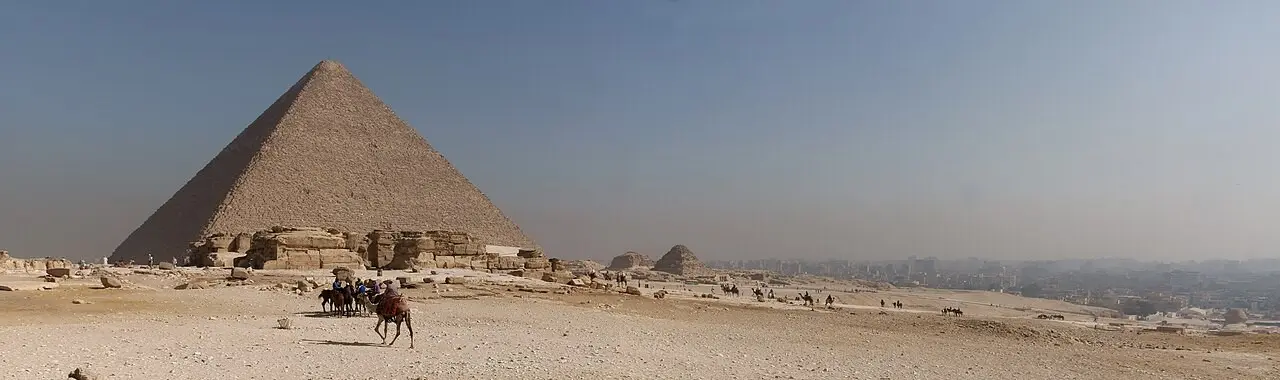
Some elements of the complex have astronomical associations, and the pyramids have long attracted legends and speculative theories about their construction and purpose. It’s worth stating plainly that claims about extraterrestrial involvement in building the pyramids are not supported by archaeological or engineering evidence; the prevailing scholarly understanding points to organized labor, sophisticated logistics, and skilled Egyptian engineering. The pharaohs buried here were also surrounded by an elaborate visual language of royal and divine power, from crowns to scepters, used to assert their authority. The pyramids’ scale, age, and the remaining questions about construction logistics are more than enough to sustain their mystical reputation without invented explanations.
12. Delphi, Greece
Delphi occupies a dramatic site on the slopes of Mount Parnassus in central Greece and was home to the ancient sanctuary of Apollo. It was best known for the Oracle of Delphi, where a priestess called the Pythia delivered prophecies that influenced political and military decisions across the ancient Greek world.
Delphi was widely regarded as the omphalos, or “navel of the world,” a symbolic center point believed to mark the meeting place of two eagles sent out by Zeus. The site’s religious authority meant that leaders and city-states regularly sought guidance there before major undertakings. Combined with its steep mountain setting overlooking the Gulf of Corinth, Delphi’s history as both a spiritual and political center makes it one of the ancient world’s most enduring mystical places.
13. Lake Titicaca, Peru and Bolivia
Lake Titicaca sits at over 12,000 feet in the Andes, straddling the border between Peru and Bolivia, and is one of the highest navigable lakes in the world. In Inca tradition, the lake holds deep origin significance, with some accounts describing it as the birthplace of the sun or the site where the first Inca rulers emerged.
The Islands of the Sun and the Moon, located within the lake, were considered sacred within this tradition and are believed to have hosted important ceremonial sites. Cultures predating the Inca, including the Tiwanaku civilization, also developed around the lake’s shores, adding further historical depth to the region. The combination of extreme altitude, dramatic scenery, and layered pre-Columbian mythology gives Lake Titicaca its distinct mystical character.
14. Mount Fuji, Japan
Mount Fuji, Japan’s tallest peak, has held religious significance in both Shinto and Buddhist traditions for centuries. In Shinto belief, the mountain is associated with the deity Konohanasakuya-hime, while Buddhist pilgrims have historically climbed it as an act of spiritual discipline and purification.
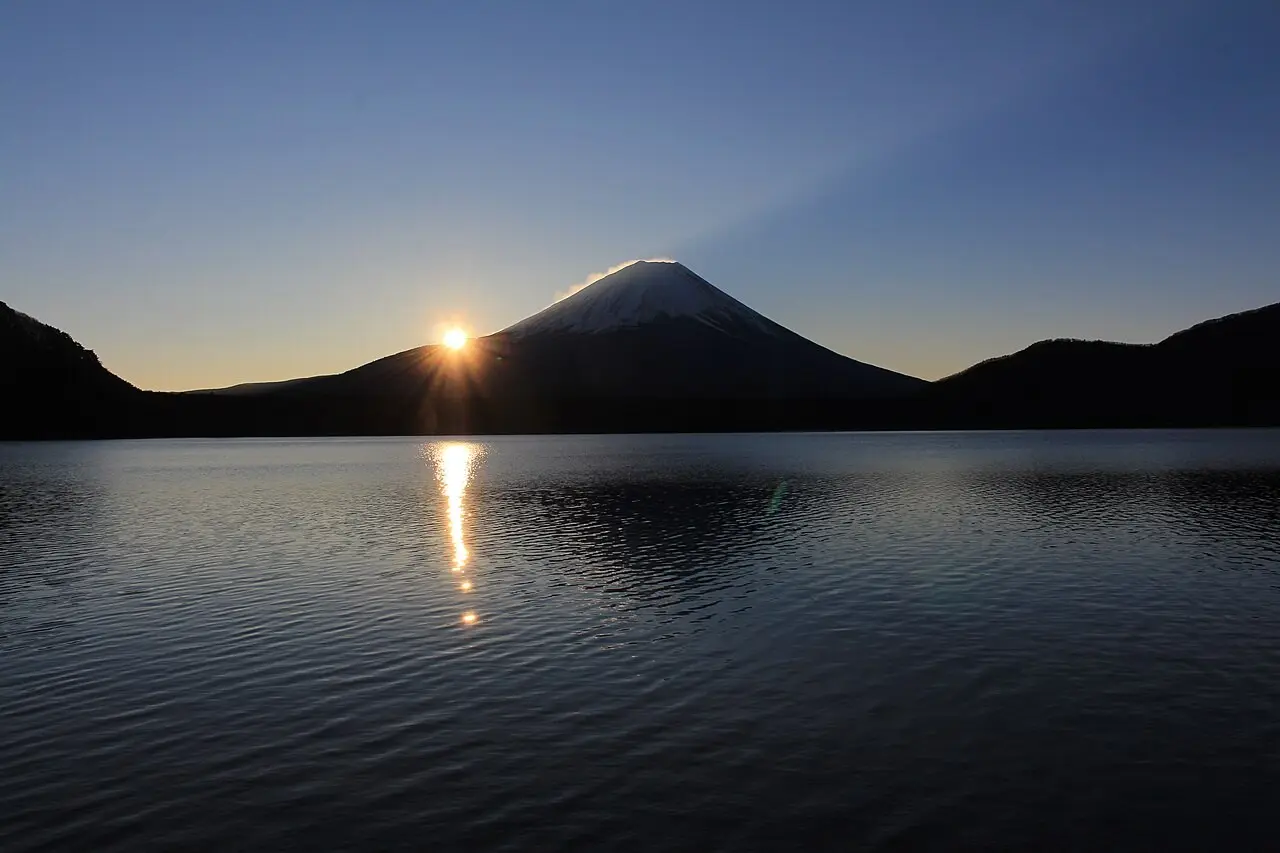
Pilgrimage routes up the mountain remain active today, and Mount Fuji has also served as a recurring subject in Japanese art and literature, most famously in woodblock prints that helped cement its symbolic status nationally and internationally. Its near-perfect symmetrical volcanic cone is instantly recognizable and reinforces the sense of a mountain set apart from ordinary landscape. That blend of active religious practice and cultural symbolism keeps Mount Fuji firmly on any list of mystical places.
15. Petra, Jordan
Petra was carved into rose-colored sandstone cliffs by the Nabataeans, an Arab trading people who established the city as a major hub roughly 2,000 years ago. Visitors typically enter through the Siq, a narrow canyon passage that opens dramatically onto the Treasury, the most famous of Petra’s rock-cut facades.
Beyond the Treasury, the city includes tombs, temples, and a sophisticated water management system that allowed a desert settlement to thrive. Petra’s wealth was built on its position along key trade routes connecting Arabia, Egypt, and the Mediterranean. While the city was largely unknown to the Western world until the early nineteenth century, it’s more accurate to describe it as forgotten by outsiders rather than genuinely lost, since local Bedouin communities were aware of the site throughout that period. Its hidden approach through solid rock and its scale within the surrounding desert are central to why Petra continues to be described as a mystical place.
16. Newgrange, Ireland
Newgrange, located in Ireland’s Boyne Valley, is a prehistoric passage tomb constructed around 3200 BCE, making it older than both Stonehenge and the Egyptian pyramids. The mound covers a stone passage and chamber believed to have served burial and ceremonial functions for the community that built it.
Newgrange is best known for its winter solstice alignment: for a few mornings each year around December 21st, sunlight travels down the passage and illuminates the inner chamber, a feature that required considerable astronomical understanding to design. In later Irish mythology, Newgrange became associated with the Tuatha Dé Danann and figures such as Aengus, layering legend on top of its older ceremonial purpose. That combination of precise ancient engineering and centuries of subsequent myth is what secures Newgrange’s place among the world’s mystical sites.
17. Chichén Itzá, Mexico
Chichén Itzá was one of the largest cities of the Maya civilization, located on Mexico’s Yucatán Peninsula. Its most recognizable structure, El Castillo, is a stepped pyramid closely associated with Maya astronomy. Around the spring and autumn equinoxes, sunlight and shadow can create the appearance of a serpent descending one staircase.
The site also includes the Sacred Cenote, a natural sinkhole into which offerings, and at times human remains, were deposited as part of religious ceremonies connected to rain and fertility deities. Chichén Itzá functioned as an important political and religious center within the Maya world, and its ceremonies should be understood within that broader religious and civic context rather than reduced to sensationalized descriptions of sacrifice. Maya rulers reinforced that authority visually as well, often through jaguar imagery and throne regalia meant to connect the ruling elite with supernatural forces. The precision of its astronomical architecture, paired with its religious depth, makes it one of the most studied mystical places in the Americas.
18. The Nazca Lines, Peru
The Nazca Lines are a series of enormous geoglyphs etched into the arid desert floor of southern Peru, created by the Nazca culture between roughly 500 BCE and 500 CE. The designs include animals, plants, and geometric shapes, some stretching hundreds of feet across, made by removing dark surface stones to reveal the lighter soil underneath.
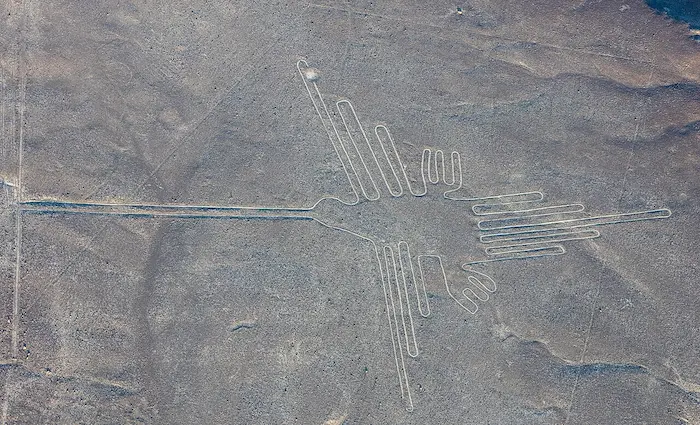
Because of their scale, the lines are best appreciated from the air, which has fueled decades of speculation about their purpose. Leading archaeological interpretations connect the lines to ritual pathways, water and irrigation practices, or ceremonial movement tied to astronomical or agricultural cycles. Claims that the lines were created with the help of extraterrestrial visitors are not supported by archaeological evidence and are generally regarded by researchers as unfounded speculation. The genuine scale of the achievement, built without any aerial vantage point available to the Nazca themselves, is impressive enough without unsupported explanations.
19. Göbekli Tepe, Türkiye
Göbekli Tepe, in southeastern Türkiye, contains monumental stone pillars arranged in circular enclosures dating back roughly 11,000 years, making it one of the oldest known monumental structures on Earth. Many of the T-shaped pillars are carved with images of animals, including foxes, boars, and birds.
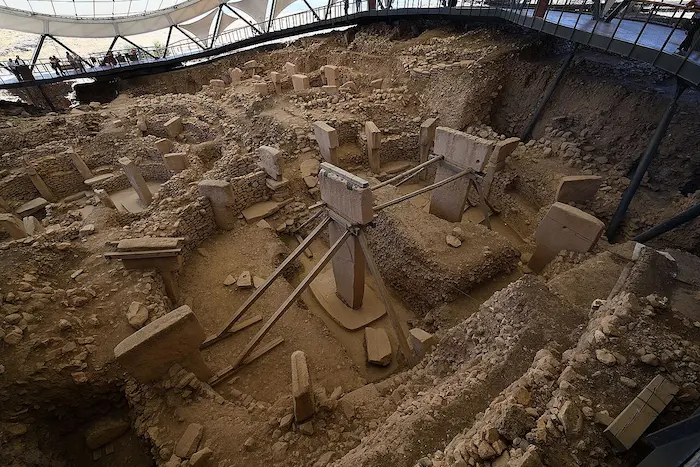
Its age has made Göbekli Tepe central to ongoing debates about how complex, large-scale construction projects were organized during the transition from hunter-gatherer lifeways to early farming communities. Researchers continue to discuss whether the site served ceremonial, religious, or communal gathering functions, and while it is sometimes described in popular coverage as the world’s first temple, that label should be treated as a working hypothesis rather than a settled conclusion. Its age alone, predating both Stonehenge and the pyramids by thousands of years, gives Göbekli Tepe a mystique rooted entirely in verified archaeology.
20. The Isle of Skye, Scotland
The Isle of Skye, off Scotland’s northwest coast, is shaped by dramatic landscapes including the Fairy Pools, a series of clear blue pools and waterfalls, the eerily rock-formed Fairy Glen, and the jagged basalt pillar known as the Old Man of Storr. These features owe their names to generations of local folklore.
Gaelic tradition on Skye includes stories of fairies, giants, and other supernatural beings tied to specific landmarks across the island, passed down long before the island became a popular hiking destination. Unlike many entries on this list, Skye’s mystical reputation isn’t anchored to a single monument or sacred building; it comes primarily from the combined effect of striking landscape and centuries of oral storytelling. That distinction makes it a useful reminder that a mystical place doesn’t always require ancient architecture to earn its reputation.
21. Teotihuacán, Mexico
Teotihuacán, located northeast of modern Mexico City, was one of the largest cities in the pre-Columbian Americas at its height, though the identity of the people who founded it remains a subject of ongoing research; even its original name is unknown, since “Teotihuacán” was a name given later by the Aztecs. The city’s layout centers on the Avenue of the Dead, connecting the Pyramid of the Sun and the Pyramid of the Moon.
By the time the Aztecs encountered the ruins centuries after the city’s decline, they regarded Teotihuacán as a sacred place tied to creation mythology, believing it to be where the gods gathered to create the sun and moon. The city’s precise urban planning, its massive ceremonial pyramids, and the layered mystery surrounding its original builders all contribute to Teotihuacán’s status as one of Mexico’s most mystical places.
Frequently Asked Questions
What is a mystical place?
A mystical place is a real, physical location associated with sacred traditions, ancient history, mystery, legends, unusual landscapes, or profound personal experiences reported by visitors over time. It doesn’t require proof of paranormal activity to earn the label. Instead, the designation usually comes from a combination of documented history, religious or cultural significance, and stories that have accumulated around the site over generations. Many mystical places, like Varanasi or Mount Kailash, are also active centers of living religious practice rather than abandoned ruins, which adds another layer to why they continue to draw visitors and pilgrims alike.
What is the most mythical place in the world?
Atlantis is probably the best-known mythical place, most often cited when people discuss legendary lost civilizations. The story originates from the ancient Greek philosopher Plato, who described Atlantis in his dialogues as an advanced island civilization that sank beneath the sea. No archaeological evidence has ever conclusively identified Atlantis as a real historical location, and most historians consider it a philosophical device rather than a factual account. It’s worth noting that “mythical” and “mystical” are not interchangeable: mythical generally refers to something that exists only within myth or legend, while mystical usually describes a real place wrapped in sacred meaning or mystery.
What are some of the most mystical places in the world?
Some of the most frequently cited mystical places include Stonehenge in England, Machu Picchu in Peru, and Mount Kailash in Tibet, each combining ancient history with unresolved questions about their full purpose. Uluru in Australia and Varanasi in India are notable for their deep, ongoing significance within living Indigenous and religious traditions. Sedona, Arizona is well known for its association with New Age spiritual beliefs, while Angkor Wat in Cambodia and the Pyramids of Giza in Egypt stand out for their monumental scale and religious continuity. Each of these sites blends documented history with layers of belief and legend.
What does a mythical place mean?
A mythical place is a location that exists primarily within mythology, legend, religious narrative, or literature, rather than one that can be confirmed through historical or archaeological evidence. Atlantis, Camelot, and Shangri-La are commonly cited examples: each has captured imaginations for centuries, but none has ever been definitively located or proven to have existed as described. This is a useful contrast to mystical places, which are typically real, physical locations that carry sacred meaning, mystery, or legend layered on top of a documented, verifiable history.
Are mystical places real?
Yes, the locations featured in this article are geographically and historically real; you can visit each one, and much of their history has been documented by archaeologists, historians, and religious scholars. What isn’t necessarily proven are the supernatural claims sometimes attached to them, such as energy vortexes, curses, hidden portals, or other paranormal phenomena. These ideas typically come from folklore, spiritual belief systems, or subjective personal experience rather than verifiable scientific evidence, which is why it’s worth engaging with each place’s documented history separately from the legends that surround it.
Conclusion
What makes these 21 destinations so compelling isn’t any single quality, but the way real landscapes, human history, sacred tradition, architecture, and centuries of storytelling all come together in one place. A visitor doesn’t need to accept every supernatural claim attached to a site to appreciate why it continues to draw people back, whether that’s the precision of a solstice alignment at Newgrange, the living religious practice along the ghats of Varanasi, or the sheer isolation of Machu Picchu high in the Andes. Each of these mystical places rewards a visitor willing to separate documented history from folklore while still respecting the traditions that give a site its meaning. If you have the chance to visit any of them, approach the experience with curiosity and cultural respect, and let the place’s own history speak for itself.

About the Author
Dana Whitfield
I write about numerology, astrology, mythology, tarot, and world mystical traditions for Mystivora, drawing on years of independent research across comparative religion and symbolic systems. I approach each topic by cross-checking primary texts and established scholarship rather than repeating popular but unverified claims.
Related Articles
View All Articles → Mysticism