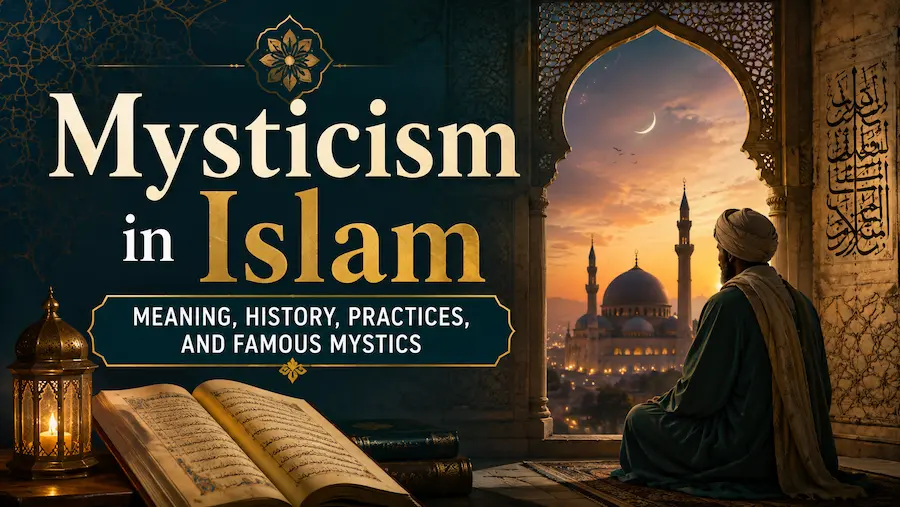
Mysticism in Islam is the inward spiritual dimension of the Islamic faith, focused on purifying the heart, remembering Allah, and developing a deeper awareness of His presence. It is most commonly expressed through Sufism, known in Arabic as Tasawwuf. Rather than being a separate religion or Islamic sect, Sufism is generally understood by its practitioners as a path of spiritual discipline, ethical refinement, and closeness to Allah within Islam.
Islamic mysticism belongs to the broader tradition of mysticism found in many religions, including Catholic mysticism and Jewish mystical traditions. Its central concerns are not supernatural powers or unusual experiences, but sincerity, self-discipline, remembrance of God, and the transformation of character in everyday life.
What Is Mysticism in Islam?
Islamic mysticism is best described as the pursuit of a deeper, more direct awareness of Allah through inner transformation rather than through external observance alone. It emphasizes qualities such as sincerity, humility, and love, and it treats religious practice as something that should reshape the heart, not just the outward actions of the believer.
Several themes recur across nearly every school of Islamic mysticism:
- Inner spiritual transformation, understood as a gradual refinement of character and intention
- Experiential or heartfelt knowledge of God, alongside — not instead of — scriptural and legal knowledge
- Purification of the heart from pride, greed, envy, and attachment to worldly things
- Regular remembrance of Allah, both in formal worship and throughout daily life
- A heightened awareness of the divine presence in ordinary moments
It is worth being direct about what Islamic mysticism is not. It is not a system of magic, fortune-telling, or occult power, and mainstream Sufi teachers have historically drawn a firm line between spiritual discipline and supernatural claims of that kind. For a closer look at that distinction, see our comparison of mysticism vs magic. The tradition’s central concern is ethical and spiritual: how a person relates to God, to their own soul, and to other people.
Is Islamic Mysticism the Same as Sufism?
In everyday usage, “Islamic mysticism” and “Sufism” are treated as synonyms, and for most readers that equivalence is accurate enough. Sufism is the dominant historical form that Islamic mysticism has taken, with its own vocabulary, teachers, and institutions.
In academic writing, however, “Islamic mysticism” sometimes covers a slightly wider field. Scholars may use the term to include mystical philosophy and certain strands of contemplative thought that developed alongside Sufism but were not always tied to a formal Sufi order. For a general reader, though, it is reasonable to treat Sufism as the practical face of Islamic mysticism.
What Does Tasawwuf Mean?
Tasawwuf is the Arabic term most commonly translated as Sufism. Its exact linguistic origin is debated among scholars, and no single explanation is universally accepted.
The most frequently cited theory links the word to suf, the Arabic word for wool, since early ascetics were associated with wearing simple woolen garments as a sign of humility and detachment from luxury. Other proposed origins connect the term to concepts such as purity or to the Ahl al-Suffa, a group of companions of the Prophet Muhammad known for their devotion and simple living. None of these explanations should be presented as settled fact; they remain proposals rather than certainties.
The Origins and History of Islamic Mysticism
Sufism did not appear as a complete, fully formed system in the early years of Islam. Instead, it emerged gradually out of the ascetic, ethical, and devotional practices already present among early Muslims, slowly developing its own vocabulary, methods, and institutions over the following centuries.
Mystical Themes in the Quran and Hadith
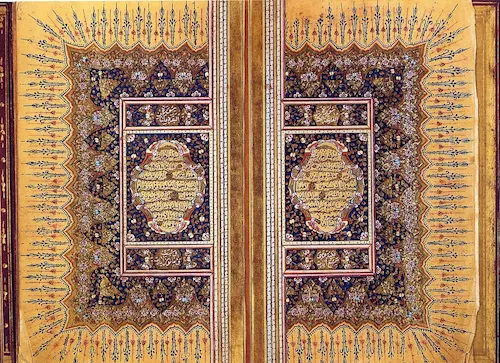
Sufi scholars have long pointed to certain themes within the Quran and Hadith literature as foundational to their tradition. These include the nearness of Allah to human beings, the importance of remembering God consistently, the purification of the soul, an emphasis on divine love, the value of sincerity in worship, and the concept of ihsan — often summarized as worshiping God as though one sees Him, knowing that He sees us. These themes are not exclusive to Sufism; they are shared across Islamic thought more broadly, but Sufi teachers have historically placed them at the center of their spiritual method.
Early Muslim Ascetics
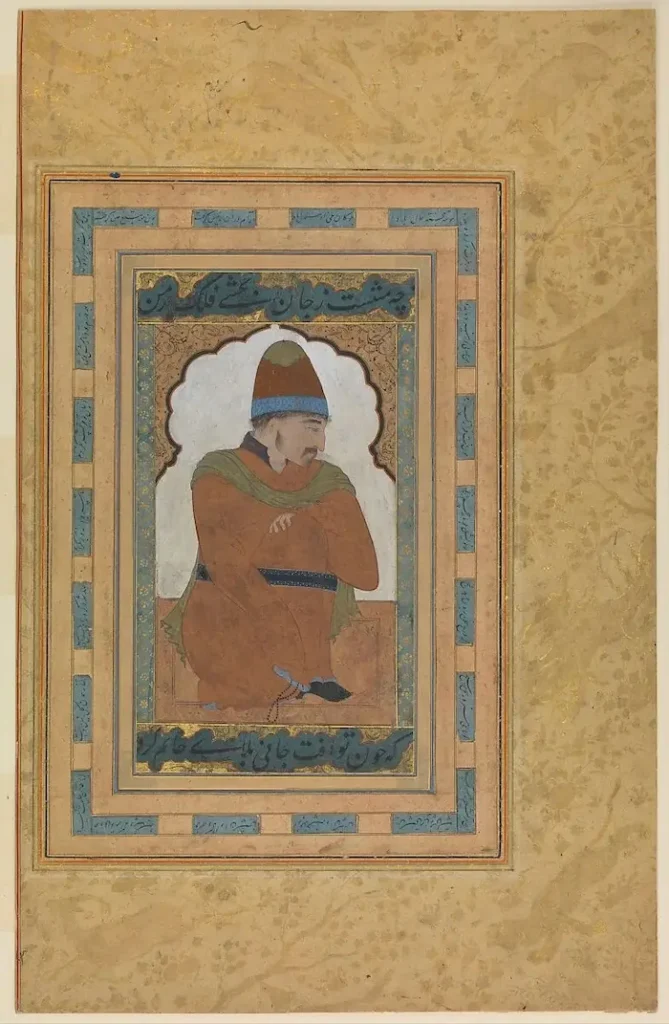
The roots of what later became organized Sufism lie in the renunciant and ascetic movements of the first few Islamic centuries. Figures such as Hasan al-Basri, a prominent early preacher known for his emphasis on piety and reflection on mortality, and Rabia al-Adawiyya, associated with an early and influential articulation of selfless love for God, are often cited as important early figures. Alongside them were other zuhhad, or ascetics, whose renunciation of worldly comfort was driven by a mixture of fear of divine judgment and longing for closeness to God. This early ascetic movement laid much of the groundwork for the more systematic spiritual teachings that followed.
The Development of Classical Sufism
Over the following centuries, this ascetic impulse developed into a more structured tradition with its own psychology, ethics, and metaphysics. Junayd of Baghdad is frequently regarded as a central figure in shaping a sober, disciplined form of Sufism grounded in scripture and law. Bayazid Bastami is associated with a more ecstatic style of mystical expression. Mansur al-Hallaj became one of the most debated figures in the tradition, and his case is discussed in more detail later in this article. Al-Ghazali, a towering figure in Islamic scholarship, worked to reconcile mystical practice with mainstream theology and law, while Ibn Arabi later developed an influential and complex mystical philosophy that continues to be studied and debated today. Together, these figures helped Sufism mature from individual ascetic practice into a broader intellectual and spiritual tradition.
The Rise of Sufi Orders
As Sufism matured, it also became institutionalized through the formation of tariqas, or Sufi orders. A tariqa typically centers on a shaykh, or spiritual guide, who trains students known as murids. Many orders trace their teaching authority through a silsila, a chain of transmission linking the current teacher back through a lineage of earlier masters, often to the Prophet Muhammad himself. Communities of students often gathered and lived in a khanqah or zawiya, buildings that served as centers for teaching, communal worship, and lodging. These orders varied considerably in method and emphasis, but they gave Sufism a durable institutional structure that helped it spread across the Muslim world.
What Do Islamic Mystics Believe?
There is no single, unified body of doctrine that represents every Sufi order or every Islamic mystic. That said, several core concepts recur widely across the tradition.
Tawhid and the Unity of God
Tawhid, the belief in the absolute oneness of Allah, remains the theological foundation of Islamic mysticism just as it is for Islam more broadly. Sufi teachers have historically been careful to distinguish their language about closeness to God from any claim that a human being literally becomes God or merges with the divine essence in a physical sense. Even the most intense mystical experiences are generally framed within, not outside, the framework of tawhid.
Purification of the Heart
Tazkiyah, the purification of the heart, is a central practical goal in Sufi teaching. This involves confronting the nafs, or lower self, and its tendencies toward pride, greed, envy, and unhealthy attachment. Sufi teachers encourage cultivating humility, patience, sincerity, and compassion as the practical fruits of this inner work, treating character refinement as inseparable from spiritual progress.
Divine Love and Ma’rifa
Mahabba, or divine love, is a recurring theme in Sufi literature, describing a deep, devoted love directed toward Allah. Ma’rifa refers to a form of spiritual or experiential knowledge of God, distinct from purely intellectual or legal knowledge. Importantly, mainstream Sufi teaching does not present ma’rifa as a replacement for reason, scripture, or religious practice; rather, it is generally understood as complementing and deepening them.
Fana and Baqa
This concept requires careful explanation, since it is easily misunderstood. Fana generally refers to the diminishing of the ego and of self-centered awareness in the presence of the divine — a letting go of self-assertion rather than a literal dissolution of one’s being into God. Baqa refers to a subsequent state of continued life and awareness, now deeply oriented toward Allah. Sufi thinkers have offered varying interpretations of these terms over the centuries, and it would be inaccurate to reduce fana to a simple claim of physical or metaphysical union with God. The concept is better understood as describing a transformed relationship with one’s own ego, not the erasure of the boundary between Creator and creation.
Maqamat and Ahwal
Sufi psychology often distinguishes between maqamat, or spiritual stations, and ahwal, or spiritual states. Maqamat are understood as stages attained gradually through sustained discipline and effort — repentance, patience, trust, and gratitude are commonly cited examples. Ahwal, by contrast, are described as transient states experienced as gifts from God, such as a fleeting sense of intense love, awe, or peace, rather than as something earned through effort alone.
How Is Islamic Mysticism Practiced?
Practice varies considerably depending on region, school of thought, and specific tariqa, so no single description can stand in for the whole tradition.
Dhikr and the Remembrance of Allah
Dhikr, the remembrance of God, can take silent or vocal forms and may involve repeating divine names, Quranic phrases, or specific prayers. It can be practiced individually or in a group setting, and its specific form differs from one order to another. No single style of dhikr should be taken as representative of Sufi practice as a whole.
Prayer, Fasting, and Quran Recitation
Many Sufis place the basic obligations of Islam at the center of their spiritual life rather than treating them as separate from mystical practice. This typically includes the five daily prayers, additional voluntary prayers, fasting, regular Quran recitation, extended night worship, and charitable giving. For most Sufi teachers, mystical depth is meant to grow out of these foundational practices, not replace them.
Muraqaba and Spiritual Reflection
Muraqaba is often described as a state of watchfulness or contemplative awareness of God, involving close attention to one’s own thoughts, intentions, and inner states. While it shares some surface similarities with meditation or secular mindfulness practices, it is rooted in a specifically theistic framework centered on awareness of Allah, and equating it directly with modern secular meditation would overlook that distinction.
Guidance From a Shaykh
In many Sufi traditions, a shaykh plays an important role in guiding a student’s development — teaching discipline, correcting flaws in character, guiding the practice of dhikr, and helping interpret spiritual experiences. That said, the precise nature of the teacher-student relationship varies significantly between orders, and it would be inaccurate to describe a single fixed model as universal across all of Sufism.
Sama, Music, Poetry, and Whirling
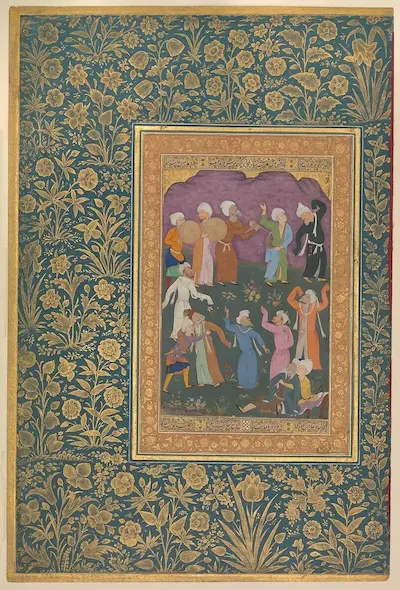
This area of practice needs careful nuance. Sama refers to spiritual listening, a practice found in some — but not all — Sufi traditions, often involving music or poetry intended to evoke longing for God. Qawwali, a devotional musical form, is especially prominent in South Asian Sufi contexts. Whirling, meanwhile, is most closely associated with the Mevlevi order and its distinctive Sema ceremony. It is not a universal Sufi practice. In fact, a number of Muslim scholars and Sufi communities have historically viewed music and dance with caution or outright disapproval, considering such practices unnecessary or even problematic within a spiritual path centered on scripture and law.
Key Terms in Islamic Mysticism
| Term | Simple meaning | Role in Sufism |
|---|---|---|
| Tasawwuf | The Arabic term for Sufism | Names the broader spiritual tradition and its practices |
| Sufi | A practitioner of Islamic mysticism | Describes someone pursuing purification and closeness to God |
| Ihsan | Spiritual excellence or sincerity | Often cited as the theological basis for Sufi practice |
| Dhikr | Remembrance of Allah | Central devotional practice, silent or vocal |
| Tazkiyah | Purification of the heart | Core goal of spiritual discipline |
| Nafs | The lower self or ego | The inner tendency that spiritual discipline seeks to refine |
| Ma’rifa | Experiential spiritual knowledge | Deepens, rather than replaces, scriptural knowledge |
| Fana | The diminishing of ego-centered awareness | Marks a shift in one’s relationship to self, not literal union with God |
| Baqa | Continued life with heightened God-awareness | Understood as following the experience of fana |
| Tariqa | A Sufi order or spiritual path | Provides structured teaching and lineage |
| Shaykh (Murshid) | A spiritual guide or teacher | Trains and corrects students on the path |
| Murid | A student or disciple | Follows the guidance of a shaykh |
| Silsila | A chain of spiritual transmission | Links a teacher’s authority back through a lineage |
| Wali | A friend of God, sometimes translated as saint | Refers to someone regarded as spiritually close to Allah |
Major Sufi Orders in Islam
Sufi orders share many common goals, including purification of the heart and remembrance of God, but they differ in lineage, method, and regional tradition.
Qadiriyya
The Qadiriyya order traces its inspiration to Abdul Qadir Gilani, a widely respected scholar and preacher. It became one of the most geographically widespread Sufi orders, with branches and adaptations across many regions, each carrying somewhat different local characteristics rather than a single uniform practice.
Chishtiyya
The Chishtiyya order developed a particularly strong presence in South Asia, where it became known for emphasizing love, humility, service to others, and hospitality toward visitors regardless of background. In some of its branches, it is closely linked with qawwali as a devotional practice, though this is not true of every Chishti community.
Naqshbandiyya
The Naqshbandiyya order spread widely across Central Asia, South Asia, and the Ottoman world. It is often associated with silent forms of dhikr in many of its branches, along with a strong emphasis on personal discipline and active engagement with social and political life, rather than withdrawal from it.
Mevleviyya
The Mevleviyya order is closely associated with Jalal al-Din Rumi and is best known in popular culture for its Sema ceremony, which includes the practice of whirling. It is important not to treat the Mevlevi order as representative of Sufism as a whole, since its distinctive practices are specific to this particular tradition.
Shadhiliyya
The Shadhiliyya order emerged in North Africa and became known for combining serious spiritual discipline with active participation in ordinary social and economic life. Unlike some ascetic movements, it did not generally require withdrawal from society as a condition for spiritual progress.
Famous Mystics in Islam
Rabia al-Adawiyya
Rabia al-Adawiyya lived in the eighth century in Basra, in present-day Iraq. She is remembered as one of the most influential early figures in Islamic mysticism, particularly for her emphasis on selfless love of God rather than worship motivated by fear of punishment or hope of reward. Her life and sayings had a lasting influence on how divine love would later be discussed throughout the Sufi tradition.
Junayd of Baghdad
Junayd lived in the ninth century in Baghdad and is widely regarded as a foundational figure in what is often called “sober” Sufism — a disciplined approach grounded firmly in Islamic law and scripture. His teachings emphasized self-restraint and careful, measured spiritual expression, and he had a significant influence on later generations of Sufi thinkers who sought to keep mystical experience anchored to mainstream religious practice.
Mansur al-Hallaj
Mansur al-Hallaj, active in the ninth and early tenth centuries, remains one of the most debated figures in Islamic mystical history. He is remembered above all for the controversial phrase “Ana al-Haqq,” often translated as “I am the Truth,” which some contemporaries and later scholars interpreted as a claim of union with the divine, while others read it as an expression of complete self-effacement before God rather than a literal theological claim. His execution followed a highly charged mixture of theological, political, and social controversy, and scholars continue to debate exactly how his words should be understood. No simple or sensational conclusion does justice to this complexity.
Al-Ghazali
Al-Ghazali, who lived in the eleventh and early twelfth centuries, is one of the most influential scholars in Islamic intellectual history. After a period of personal spiritual crisis, he worked to bridge spirituality, ethics, Islamic law, and theology, arguing that inner spiritual development and outward religious observance needed each other rather than standing in opposition. His major work, The Revival of the Religious Sciences, remains a foundational text linking mysticism with mainstream Islamic scholarship.
Ibn Arabi
Ibn Arabi, active in the twelfth and thirteenth centuries, developed one of the most intricate and influential bodies of mystical philosophy in Islamic history, addressing themes such as divine reality and the role of imagination in spiritual perception. He is often associated with the concept of wahdat al-wujud, sometimes translated as “the oneness of being,” although the precise meaning and implications of this idea remain a subject of ongoing scholarly debate. It would be a significant oversimplification to reduce his thought to the phrase “everything is God”; his writings are considerably more layered and have been interpreted in multiple, sometimes conflicting, ways by later scholars.
Jalal al-Din Rumi
Jalal al-Din Rumi, who lived in the thirteenth century, was a Muslim scholar, preacher, and poet whose work remains deeply rooted in the Quran and the broader Islamic spiritual tradition. His poetry frequently draws on Quranic imagery and Islamic theological themes, even as some modern adaptations and popular translations present his work in a more generic, detached spiritual framing that leaves out its Islamic context. Other notable figures worth mentioning briefly include Abdul Qadir Gilani, Attar of Nishapur, Bayazid Bastami, and Suhrawardi, each of whom contributed distinctively to the broader development of Islamic mystical thought.
Is Sufism Accepted in Islam?
This question deserves a genuinely neutral treatment, since Muslims themselves hold differing views on the matter.
Why Many Muslims Consider Sufism Part of Islam
Many Muslims regard Sufism as the inward dimension of Islam, closely tied to the concept of ihsan and understood as a path of ethical and spiritual purification. From this perspective, Sufism is historically and doctrinally connected to the Quran, Hadith, Islamic law, and theology, functioning as a complementary rather than competing dimension of religious life.
Why Some Muslims Criticize Sufi Practices
Other Muslims raise concerns about specific Sufi beliefs or practices rather than about spirituality in general. Common points of criticism include the veneration of saints, visiting tombs in ways seen as excessive, seeking intercession through deceased spiritual figures, the use of music and dance in worship, certain metaphysical teachings associated with figures like Ibn Arabi, and concerns about excessive authority granted to spiritual masters. It is important to note that this criticism is typically directed at particular beliefs or practices within specific communities, rather than at the entire concept of inner spirituality or tazkiyah.
Sufism, Sharia, and Islamic Orthodoxy
Many classical Sufi teachers insisted that authentic spiritual life must remain grounded in Islamic law, treating the two as mutually reinforcing rather than in tension. At the same time, some modern movements and interpretations have presented Sufism as separable from traditional legal and doctrinal frameworks. There is no single, universally shared Muslim position on every Sufi order and practice, and this diversity of opinion should be understood as part of an ongoing internal conversation within the Muslim community rather than a settled dispute.
Islamic Mysticism in Poetry, Art, and Culture
Sufi Poetry and the Language of Divine Love
Sufi poetry frequently draws on a shared symbolic vocabulary, including images of wine, the beloved, longing, spiritual journeying, light, and the themes of separation and union. These images are generally understood as symbolic representations of the soul’s relationship with God, though interpretations of specific verses and metaphors can vary considerably among readers and scholars.
Rumi, Attar, and Hafez
Rather than repeating biographical details already covered, it is worth noting the broader literary influence of these poets. Their work helped establish poetry as a major vehicle for transmitting mystical ideas within the Persian-speaking Islamic world and, later, far beyond it, shaping how generations of readers encountered concepts like divine love and spiritual longing.
Qawwali, Calligraphy, and Sacred Architecture
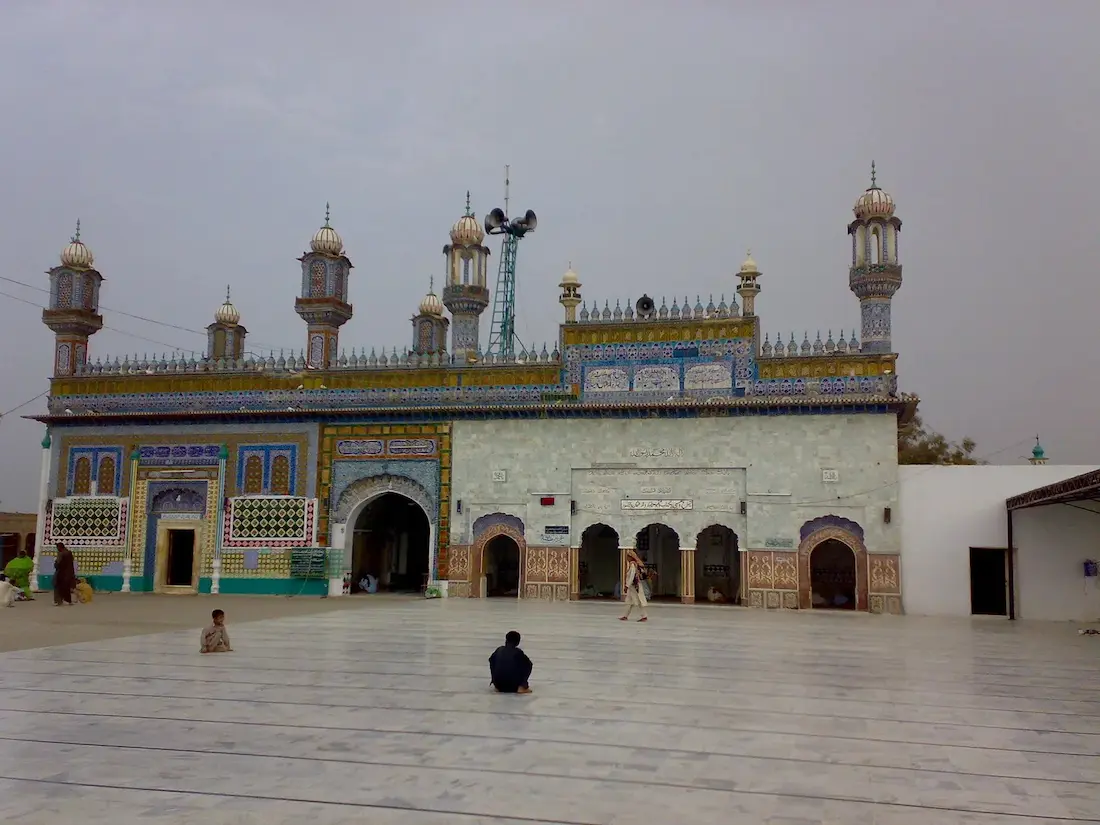
Sufi influence extends into cultural forms such as qawwali music, Islamic calligraphy, and the architecture of shrines and gathering spaces. These forms are prominent in certain regions and communities but should not be assumed to be present in every Sufi context worldwide.
The Role of Sufis in Spreading Islam
Sufi networks and traveling teachers are often credited with playing a meaningful role in the spread of Islam in regions such as South Asia, Central Asia, Africa, and Southeast Asia. It would be inaccurate, however, to suggest that Sufis were solely responsible for the spread of Islam in these regions, since trade, migration, political developments, and other religious scholars and institutions also played significant roles.
Islamic Mysticism in the Modern World
Sufism Beyond Muslim-Majority Societies
In recent decades, Sufi orders and study circles have also developed a presence in Europe and North America, attracting both Muslim practitioners and, in some cases, non-Muslim audiences interested in contemplative spirituality.
The Modern Popularity of Rumi
Rumi has become one of the best-selling poets in English translation in recent decades. Some popular adaptations, however, remove references to the Quran, the Prophet Muhammad, and the broader Islamic framework in which Rumi wrote, presenting him instead as a generic spiritual poet detached from his religious context. This shift has shaped how many contemporary readers encounter his work, often without awareness of its specifically Islamic roots.
Persecution and Attacks on Sufi Communities
In some regions, Sufi shrines and communities have been targeted in attacks linked to extremism, sectarian tension, or broader political conflict. These events vary significantly by context and cannot be generalized into a single narrative about any particular Muslim movement or society as a whole.
Can Sufism Be Separated From Islam?
Two realities exist side by side here. Classical Sufism developed within, and remains historically tied to, the broader Islamic religious framework of scripture, law, and theology. At the same time, some modern movements have reinterpreted Sufism as a form of universal spirituality detached from that framework. These represent genuinely different approaches, and it would be inaccurate to assume that all contemporary groups describing themselves as Sufi share the same relationship to Islamic tradition.
Common Misconceptions About Mysticism in Islam
Sufism Is Not a Separate Religion
Sufism is widely understood by its practitioners as a dimension within Islam, not a distinct religion. Framing it as an entirely separate belief system misrepresents how the majority of Sufis themselves understand their practice.
Not All Sufis Practice Whirling
Whirling is specifically associated with the Mevlevi order and is not a general Sufi practice. Many Sufi communities have never incorporated whirling into their tradition at all.
Islamic Mysticism Is Not Only About Rumi
Rumi is only one figure among many significant Islamic mystics across centuries and regions. Reducing the entire tradition to his poetry overlooks the much broader historical and intellectual scope of Islamic mysticism.
Mystical Practice Does Not Necessarily Replace Islamic Law
Most classical Sufi teachers maintained that observance of Islamic law remained essential alongside spiritual practice. Treating mysticism as a substitute for religious obligation misrepresents how the majority of historical Sufi teachers approached the relationship between the two.
Not All Sufi Orders Share the Same Beliefs and Rituals
Sufi orders differ meaningfully in lineage, method, and emphasis. Assuming uniformity across all orders overlooks this genuine diversity within the broader tradition.
Frequently Asked Questions
Do Muslims believe in mysticism?
Many Muslims embrace mysticism in the form of Sufism, viewing it as the inward, spiritual dimension of Islam connected to ihsan and purification of the heart. Others are more cautious or critical of specific Sufi beliefs and practices. There is no single, unified Muslim position on the matter; views range widely across regions, scholars, and traditions.
What is the meaning of Islamic mysticism?
Islamic mysticism refers to the inner, contemplative dimension of Islam focused on purifying the heart, remembering Allah, and cultivating sincerity and closeness to God. It is most commonly expressed through Sufism, or Tasawwuf, and emphasizes spiritual transformation alongside, rather than instead of, standard religious practice.
Is Islamic mysticism the same as Sufism?
In practical terms, yes — Sufism is the dominant and most recognized form that Islamic mysticism has taken historically. Some scholars use “Islamic mysticism” more broadly to include related mystical philosophy, but for most readers, treating the two as equivalent is accurate.
Who are the most famous mystics in Islam?
Widely recognized figures include Rabia al-Adawiyya, Junayd of Baghdad, Mansur al-Hallaj, Al-Ghazali, Ibn Arabi, and Jalal al-Din Rumi. Each contributed differently, ranging from early ascetic devotion to complex mystical philosophy and influential poetry.
Do all Sufis practice whirling?
No. Whirling is specifically associated with the Mevlevi order and its Sema ceremony. Most Sufi orders and communities do not practice whirling at all, and some have historically discouraged music and dance in worship altogether.
Conclusion
Mysticism in Islam centers on inner spiritual life and closeness to Allah, most commonly expressed through Sufism, or Tasawwuf. This tradition developed gradually from early ascetic and devotional practices into a rich landscape of schools, orders, and teachers, each with its own methods and emphases. Its core concerns are purification of the heart, sincerity, and remembrance of God, supported by foundational Islamic practices rather than separate from them. Understanding this tradition requires looking well beyond Rumi’s poetry, whirling ceremonies, or any single practice, toward the broader history of figures, orders, and ideas that have shaped Islamic mysticism across centuries and regions.

About the Author
Dana Whitfield
I write about numerology, astrology, mythology, tarot, and world mystical traditions for Mystivora, drawing on years of independent research across comparative religion and symbolic systems. I approach each topic by cross-checking primary texts and established scholarship rather than repeating popular but unverified claims.
Related Articles
View All Articles → Mysticism