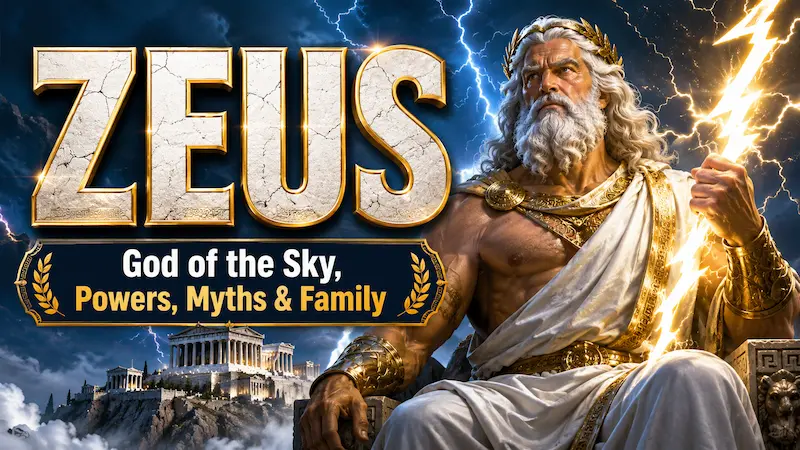
Zeus Greek mythology centers on the king of the Olympian gods, the ruler of the sky, and the god who wields thunder and lightning. Zeus governs from Mount Olympus, where he presides over the other Olympians and enforces the order that holds the divine and mortal worlds together. No other figure appears in as many Greek mythology stories, and almost every major god or hero is connected to him in some way.
This guide covers who Zeus is, what he is the god of, the powers attributed to him, how he was born and rose to power, his most famous myths, his sprawling family, and the symbols that identify him in ancient art.
Who Is Zeus in Greek Mythology?
Zeus is the king of the gods in Greek mythology, the supreme authority among the Olympians and the ruler of Mount Olympus. He is the youngest son of the Titans Cronus and Rhea, and after the fall of the Titans he took the sky as his domain and the leadership of the new divine order as his position.
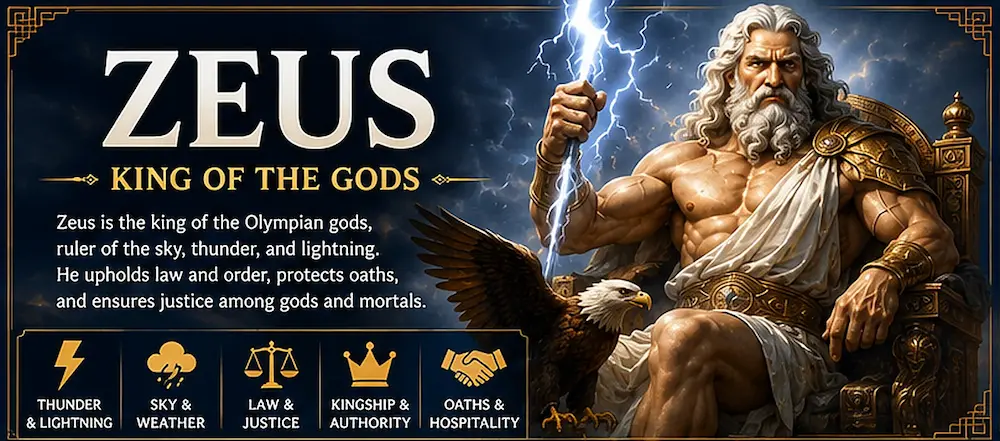
As king, Zeus sits at the head of the Olympian gods. He settles disputes among them, assigns honors and responsibilities, and has the final word when the gods disagree. The other Olympians can argue with him, deceive him, or delay him, but they cannot displace him. That distinction matters: Zeus is not simply the strongest god, he is the one whose authority the rest of the pantheon recognizes.
His authority also extends to mortals. Kings were said to hold their power through Zeus, oaths were sworn in his name, and strangers who arrived at a door were protected by him. Human affairs and divine affairs meet in his role, which is a large part of why he stands at the center of Greek myth. When a story needs a decision that binds everyone, gods and humans alike, it usually comes from Zeus.
What Is Zeus the God Of?
Zeus is the god of the sky, thunder, and lightning, and also the god of law, order, justice, kingship, oaths, and hospitality. The weather side of his character is the most familiar, but in ancient Greek religion the two halves belong together: the god who controls the storm is the same god who guarantees that promises are kept.
His main domains can be grouped this way:
- Sky and weather: the open heavens, clouds, rain, and storms.
- Thunder and lightning: the thunderbolt, his signature weapon and the visible sign of his power.
- Law and justice: the standards that both gods and humans are expected to respect.
- Kingship and authority: rightful rule, on Olympus and among mortal rulers.
- Oaths: sworn agreements, which carried real weight because breaking them offended Zeus directly.
- Hospitality: the obligation to receive guests and travelers properly, a duty the Greeks took seriously.
This is why calling Zeus a thunder god is accurate but incomplete. Ancient Greeks approached him under many titles that reflect these roles, and his broader responsibility is maintaining order. When that order breaks down, whether through a rebellion on Olympus, a broken oath, or a serious offense against a guest, the myths tend to place Zeus at the point where the consequences arrive.
What Powers Does Zeus Have?
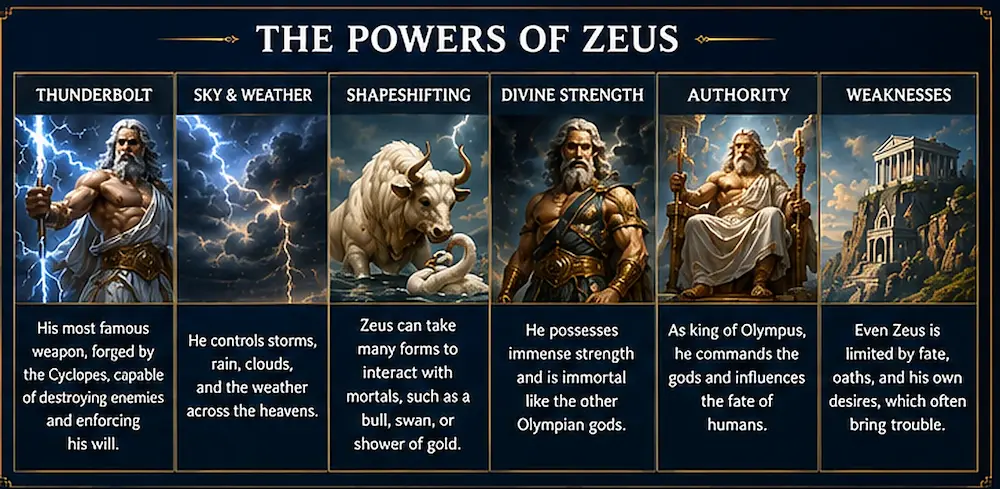
The powers of Zeus fall into a few clear categories: command of thunder and lightning, control of the sky and weather, the ability to change his form, immense divine strength, immortality, and supreme authority over the other gods. His thunderbolt is the most recognizable of these, but his real dominance in the myths comes from the combination of raw force and the right to rule.
Control Over Thunder and Lightning
Zeus wields thunder and lightning as weapons. His thunderbolt was forged by the Cyclopes and given to him during the war against the Titans, and it becomes inseparable from him afterward. It is the tool he uses to strike down enemies who threaten the cosmic order, and it functions as a sign of judgment as much as a weapon.
In art and poetry, the thunderbolt in his hand is enough to identify him. The connection runs both ways: the weapon marks his authority, and his authority is what makes the weapon meaningful.
Control Over the Sky and Weather
As god of the sky, Zeus gathers clouds, sends rain, and raises storms. Homer repeatedly calls him the cloud-gatherer, and myths describe him darkening the sky, sending downpours, or holding back weather when it suits his purpose.
His control is not total, though. Greek mythology assigns the sea to Poseidon, the winds to Aeolus and the individual wind gods, and the dawn to Eos. Zeus rules the sky and what falls from it rather than every force in nature.
Shapeshifting
Zeus can change his appearance and take other forms, and this ability shows up constantly in myths that involve mortals. He appears as animals, as natural phenomena, and sometimes in the shape of another person entirely.
The best known examples include the bull in the story of Europa, the swan in the story of Leda, and the shower of gold that reaches Danae. Each of these myths is covered further down, since they are among the most retold stories in the whole tradition.
Divine Strength and Immortality
Zeus possesses strength beyond that of the other Olympians. In the Iliad he claims he could pull all the other gods up on a rope while they could not move him, a boast presented as a statement of fact about the balance of power on Olympus.
He is also immortal and cannot be killed. That combination allowed him to face opponents no one else could handle, including the Titans and the monster Typhon, and to survive conflicts that would have ended any other figure in the myths.
Authority Over Gods and Mortals
Beyond force, Zeus holds command. He can summon the gods, forbid them from intervening in a war, assign duties, and punish those who defy him. Hera, Apollo, and Poseidon all test his authority at different points, and all of them ultimately submit.
He also enforces order among humans, backing kings, oaths, and the treatment of guests. It is worth being precise here: Greek sources present Zeus as the highest power, not as an all-knowing or all-powerful god in the modern sense. His supremacy is political and physical rather than absolute.
Does Zeus Have Any Weaknesses?
Zeus is extraordinarily powerful, but Greek mythology does not describe him as unlimited. Several constraints appear repeatedly:
- Fate. The Moirai, the Fates, set outcomes that even Zeus does not simply overrule. In the Iliad, he grieves over the coming death of his son Sarpedon and lets it happen rather than overturn what is fated.
- Oaths. An oath sworn on the River Styx binds the gods, including Zeus, and myths show him held to promises he later regrets.
- Deception. He can be tricked or distracted, most famously by Hera and Prometheus in different episodes.
- His own desires. His many affairs generate conflict with Hera and set off chains of events that cause trouble across the myths.
These limits are part of the design rather than flaws in the storytelling. The Greek gods were imagined as immensely powerful persons with interests and rivalries, not as a single perfect deity, and Zeus is the clearest example of that.
The Birth and Childhood of Zeus
Zeus Was the Son of Cronus and Rhea
Zeus was born to the Titans Cronus and Rhea. Cronus had overthrown his own father, Uranus, and a prophecy warned that one of his children would do the same to him. To prevent it, he swallowed each child as soon as it was born.
Five of Zeus’ siblings suffered this fate: Hestia, Demeter, Hera, Hades, and Poseidon. Zeus, the youngest in Hesiod’s account, was the one who escaped.
How Zeus Escaped Cronus
Rhea saved her last child. When Zeus was born she hid him and handed Cronus a stone wrapped in swaddling cloth, which he swallowed without noticing the substitution.
Zeus was then raised in secret, far from his father. Crete is the location most consistently associated with his upbringing, usually a cave on Mount Ida or Mount Dicte, where he was nursed and guarded until he was old enough to challenge Cronus. Ancient authors differ on the details of who cared for him and where exactly he was hidden, but the core of the story stays the same: Cronus tried to eliminate the threat and the threat survived.
How Zeus Became King of the Gods
Zeus Freed His Brothers and Sisters
Once he had grown, Zeus returned to confront Cronus and forced him to disgorge the children he had swallowed. Hestia, Demeter, Hera, Hades, and Poseidon emerged, and the stone that had been swallowed in Zeus’ place came up as well.
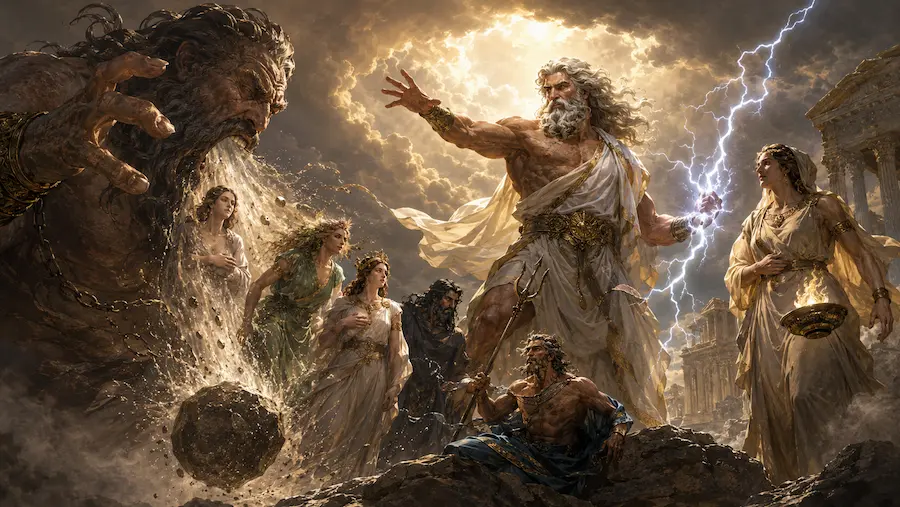
These freed siblings became the core of the new divine generation. Instead of facing Cronus alone, Zeus now had allies who had every reason to fight beside him.
Zeus and the Titanomachy
The Titanomachy was the war between the younger gods and the Titans for control of the cosmos, and Hesiod describes it as lasting ten years without a decisive result. Zeus led the younger side.
The turning point came when he released prisoners Cronus had kept confined. The Cyclopes, master craftsmen, forged and gave Zeus the thunderbolt, and the hundred-handed Hecatoncheires joined the fighting on his side. With the thunderbolt in hand, Zeus broke the Titan resistance. The defeated Titans were imprisoned in Tartarus, and the Olympian order replaced the older one.
Zeus, Poseidon and Hades Divided the Cosmos
After the victory, the three brothers divided the universe between them by drawing lots:
- Zeus received the sky and the heavens.
- Poseidon received the sea.
- Hades received the Underworld.
The earth and Mount Olympus itself were held in common by all three. In principle each brother was sovereign in his own realm, but Zeus held the sky, the seat of Olympus, and the position of king, which made him the supreme ruler of the gods in practice as well as in name.
Famous Myths About Zeus
Zeus appears in a large share of the most important stories in Greek mythology, sometimes as the central figure and often as the power that decides how a story ends. The myths below are the ones most closely tied to him.
Zeus and Prometheus
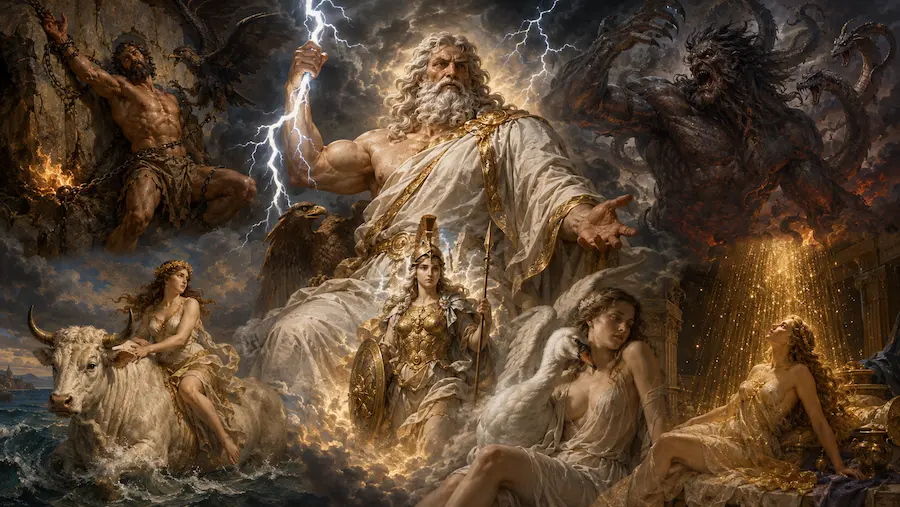
Prometheus was a Titan who sided with Zeus during the Titanomachy but later came into conflict with him over the treatment of humanity. The dispute began with a division of sacrificial meat that left Zeus with the poorer portion, and Zeus responded by withholding fire from mortals.
Prometheus stole fire and gave it to humanity anyway, carrying it hidden in a fennel stalk. Zeus punished him by having him chained to a rock, where an eagle came each day to feed on his liver, which regrew overnight. The punishment lasted generations until Heracles freed him. Humanity was punished too, through Pandora and the jar whose opening released troubles into the world.
Zeus and Typhon
Typhon was the most dangerous opponent Zeus ever faced. Described by Hesiod as the last child of Gaia, he was a vast serpentine monster with snake heads that spoke in many voices and breathed fire, and he was produced specifically to challenge Olympian rule.
The battle is presented as a struggle for control of the cosmos itself. Zeus met him with thunderbolts and eventually struck him down, imprisoning him beneath the earth, most often in Tartarus or under Mount Etna, where later writers explained volcanic eruptions as Typhon still stirring. A separate tradition preserved by Apollodorus adds an episode in which Typhon briefly overpowers Zeus before Zeus recovers and wins. Typhon is one of the most formidable of all Greek mythology creatures, and defeating him confirmed that the Olympian order would hold.
The Birth of Athena
Metis, an Oceanid associated with wisdom and cunning, was Zeus’ first wife. A prophecy warned that the child she carried would be a daughter, and that any son born to her afterward would overthrow his father, exactly as Cronus and Uranus had been overthrown.
Zeus responded by swallowing Metis. Some time later he suffered a violent headache, and when his head was split open, Athena emerged fully grown and armed. Sources name Hephaestus or Prometheus as the one who struck the blow. Athena went on to become one of the most important Olympian deities and was closely associated with her father throughout the myths.
Zeus and Europa
Europa was a Phoenician princess who caught Zeus’ attention while gathering flowers near the shore. He took the form of a bull, described as unusually beautiful and gentle, and mingled with her father’s herds.
Europa approached the animal, and when she climbed onto its back, the bull carried her out to sea and across to Crete. There Zeus revealed himself. Their children included Minos, later king of Crete, along with Rhadamanthys and, in most accounts, Sarpedon. The continent of Europe takes its name from her.
Zeus and Leda
Leda was the wife of Tyndareus, king of Sparta. Zeus approached her in the form of a swan, and the encounter is one of the most frequently depicted scenes in later art.
Helen, whose abduction sets the Trojan War in motion, is the child most consistently attributed to this union. Ancient sources vary considerably on the parentage of Leda’s other children, Clytemnestra, Castor, and Polydeuces, and different traditions divide them between Zeus and Tyndareus in different ways. The connection to Helen is the part that remains stable across versions.
Zeus and Danae
Danae was the daughter of Acrisius, king of Argos. Warned by an oracle that his daughter’s son would kill him, Acrisius confined her in a sealed underground chamber so that no one could reach her.
Zeus reached her regardless, in the form traditionally described as a shower of gold that fell through the roof. The child of that union was Perseus, who grew up to become one of the great heroes of Greek myth and who, in the end, fulfilled the prophecy his grandfather had tried to avoid.
Zeus’ Family
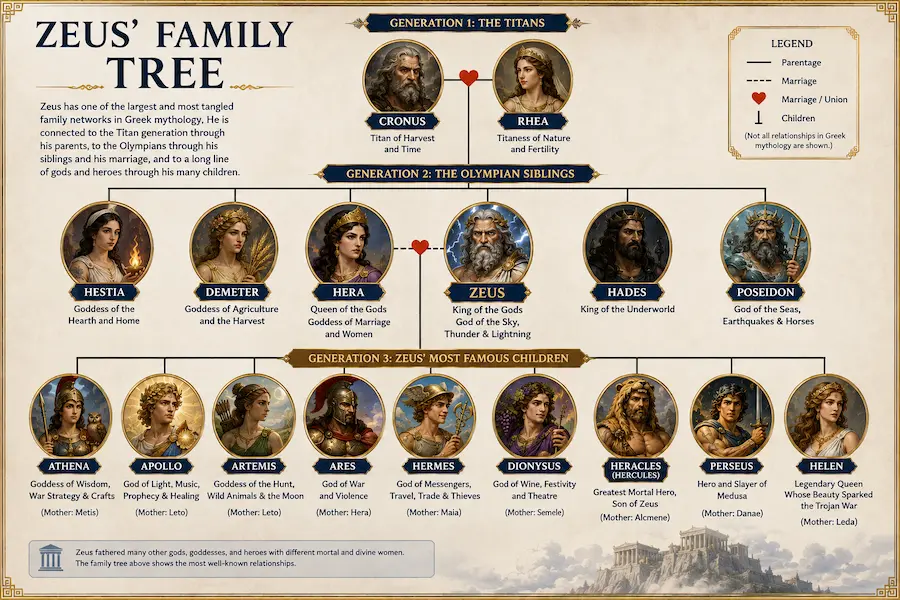
Zeus has one of the largest and most tangled family networks in Greek mythology. He is connected to the Titan generation through his parents, to the Olympians through his siblings and his marriage, and to a long line of gods and heroes through his many children. The Greek mythology family tree shows how these generations fit together.
Who Were Zeus’ Parents?
Zeus’ parents were the Titans Cronus and Rhea. Cronus ruled during the Titan age and was overthrown by Zeus, while Rhea was the one who saved her youngest child and made that overthrow possible.
Who Were Zeus’ Brothers and Sisters?
Zeus had five full siblings:
- Hestia, goddess of the hearth.
- Demeter, goddess of the harvest and grain.
- Hera, goddess of marriage, who became his wife and queen.
- Hades, ruler of the Underworld.
- Poseidon, ruler of the sea.
Together with Zeus, these six formed the generation that displaced the Titans and established the Olympian order.
Zeus and Hera
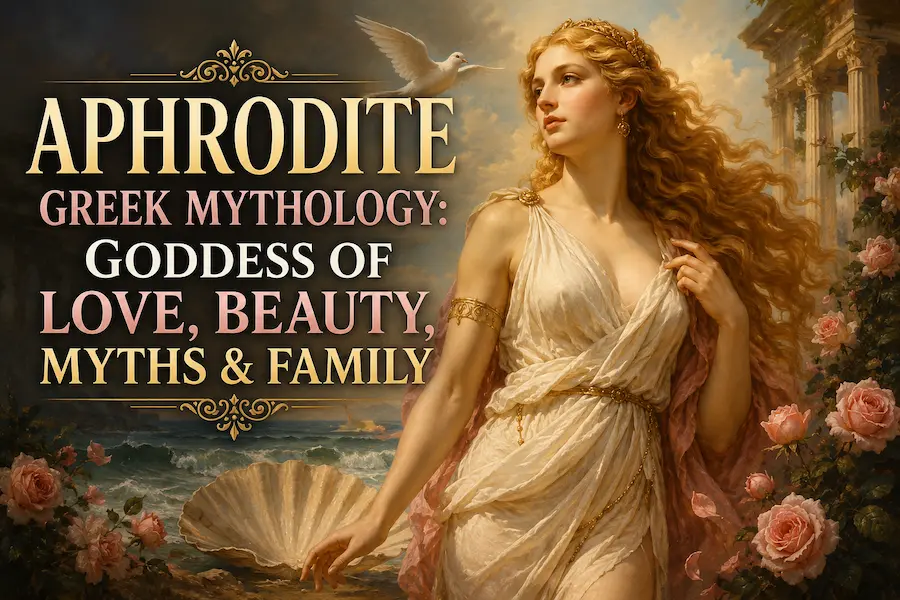
Hera was both Zeus’ sister and his wife, and as his consort she became Queen of the Gods. Their marriage was treated as the model of divine marriage in Greek religion, and Hera’s own domain covered marriage, women, and the family.
The relationship is also one of the most persistent sources of conflict in the myths. Zeus’ affairs with goddesses, nymphs, and mortal women provoked Hera repeatedly, and her responses often fell on the women involved or on their children rather than on Zeus himself. Heracles, in particular, spends much of his life dealing with her hostility. The pattern recurs across so many stories that it functions as a running theme of the entire tradition.
Zeus’ Lovers and Consorts
Ancient sources attribute a very long list of consorts to Zeus. These are the ones who matter most for understanding his role in the myths:
- Metis, his first wife, mother of Athena.
- Themis, a Titaness associated with divine law and order, mother of the Horae and, in Hesiod, the Moirai.
- Leto, mother of Apollo and Artemis.
- Maia, a Pleiad and mother of Hermes.
- Europa, mother of Minos and Rhadamanthys.
- Leda, connected with the birth of Helen.
- Danae, mother of Perseus.
The pattern is worth noticing: several of these unions produce major Olympian gods, and others produce the heroes whose stories define the rest of Greek mythology.
Zeus’ Most Famous Children
Zeus fathered a remarkable number of significant figures. The best known include:
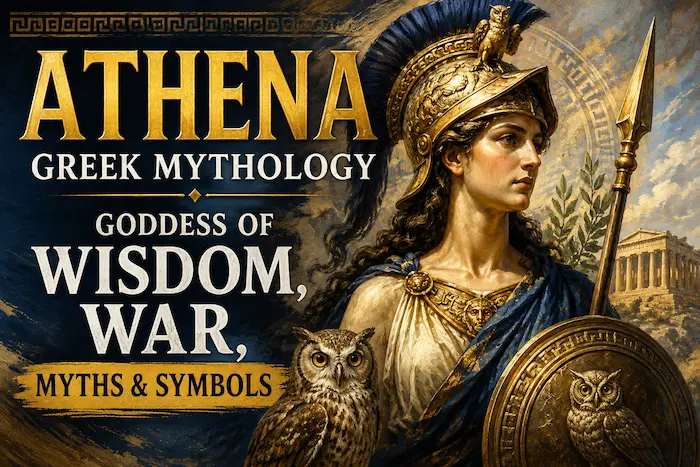
- Athena, goddess of wisdom and strategic warfare, born from his head.
- Apollo, god of prophecy, music, healing, and archery, and the voice behind the Oracle of Delphi.
- Artemis, goddess of the hunt and the wilderness, twin sister of Apollo.
- Ares, god of war and, with Hera, one of Zeus’ children by his wife.
- Hermes, messenger of the gods and guide of souls, born to Maia.
- Dionysus, god of wine, ecstasy, and theater, born to Semele.
- Heracles, the greatest of the Greek heroes, born to Alcmene.
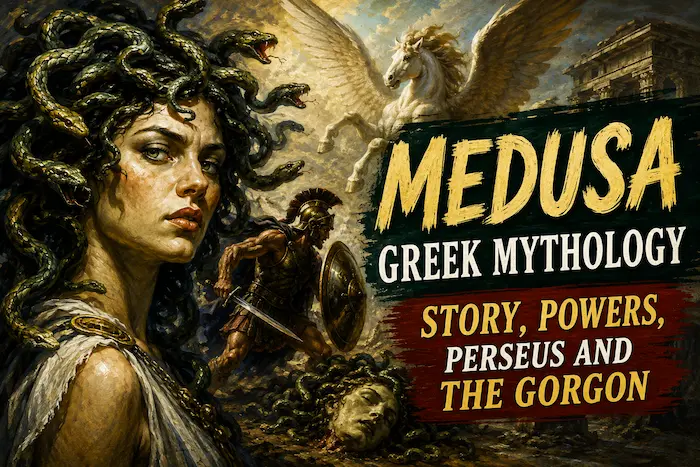
- Perseus, the hero who killed Medusa, born to Danae.
- Helen, whose story sets the Trojan War in motion.
Ancient traditions attribute many more children to Zeus, and the lists vary from author to author. The figures above are the ones who appear consistently and who carry the most weight in the myths.
Symbols of Zeus
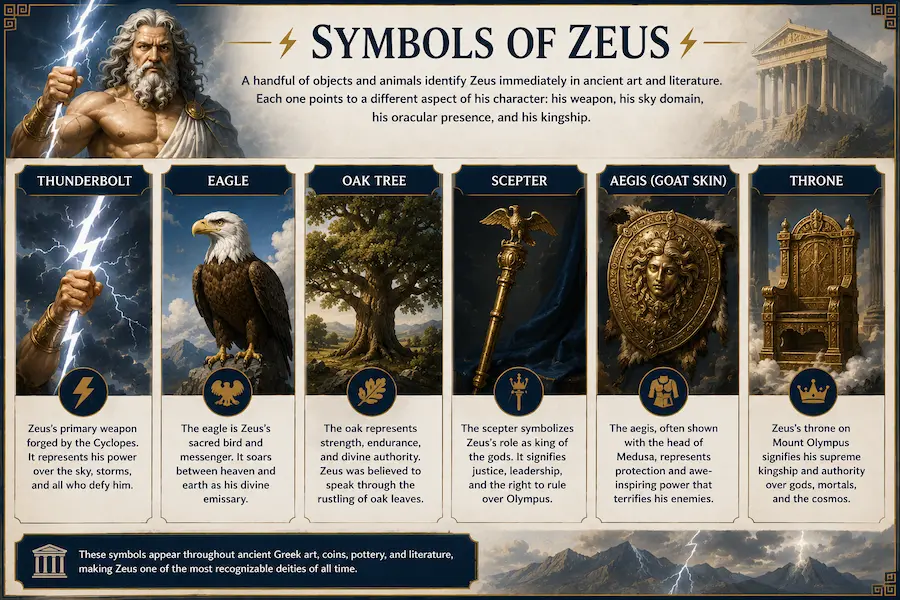
A handful of objects and animals identify Zeus immediately in ancient art and literature. Each one points to a different aspect of his character: his weapon, his sky domain, his oracular presence, and his kingship.
Thunderbolt
The thunderbolt is Zeus’ best known symbol and his primary weapon. Forged by the Cyclopes, it stands for divine power, decisive force, and punishment. In sculpture and vase painting, a figure poised to hurl a bolt is understood to be Zeus without any further identification needed.
Eagle
The eagle is the bird sacred to Zeus and the animal most often shown at his side. As the bird that flies highest and hunts the most powerfully, it fits his roles as sky god and king. Eagles also appear in the myths as his messengers and as omens sent to signal his will.
Oak Tree
The oak was Zeus’ sacred tree. Its strongest association is with Dodona in northwestern Greece, home to one of the oldest oracles in the Greek world, where priests were said to interpret his responses from the sound of the wind moving through the leaves of a sacred oak. The tree links Zeus to prophecy as well as to strength and endurance.
Scepter and Throne
The scepter and the throne are symbols of rule rather than of natural force. Ancient depictions regularly show Zeus seated, holding a long staff, in the posture of a king receiving those who come before him. These attributes present him as sovereign of the gods, and the famous statue of Zeus at Olympia, one of the Seven Wonders of the ancient world, showed him enthroned in exactly this way.
Zeus and Mount Olympus
Mount Olympus is the home of the Olympian gods and the seat of Zeus’ rule. Greek myth places the gods’ dwellings on its heights, above the reach of mortals and beyond the ordinary weather of the world below.
Zeus rules there as king. He calls the gods into assembly, hears their arguments, and hands down decisions that the rest of the pantheon is expected to follow. The other Olympians hold their own domains and their own honors, but Olympus operates as his court.
Because of that, Olympus works as a symbol as much as a place. When a myth moves to Olympus, it is usually because something has to be decided at the highest level, and Zeus is the one who decides it.
Zeus’ Roman Equivalent: Jupiter
Jupiter is the Roman god identified with Zeus. Like Zeus, he is a sky god associated with thunder and lightning and holds the supreme position in his pantheon, worshipped in Rome above all as Jupiter Optimus Maximus on the Capitoline Hill.
As Roman culture absorbed Greek literature and art, Romans adapted Greek myths and attributes to Jupiter, which is why the two gods share so much of the same story material. Jupiter was not simply a renamed Zeus, though. He had his own cult, his own priesthood, and his own place in Roman state religion, developed independently of Greek influence before the two traditions merged.
Frequently Asked Questions About Zeus
What is Zeus mainly the god of?
Zeus is mainly the god of the sky, thunder, and lightning. He is the one who gathers clouds, sends storms, and strikes with the thunderbolt. His role also covers law, justice, and order, along with kingship, sworn oaths, and the protection of guests and strangers, which made him both a weather god and the guarantor of the rules that gods and humans lived by.
What powers does Zeus have?
Zeus commands thunder and lightning through his thunderbolt, controls the sky and weather, and can change his shape into animals or other forms. He has strength greater than any other Olympian, is immortal, and holds supreme authority as king of the gods, able to command the other Olympians and enforce order among mortals. He is not, however, portrayed as unlimited or all-knowing.
Who did Zeus love the most?
Greek mythology does not give a single clear answer. Hera was his wife and Queen of the Gods, and their marriage holds a permanent place at the center of the tradition. Zeus was also linked with many other consorts, including Metis, Leto, Maia, Europa, Leda, and Danae. Ancient sources describe strong attachments in several of these stories without ranking one above the rest.
What are 5 interesting facts about Zeus?
Five facts that capture the essentials:
- Zeus was the youngest son of Cronus and Rhea.
- He escaped being swallowed by his father because Rhea substituted a stone.
- He led the Olympians to victory over the Titans in the Titanomachy.
- His most famous weapon, the thunderbolt, was forged for him by the Cyclopes.
- He fathered many major Greek gods and heroes, including Athena, Apollo, Hermes, and Heracles.
How old is Zeus right now?
Zeus is a mythological deity rather than a historical person, so he does not have a current age that can be measured. Greek myths describe him as immortal and unaging. What can be dated is the tradition itself: stories about Zeus were written down by Homer and Hesiod roughly 2,700 years ago, and the worship behind them is older still.
Conclusion
Zeus stands at the top of the Greek divine order as king of the Olympian gods, ruling the sky from Mount Olympus with thunder and lightning as the visible signs of his power. He rose to that position by freeing his siblings, defeating Cronus and the Titans, and taking the sky as his share of the divided cosmos.
What keeps him at the center of Greek mythology is not only the thunderbolt. Zeus is tied to justice, oaths, hospitality, and rightful rule, and he is the father or ancestor of a large share of the gods and heroes whose stories fill the tradition. Understanding Zeus is close to understanding how the Greeks imagined authority itself.

About the Author
Dana Whitfield
I write about numerology, astrology, mythology, tarot, and world mystical traditions for Mystivora, drawing on years of independent research across comparative religion and symbolic systems. I approach each topic by cross-checking primary texts and established scholarship rather than repeating popular but unverified claims.